Patrick Mahomes has spent years mastering chaos on the football field.
Off it, chaos has a way of finding him anyway.
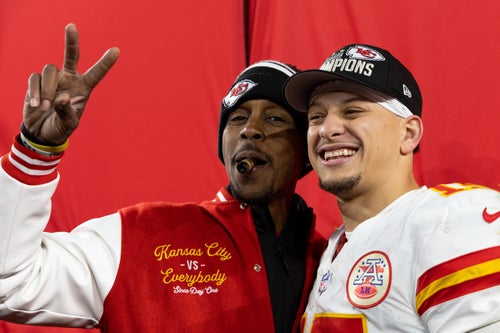
According to multiple reports, Patrick Mahomes Sr., the father of the Kansas City Chiefs quarterback, was placed in Smith County Jail in Tyler, Texas, this week amid allegations that he violated the terms of his probation.
The alleged violation stems from claims that he consumed alcohol—an explicit breach of the conditions imposed following his guilty plea to a DWI charge in February 2024.
District Attorney Jacob Putman confirmed that Mahomes Sr. could request a hearing to contest the allegation. As of now, no ruling has been made.
But the timing is difficult to ignore.
The alleged violation report indicates that a court-ordered ankle monitor registered a high alcohol reading on January 1.
That detail alone has drawn renewed attention to a situation many believed was already settled—if not resolved, then at least quieted.
Mahomes Sr., a former Major League Baseball pitcher who played 11 seasons with teams including the New York Mets, has a documented history of alcohol-related arrests. Reports indicate he has been arrested at least three times for drinking and driving.
This latest development reopens a chapter that last made headlines in early 2024, when his arrest—just days before his son appeared in the Super Bowl—became an unavoidable distraction. At that time, police records alleged he was driving with an open beer and registered a blood alcohol content of .23.
In 2025, Mahomes Sr. addressed the issue publicly in ESPN’s docuseries The Kingdom, expressing remorse for the strain his actions placed on his son during pivotal moments of his career.
That admission lingered.
Patrick Mahomes II has never publicly criticized his father. Instead, he has consistently chosen silence—a strategy that mirrors how he handles pressure elsewhere. No statements. No rebuttals. No deflections.
But silence doesn’t erase gravity.

For a quarterback whose public image is defined by control, leadership, and preparation, moments like this land heavily—not because of guilt, but because of proximity. The NFL doesn’t just market performance; it markets narratives. And family stories, fair or not, get folded into that equation.
This is especially true given the league’s obsession with optics during high-profile moments.
Even now, with the Chiefs coming off a disappointing season that kept them out of the playoffs, Mahomes remains one of the NFL’s most scrutinized figures. Every movement, every association, every silence gets read for meaning.
It’s important to note: these are allegations. Mahomes Sr. has the right to contest them, and a hearing could clarify what actually occurred.
Reports also indicate that follow-up urine tests taken earlier in January returned negative results for alcohol, adding nuance to a situation that is far from straightforward.
Still, the reemergence of the issue reinforces an uncomfortable truth: no matter how disciplined the athlete, not every variable is within his control.
Patrick Mahomes has built a career on eliminating distractions. But some arrive uninvited, carrying history with them.
Whether this incident fades quietly or resurfaces in the spotlight will depend on what comes next in court.
Until then, the NFL world is left watching something it would rather not—another reminder that even the league’s most polished stars can’t fully outrun the shadows around them.
And the most unsettling part?
This isn’t new.
Leave a Reply