On the surface, a Maxx Crosby–Detroit Lions pairing feels almost cinematic.
A Michigan native. A hometown return. A relentless edge rusher lining up opposite Aidan Hutchinson to form what might instantly become the NFL’s most feared pass-rushing duo. From a football standpoint, it makes almost too much sense.
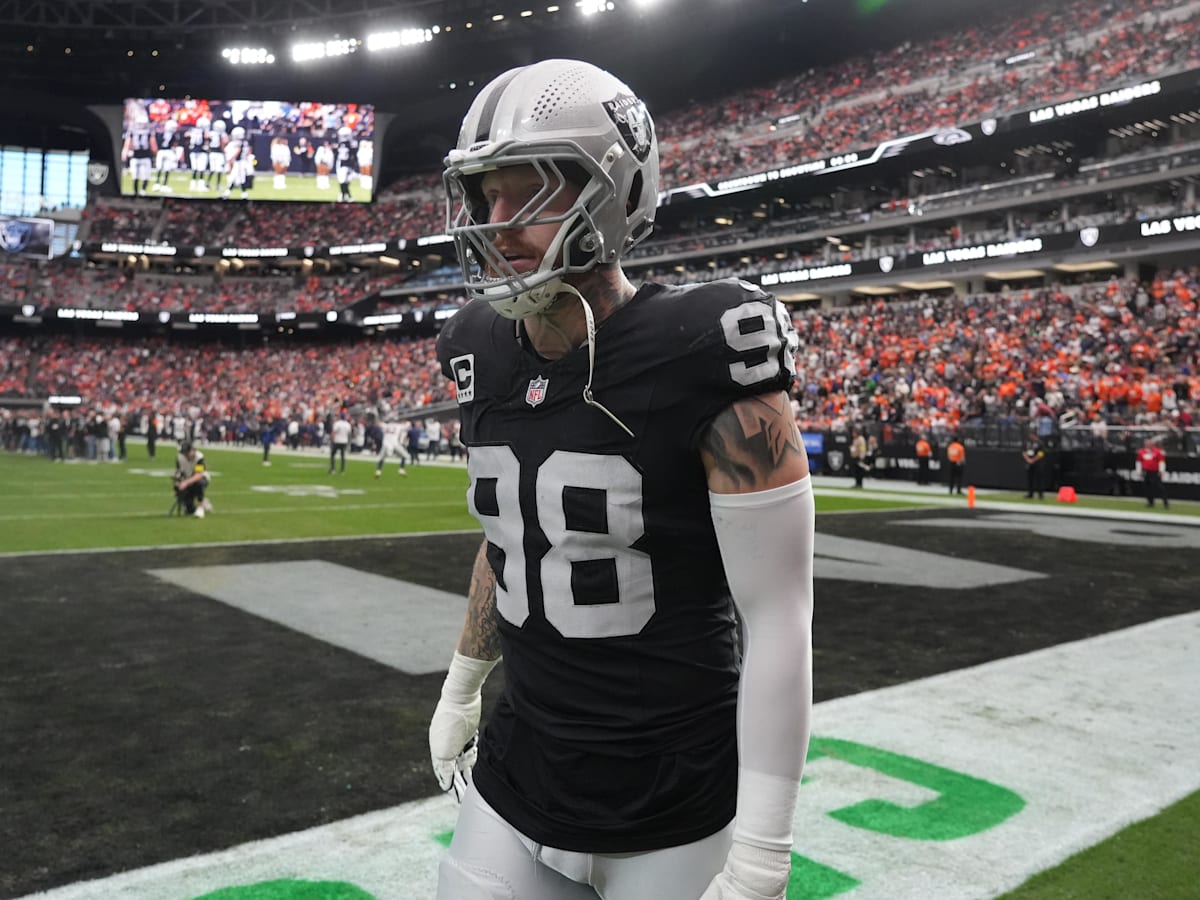
That’s exactly why the numbers matter.
Crosby’s time with the Las Vegas Raiders appears to be nearing its end. After a rocky close to the 2025 season and mounting reports of frustration, the idea of a trade has shifted from speculation to serious league-wide discussion.
With 69.5 career sacks, five Pro Bowl selections, and a reputation as one of football’s most relentless defenders, Crosby wouldn’t just upgrade a roster — he would redefine it.
Detroit knows that.
The Lions already have a cornerstone in Hutchinson, but finding a consistent threat on the opposite edge has been a lingering problem. Add Crosby, and protections change overnight. Quarterbacks don’t step up. Offenses don’t breathe. Games tilt.
But elite players don’t arrive quietly — especially on the cap sheet.
Crosby is set to earn $30.7 million in 2026, with $30 million guaranteed. After that, a three-year, $106.5 million extension kicks in, bringing cap hits of nearly $30 million per season through 2029. While none of the money beyond 2026 is currently guaranteed, his 2027 salary becomes fully guaranteed as early as March.
That timeline matters.
Detroit enters 2026 already in the red, projected at roughly -$13 million in effective cap space. This isn’t a team swimming in flexibility. Extensions handed out to homegrown talent have tightened the books — and more are coming. Jahmyr Gibbs. Sam LaPorta. Brian Branch. Jack Campbell. The core that made Detroit dangerous is about to get expensive.
Adding Crosby wouldn’t break the Lions. But it would force choices.
From Las Vegas’ perspective, the trade is clean. The Raiders would absorb roughly $5 million in dead cap in 2026 and walk away with no future penalties. That makes a deal financially painless for them — and shifts all long-term risk to the acquiring team.
For Detroit, the risk is more subtle.
The Lions do regain breathing room in later seasons. Projections show nearly $49.5 million in cap space in 2027 and close to $110 million in 2028. That future flexibility makes a Crosby deal possible. Restructures. Backloaded bonuses. Strategic cuts. The math can be made to work.
The question isn’t can it work.
It’s what gets sacrificed to make it work.
Crosby would command resources typically reserved for franchise pillars. Committing that level of money to a second edge rusher would reshape Detroit’s payroll philosophy — potentially pushing difficult decisions down the road when extensions for their young stars come due.
And yet, windows don’t stay open forever.

The Lions are no longer building. They’re contending. In that phase, cap purity matters less than impact. Crosby would instantly elevate a defense that already scares teams — and might be the missing piece that turns playoff runs into Super Bowl appearances.
General manager Brad Holmes has built his reputation on patience and precision. Trading for Crosby would represent a different kind of bet: urgency over restraint, certainty over flexibility.
The football argument is obvious.
The financial one is murkier.
And that’s why this potential trade feels less like a rumor and more like a referendum — not just on Maxx Crosby, but on how aggressive Detroit is willing to be while the door is still open.
Because if the Lions believe they’re one piece away, the cap may not stop them.
It may just force them to decide what they’re willing to live without.
Leave a Reply