The Patriots had just clinched a Super Bowl berth.
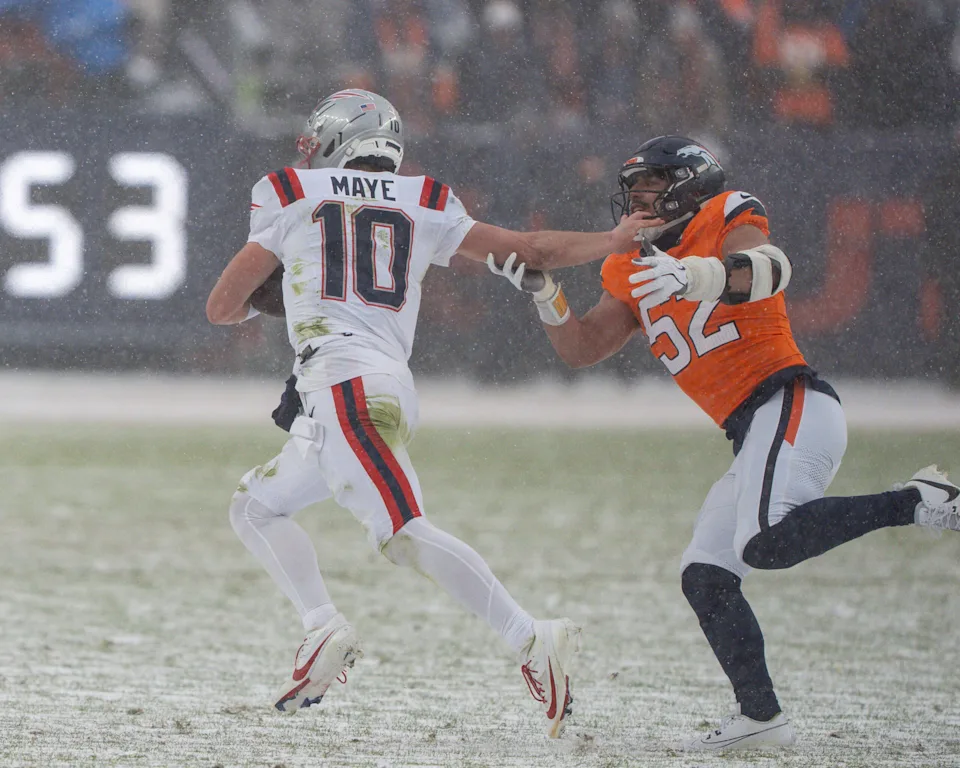
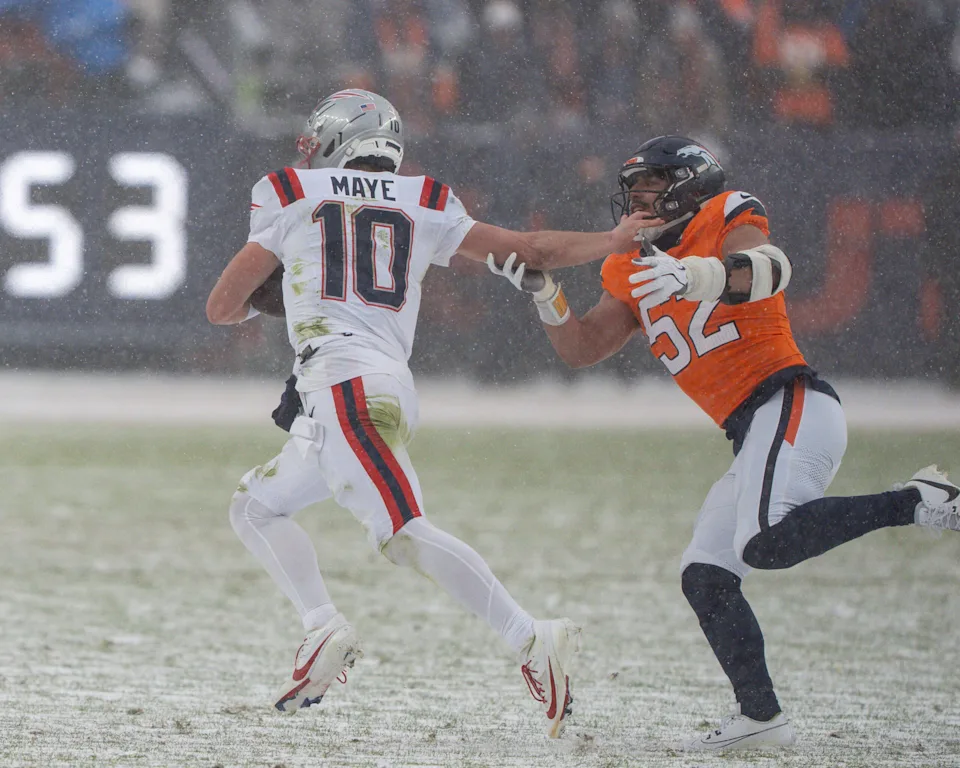
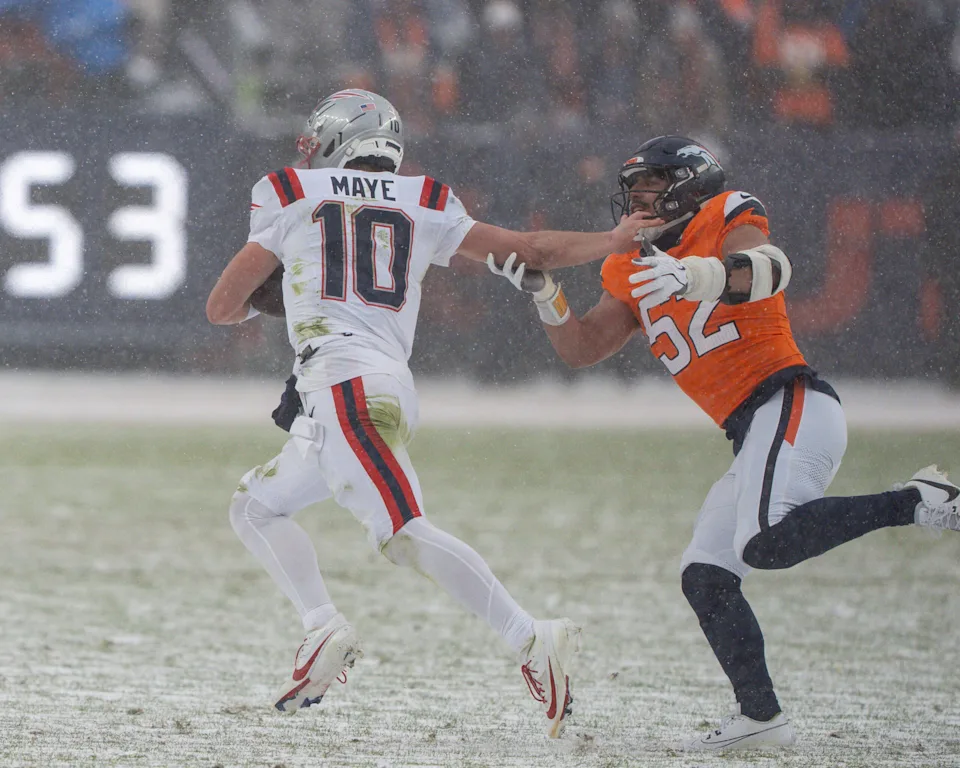
Snow still fell at Empower Field. Teammates celebrated. Confetti mixed with breath clouds in the cold Denver air. For New England, the moment marked the end of a stunning turnaround and the beginning of something historic.
Then the cameras zoomed in — and everything shifted.
In a short Instagram Reel shared by the NFL, quarterback Drake Maye reunited with his wife, Ann Michael, on the field moments after the 10–7 AFC Championship win. She rushed toward him, visibly emotional, wrapping him in hugs as she celebrated what the night meant.
Maye responded with a brief embrace — and a gentle pat on her back.
That was it.
Within hours, the internet had opinions.
To some viewers, the moment felt off. Comment sections filled quickly with speculation, dissecting body language frame by frame. Words like “awkward,” “cold,” and “distant” appeared alongside claims that Maye looked disengaged at the biggest moment of his career.
“This was hard to watch,” one comment read. “She was so excited for him.”
Others went further, suggesting his reaction signaled discomfort or disinterest — interpretations that gained traction simply because the clip was so short and the moment so exposed.
But not everyone agreed.
A sizable group rushed to Maye’s defense, pointing out the obvious context many seemed to ignore. It was freezing. Snowy. Overstimulating. The 23-year-old quarterback had just survived one of the most intense games of his life and was moments away from the realization that his season wasn’t over — it was heading to the Super Bowl.
Some noted that Maye appeared similarly subdued during postgame interviews, suggesting emotional overload rather than emotional distance.
“He’s locked in,” one fan wrote. “He knows there’s still one more game.”
Others offered a deeper perspective.
Maye and Ann Michael have been together since middle school. They announced their engagement a year ago and married just months later. This isn’t a new relationship navigating a spotlight for the first time — it’s one that has grown quietly over years, long before cameras and MVP conversations entered the picture.
“She knows his game-day persona,” one commenter explained. “You don’t last that long without understanding each other’s rhythms.”
And Ann herself seemed entirely unfazed by the online noise.
Shortly after the debate began, she posted her own message on Instagram — one overflowing with pride and excitement. She celebrated the moment openly, praised her husband’s journey, and made it clear how much the achievement meant to her.
No defensiveness. No clarification. Just joy.
That contrast may be the most telling detail of all.
In an era where every public moment is slowed down, looped, and analyzed, nuance often disappears. A pat on the back becomes a symbol. A pause becomes a narrative. And silence invites projection.
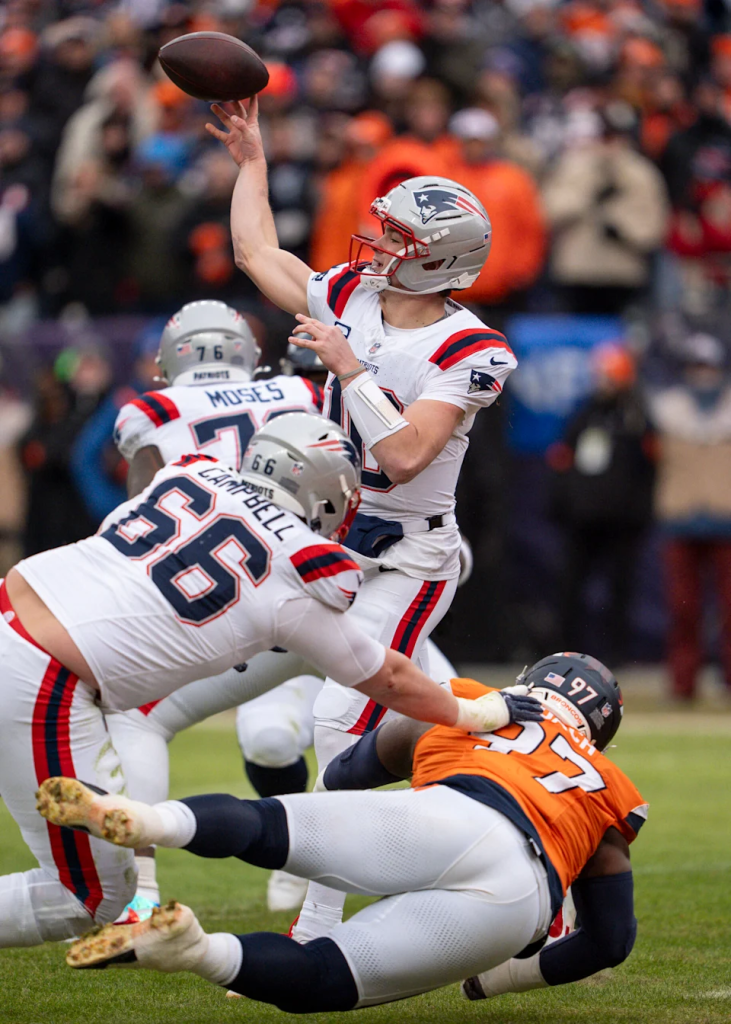
What viewers saw was less than ten seconds of a night defined by pressure, exhaustion, and magnitude. What they didn’t see was everything surrounding it — the years, the grind, the relationship built outside the frame.
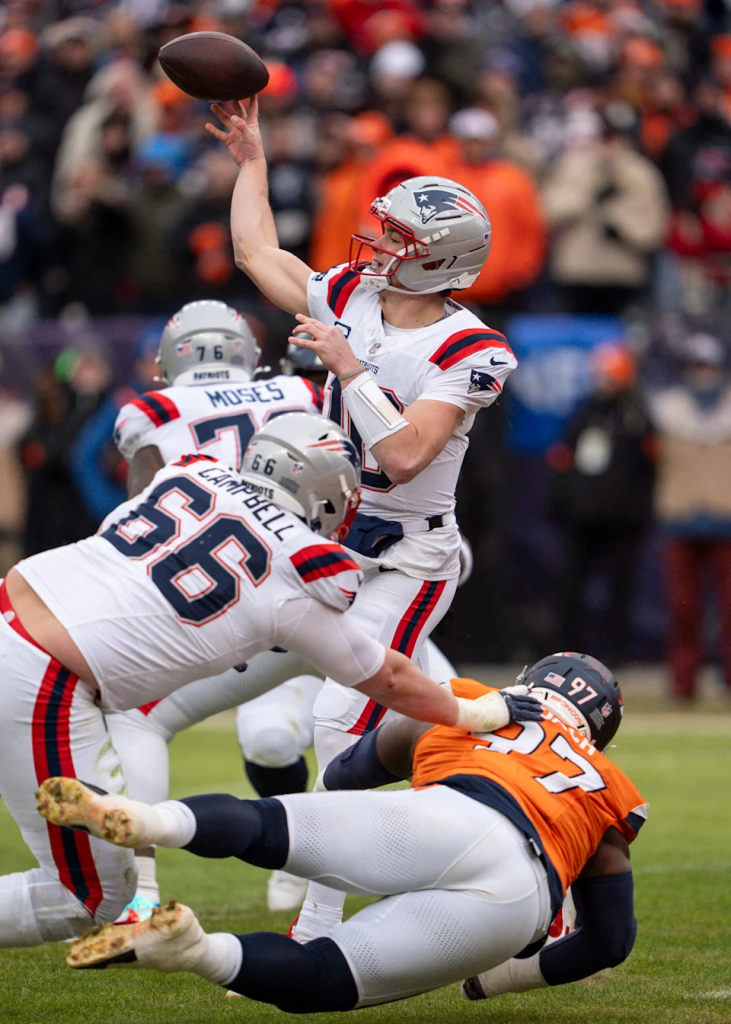
As the Patriots prepare for Super Bowl LX against the Seattle Seahawks, scrutiny around Drake Maye will only intensify. Every throw, every glance, every interaction will be amplified.
But moments like this raise a bigger question.
When success arrives, do we allow athletes to process it in their own way — or do we demand a performance even in their most human seconds?
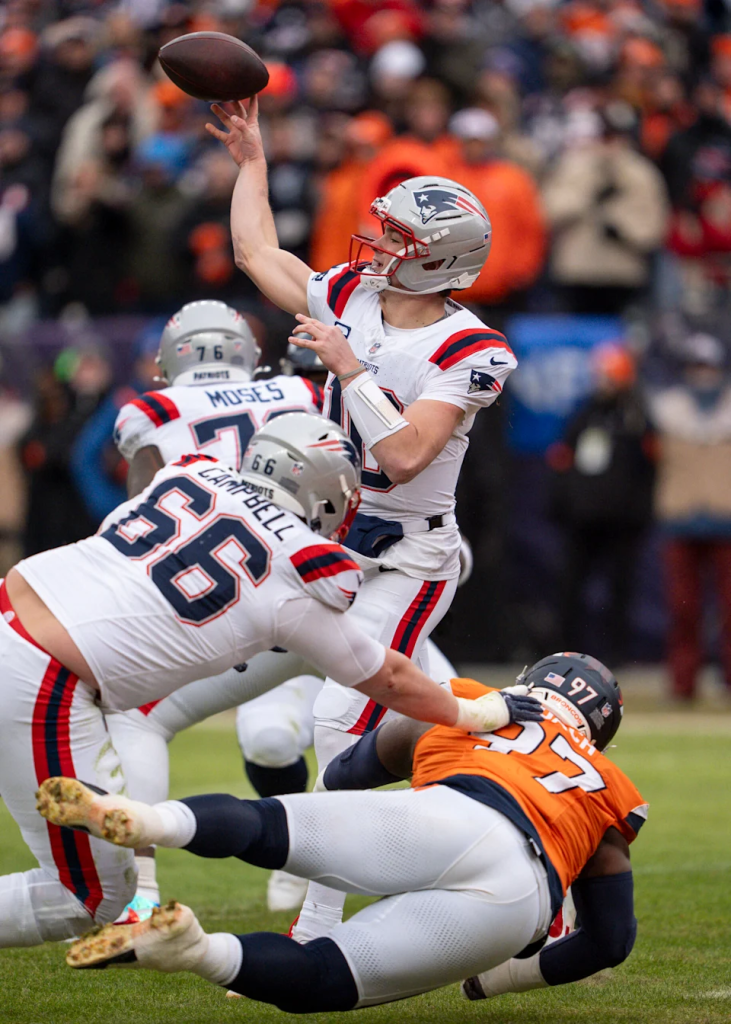
Because sometimes, the quietest reactions aren’t signs of distance.
They’re signs of disbelief.
Leave a Reply