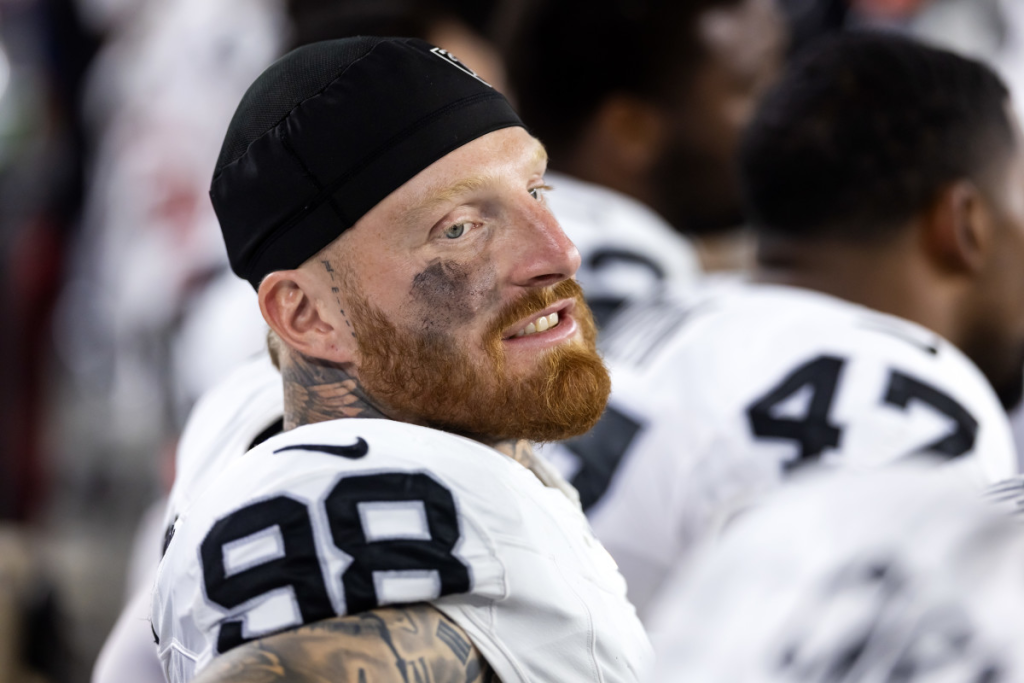
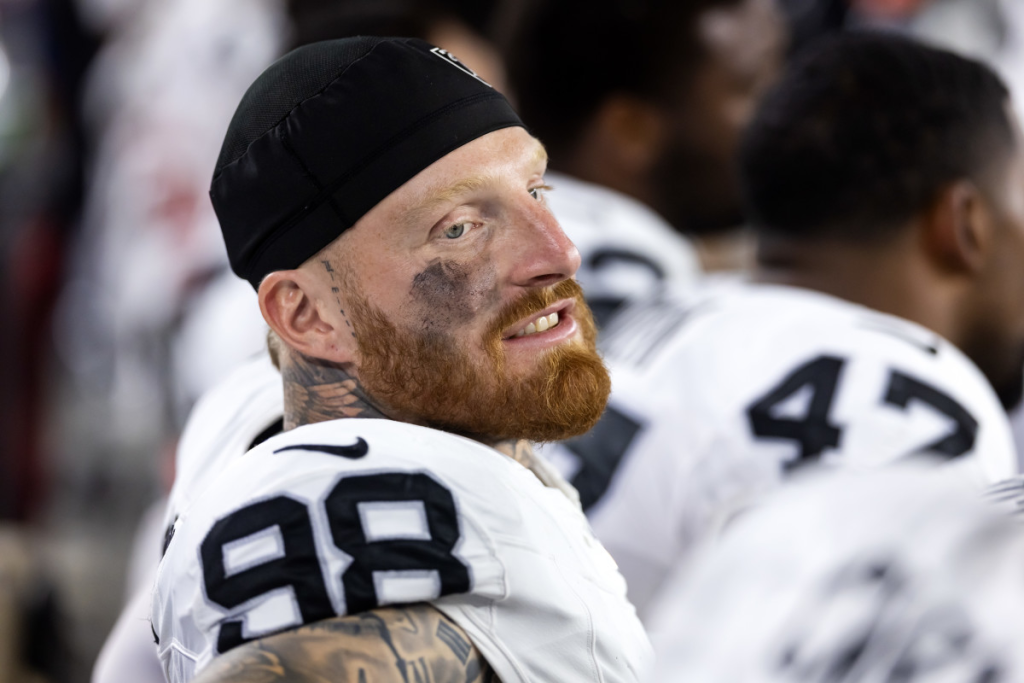
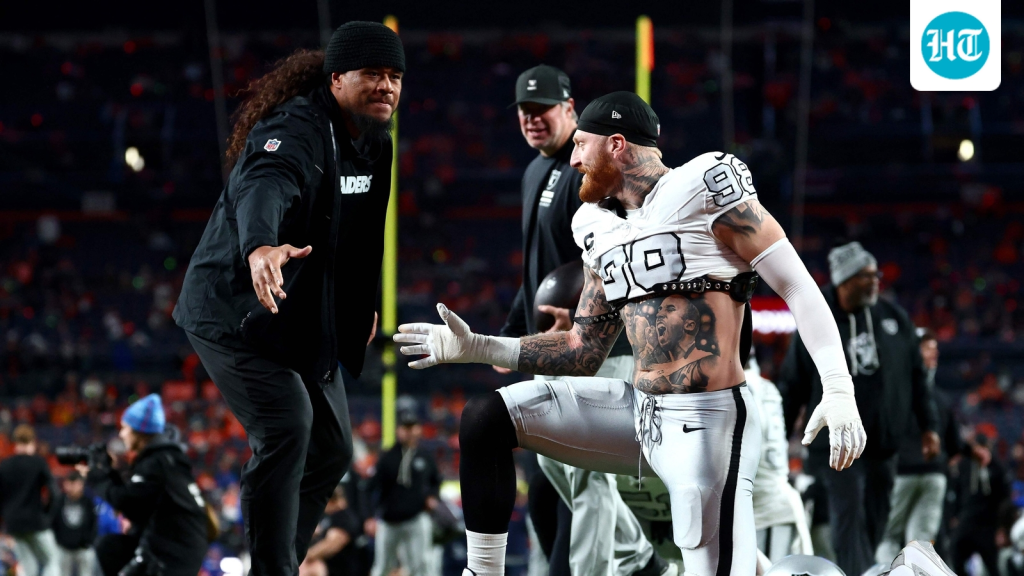
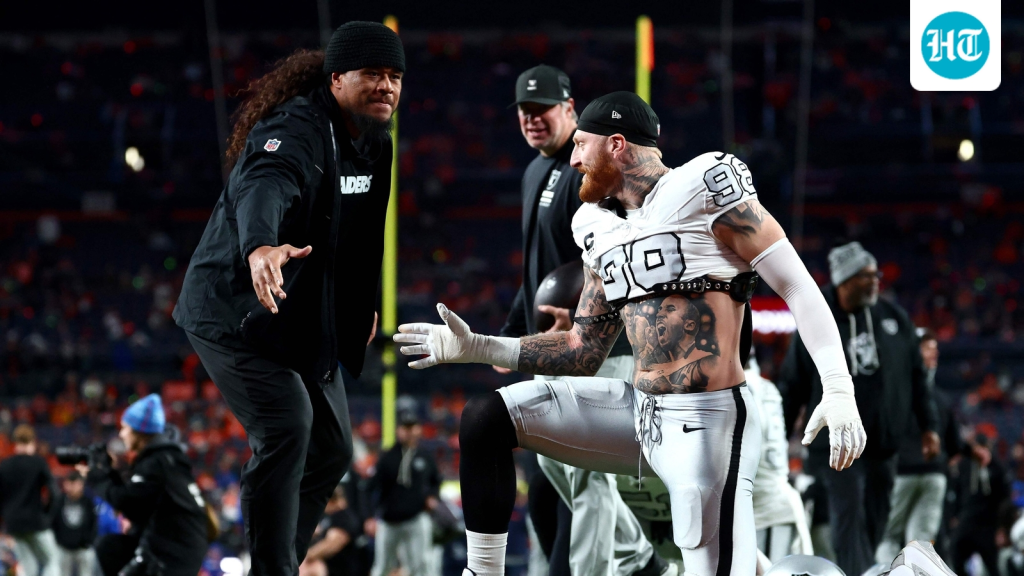
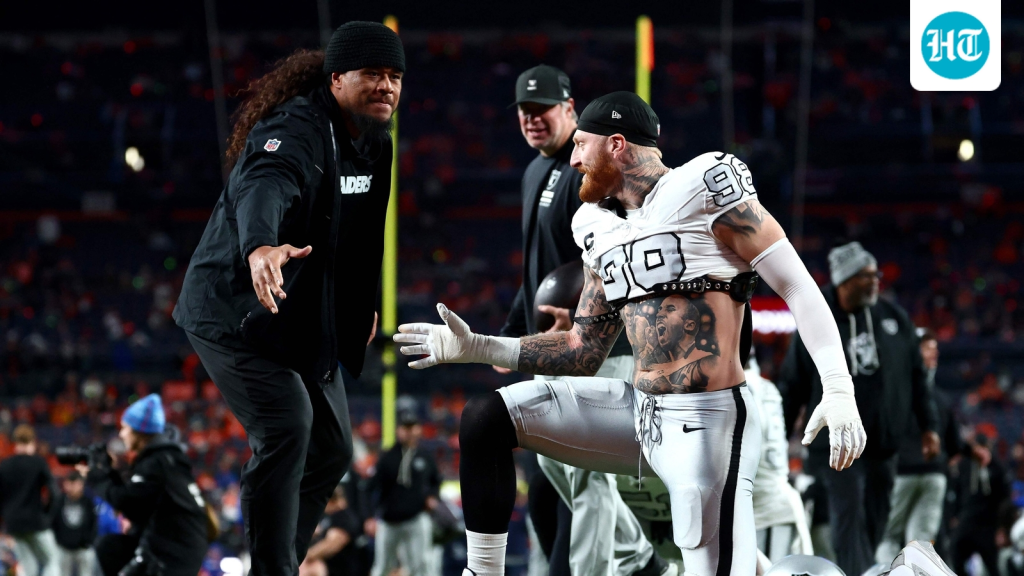
Maxx Crosby didn’t hedge. He didn’t soften the landing. He didn’t pretend this was a gradual shift.
When news broke that the Los Angeles Clippers had traded James Harden to the Cleveland Cavaliers, the Raiders’ star pass rusher made his feelings unmistakably clear—and surprisingly personal.
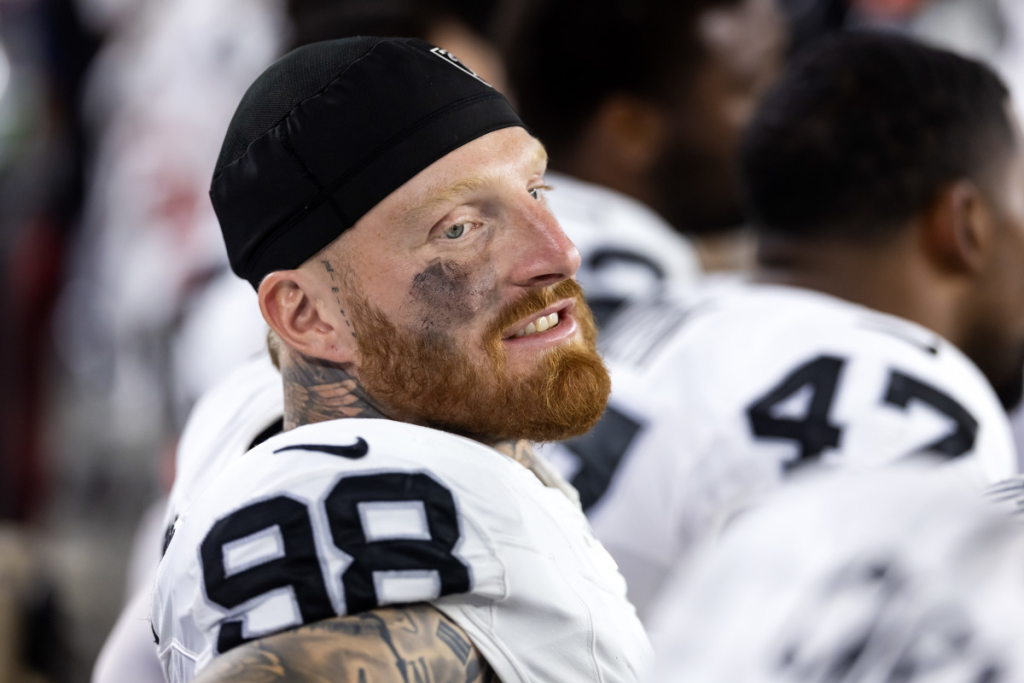
“Never thought I would be rooting for the Cavs ever… LFG!!!!! Ring time!” Crosby wrote on social media, tagging Harden directly.
For someone long associated with Clippers fandom, the pivot was immediate. And telling.
The trade itself was seismic. Los Angeles sent Harden to Cleveland in exchange for Darius Garland and a second-round pick in the 2026 NBA Draft.
From a basketball standpoint, the deal makes sense on both sides. The Clippers gain a younger, controllable asset in Garland, whose contract runs through the 2027–28 season.
The Cavaliers, meanwhile, acquire a proven superstar capable of easing the massive offensive burden currently resting on Donovan Mitchell.
But Crosby wasn’t breaking down cap tables or usage rates.
He was reacting to a feeling.
Harden, now 36, has built one of the most accomplished careers in modern NBA history—11 All-Star selections, an MVP award, and a resume full of deep playoff runs.
The one thing missing has always been the same: a championship ring.
Crosby’s message wasn’t about Cleveland. It was about closure.
For years, Harden’s playoff shortcomings have been used as shorthand to diminish his impact.
Fair or not, the narrative followed him from Houston to Brooklyn to Philadelphia to Los Angeles. Each stop promised “this might be it.” Each time, it wasn’t.
Now, with Harden heading to a Cavaliers team built around Mitchell’s explosive scoring and playoff urgency, the window feels different. Not guaranteed—but real.
That’s where Crosby’s reaction lands.
Athletes recognize other athletes’ unfinished business. Crosby knows what it means to chase something relentlessly, to feel close without reaching it.
He’s built his own NFL reputation on relentless effort and personal accountability, not comfort or consensus.
So when Harden moved again—this time to a situation that feels less glamorous but more focused—Crosby noticed.
The irony isn’t lost here. Cleveland isn’t a traditional destination for star-chasing. It’s pragmatic. Structured. Quietly competitive. Harden doesn’t arrive as a savior.
He arrives as a complement—someone who can reduce pressure, extend possessions, and make life easier for a star already carrying a heavy load.
That might be exactly why this feels different.
Statistically, Harden is still producing. He’s averaging 25.4 points, 8.1 assists, and 4.8 rebounds this season, even if efficiency has dipped. Those numbers don’t scream decline. They suggest transition.
Crosby doesn’t need the analytics to believe.
His message captured something fans often miss: loyalty in sports isn’t always about teams. Sometimes, it’s about journeys.
About wanting to see someone who’s given everything finally get the one thing missing.
So yes, Maxx Crosby may be done cheering for the Clippers. Not out of spite. Not out of betrayal.
But because James Harden’s story just moved somewhere new—and Crosby wants to see how it ends.
Leave a Reply