It didn’t come with a press conference or a dramatic leak. Just a report, dropped quietly, at a moment when most front offices were already knee-deep in draft prep.
The Minnesota Vikings fired general manager Kwesi Adofo-Mensah—and in doing so, unintentionally reopened a debate many thought was settled years ago.
Because this wasn’t just a Vikings story. It was a mirror.
Not long ago, the prevailing wisdom around the NFC North was clear: Minnesota had landed the “smart” GM, the analytics visionary, while Chicago had settled.
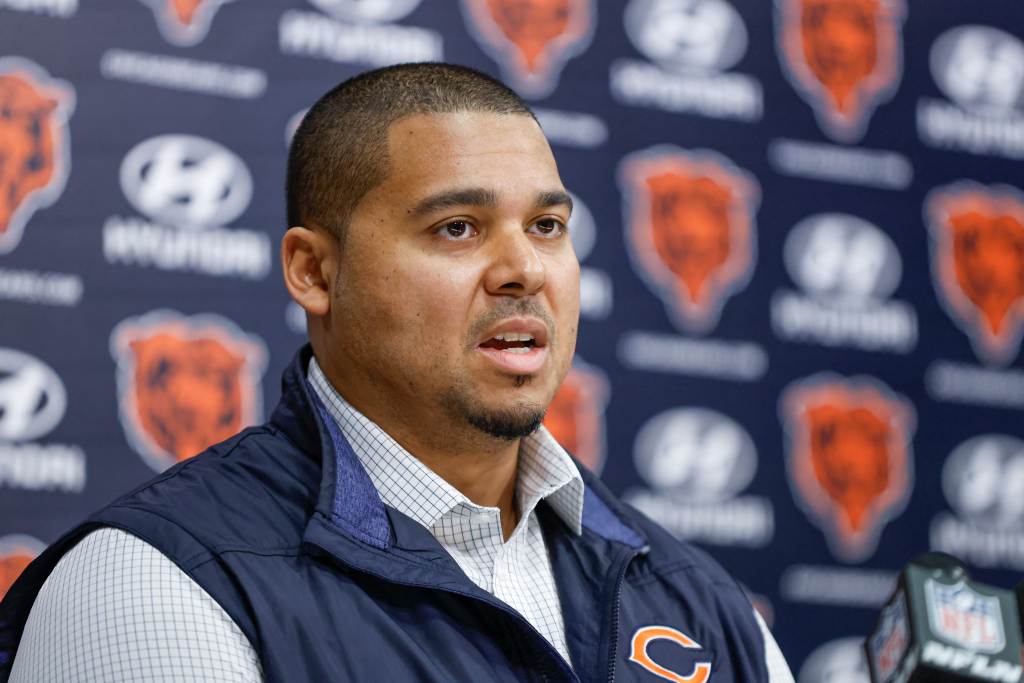
When the Bears hired Ryan Poles instead of Adofo-Mensah, criticism followed quickly and confidently. The assumption was that Chicago chose convention over innovation—and would pay for it.
Now, the roles feel uncomfortably reversed.
The timing of Adofo-Mensah’s dismissal is what makes it linger. Personnel season is already underway. The Senior Bowl has begun.
The league calendar doesn’t pause for philosophical resets. And yet Minnesota decided this was the moment to pull the plug, entrusting draft control to an interim solution while ownership figures out what went wrong.
What went wrong, at least on the surface, is hard to ignore.
A 14-win season now feels like ancient history. Sam Darnold is gone—thriving elsewhere. The Vikings’ present quarterback situation remains unsettled, with J.J. McCarthy entering Year 3 carrying more interceptions than touchdowns. Nine wins. No playoffs. And suddenly, accountability had a name.
Meanwhile, in Chicago, something very different has been happening—almost unnoticed.
The Bears aren’t flawless. But they are coherent. They have alignment between head coach and general manager, something that often sounds abstract until you watch a rival unravel without it.
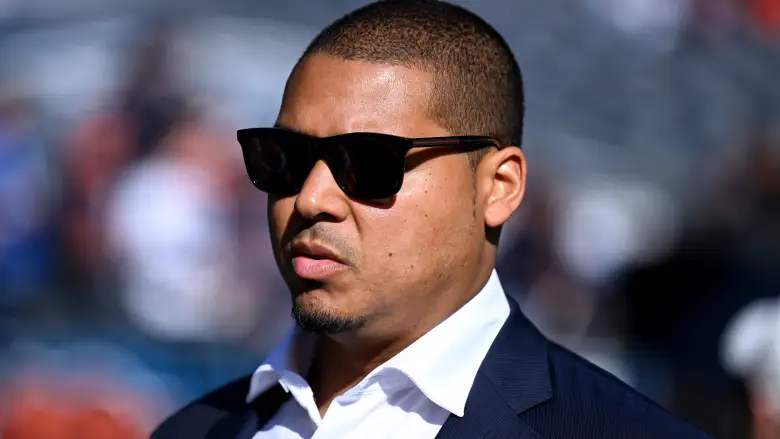
Ryan Poles hasn’t operated as an ego-driven executive chasing headlines. He’s worked as a partner, allowing coaching input to shape personnel decisions rather than resisting it.
That approach quietly produced a draft class featuring Colston Loveland, Luther Burden III, Ozzy Trapilo, and Kyle Monangai—players who fit a clear vision rather than a spreadsheet alone.
The results haven’t been perfect, but they’ve been intentional. And in the NFL, intention matters.
There’s an irony here that’s hard to miss. Had Ian Cunningham remained in Chicago, Minnesota might have been eyeing him now. Instead, he’s gone. The Bears’ structure stayed intact. The Vikings’ didn’t.
What makes this moment uncomfortable for critics is that it forces a reassessment—not just of two general managers, but of how success is defined.
Analytics matter. So does collaboration. So does timing. And so does knowing when theory stops matching reality.
None of this guarantees long-term success for the Bears. They still need defensive reinforcements. They still need consistency.
But compared to the division rival now searching for answers with an interim GM and unresolved quarterback questions, Chicago’s situation suddenly looks… stable.
That’s not something Bears fans hear often.
Adofo-Mensah’s firing doesn’t prove Ryan Poles was always the right choice. But it does dismantle the certainty with which that decision was once criticized.
The narrative has shifted—from mockery to reconsideration, from “missed opportunity” to “quietly competent.”
And in a league where front offices rarely get patience, that shift might be the most telling outcome of all.
Leave a Reply