Mike Vrabel didn’t walk onto the NFL Honors stage. There was no wave to the crowd, no trophy lift under the lights, no pause for applause.

Instead, his voice filled the room.
As the New England Patriots prepare for Super Bowl 60, Vrabel stayed with his team — but he still made sure his message arrived.
When he was named the AP NFL Coach of the Year on Thursday night, a recorded speech played for those in attendance. It wasn’t polished for spectacle. It was deliberate. And it revealed more about the Patriots’ transformation than the award itself.
“My name will go on this award,” Vrabel said, “but this award belongs to a building.”
That framing mattered.
In one sentence, Vrabel shifted the spotlight away from himself and onto the ecosystem he’s built in his first season as head coach. Staff. Players. Belief. Buy-in. The words echoed themes he’s emphasized since the spring — long before wins made them easier to hear.
He spoke directly to the locker room, crediting players who “believed when they couldn’t always see it,” and who committed when the process wasn’t comfortable. It was a quiet acknowledgment that this turnaround wasn’t linear, clean, or guaranteed.
It was earned.
Vrabel’s win caps a dramatic first year in New England — a 180-degree shift from uncertainty to legitimacy. He beat out some of the league’s most respected minds for the award, including Ben Johnson, Kyle Shanahan, Liam Coen, and Seattle head coach Mike Macdonald — the same coach he’ll face on Sunday.
That symmetry didn’t go unnoticed.
But what stood out most was who Vrabel thanked next.
He called out Patriots owner Robert Kraft, team president Jonathan Kraft, and vice president of football operations and strategy John Streicher — figures rarely spotlighted in emotional terms. Vrabel didn’t thank them for titles or authority. He thanked them for impact.
“The world may know who you are,” he said, “but they’ll never know the impact that you made on our team, my family, and obviously me.”
That line landed softly — and lingered.
For years, the Patriots were defined by discipline, hierarchy, and silence. Praise was rare. Vulnerability rarer. Vrabel hasn’t erased that legacy — but he’s changed how it feels to be inside it.
This award doesn’t celebrate schematics alone. It validates a culture shift that’s been building quietly since April. Vrabel has spoken often about trust, protection, and pride — ideas that sounded abstract at first. Now they have proof attached.
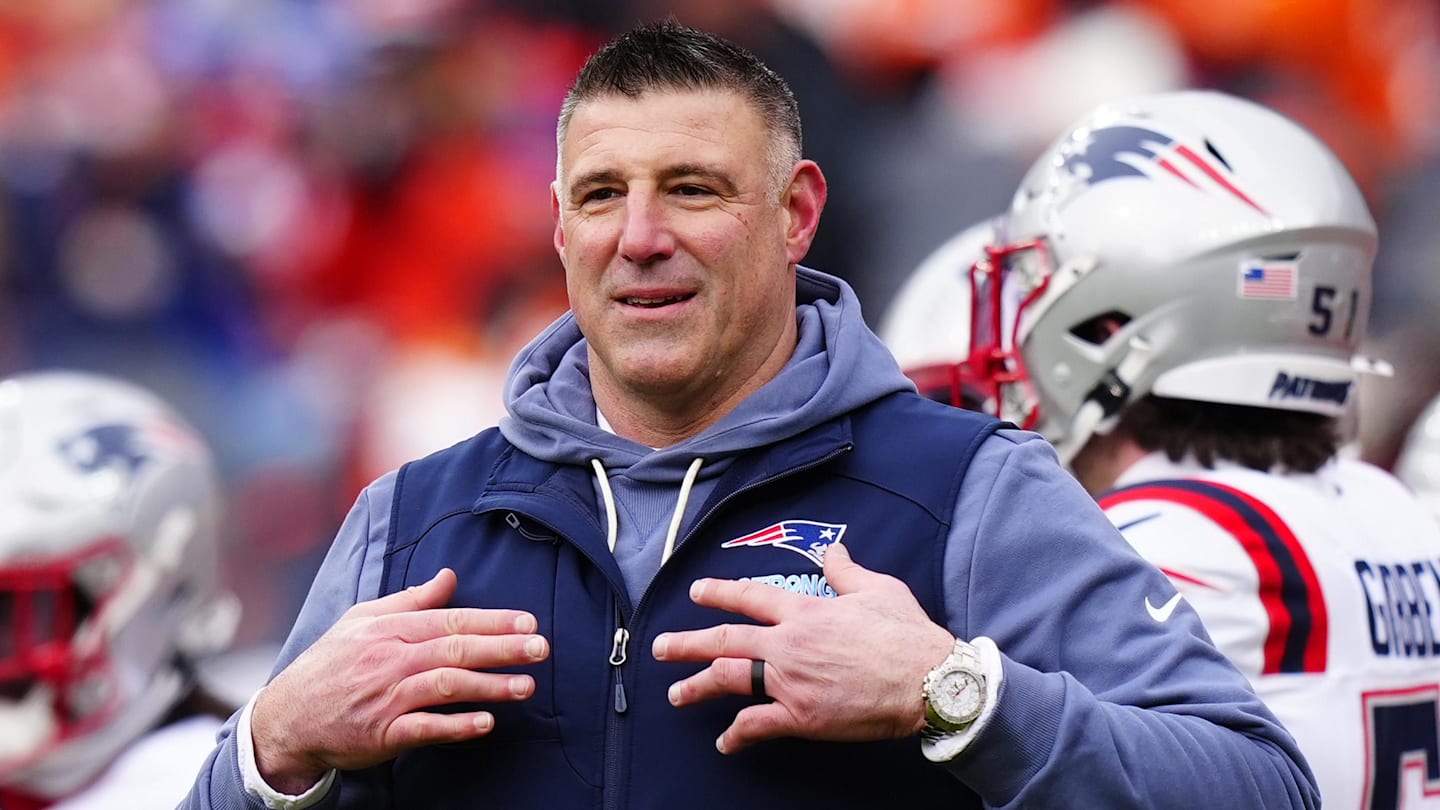
What makes the moment heavier is the timing.
Vrabel accepted Coach of the Year without stopping his routine. Without leaving his team. Without interrupting preparation for the biggest game of the season. That absence wasn’t accidental — it reinforced the same point his speech made.
This isn’t about him.
It’s about the group.
And that philosophy has carried New England back to the Super Bowl faster than almost anyone predicted. The Patriots aren’t just winning — they’re visibly connected. Players speak openly about care. Coaches share credit. Success feels communal rather than enforced.
That doesn’t guarantee a Lombardi Trophy on Sunday.
But it explains how the Patriots got here.
Coach of the Year awards often serve as punctuation marks — recognition at the end of a sentence. In Vrabel’s case, it feels more like a paragraph break. A pause to acknowledge what’s been built before turning the page.
Because when a coach wins an award without standing on stage to accept it, the message is clear.
The work isn’t done.
Leave a Reply