Padres fans aren’t confused anymore.
Confusion implies uncertainty. What they’re feeling now is closer to recognition.
Another offseason, another stretch of waiting, and another moment where the organization asks its fan base to trust the process without clearly explaining what the process actually is.
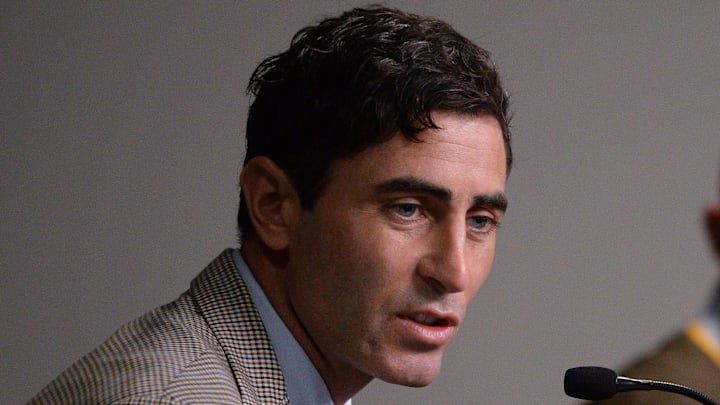
This time, the spark came from just four words—casually delivered, but heavy with implication.
“We’ll figure it out later.”
A.J. Preller didn’t mean them as a warning. But they landed like one.
San Diego’s offseason has unfolded in a way that’s become uncomfortably familiar. Talent has quietly drifted out. Depth has thinned.
The farm system, once treated like currency, now feels more like a safety net that’s already been stretched too far.
Fans understand the context: the Padres are operating under financial constraints, in a league where rivals seem increasingly comfortable spending without blinking.
Understanding it doesn’t make it easier to accept.
Preller’s comments to the Associated Press were measured, even reasonable on the surface. He talked about motivated players.
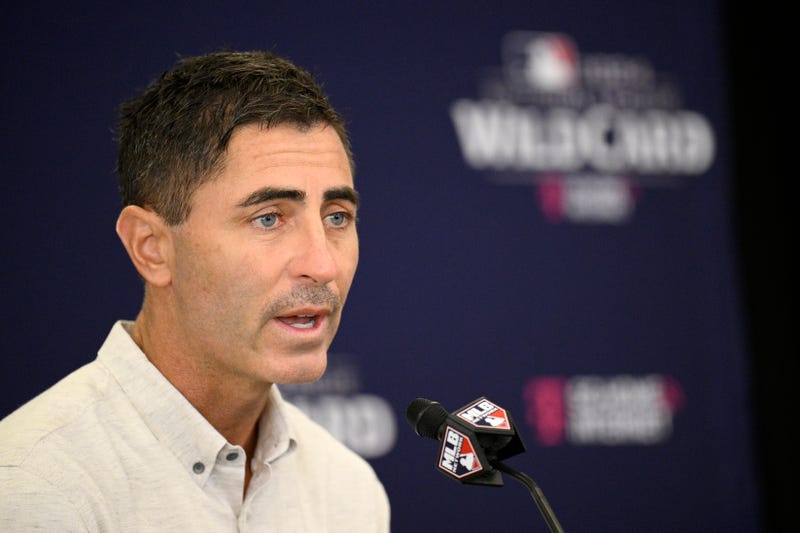
About deals lining up from a price standpoint. About value. About hopefully adding pieces in the next couple of weeks. None of it was reckless. None of it was wrong.
But none of it sounded urgent either.
And that’s the part that stuck.
Because when a team with championship aspirations starts emphasizing motivation, affordability, and alignment, it sends a quiet message about where they’re shopping.
Not at the top of the market. Not where swagger and leverage live. But in the late stages of free agency, where players are still available for reasons that are rarely flattering.
That doesn’t mean the strategy can’t work. Some of the smartest offseason moves happen after the frenzy dies down, when emotion drains out of negotiations and front offices start finding inefficiencies.
Bargains exist. Value exists. The problem isn’t the concept.
It’s the timing.

Padres fans have already watched an entire offseason of restraint unfold. They’ve watched other NL teams get louder, deeper, more aggressive.
They’ve watched their own roster hold onto star power at the top while quietly losing the buffer that used to protect it.
The Manny Machado and Fernando Tatis Jr. era still carries credibility—but it no longer carries margin for error.
And that’s where “we’ll figure it out later” hits differently.
Later used to mean flexibility. Later used to mean options. Later used to mean a trade deadline bailout or a prospect pipeline ready to fill gaps.
Now, later feels thinner. More fragile. Like a placeholder instead of a plan.
Preller’s quote didn’t sound like panic. It sounded like acceptance. Acceptance that the Padres are shopping with constraints, not confidence.
That every move has to be justified by price, not just fit. That urgency has been replaced by patience—not because patience is ideal, but because it’s necessary.
For a fan base that’s been asked to stay invested through roster churn, system depletion, and repeated recalibration, that’s a tough sell. Especially when rivals aren’t slowing down to wait with them.
Spring Training is approaching fast. The window to shift the tone is closing. And while the Padres may still add useful players—maybe even impactful ones—the emotional gap is already there.
Because right now, fans aren’t hearing a promise.
They’re hearing a reminder of the reality they’ve been living all offseason.
And the longer the room feels like it’s being asked to wait quietly, the harder it becomes to believe that “later” is actually coming with answers.
Leave a Reply