The image of the Dodgers celebrating on Toronto’s field still stings.
Champagne. Confetti. A reminder of how thin the margin really is between “almost” and “champions.” And yet, standing just a few steps away from that moment was something the Blue Jays can’t afford to overlook.
George Springer didn’t fade in 2025.

He detonated.
At 36 years old—an age when most outfielders are negotiating decline or reinvention—Springer delivered one of the most efficient offensive seasons in baseball. A .309 batting average. A staggering .959 OPS. Thirty-two home runs. Eighty-four RBIs.
That isn’t nostalgia.
That’s dominance.

Springer didn’t just silence the critics who whispered that his best days were behind him. He erased the conversation entirely.
When younger bats went cold, he steadied the lineup. When pressure mounted, he looked like someone who had been there before—because he has.
Now comes the uncomfortable part.
Springer is entering his walk year.
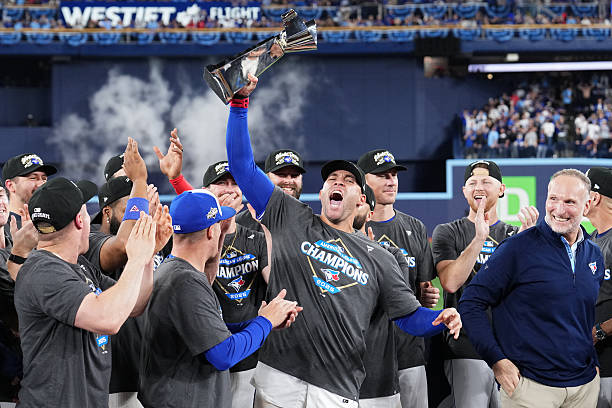
And suddenly, the Blue Jays’ front office isn’t just managing contracts—they’re managing identity. Because players like Springer don’t leave quietly. They take something with them.
On paper, the argument against an extension is obvious. A 37-year-old outfielder. Injury history. Aging curves that usually don’t bend kindly. The risk is real, and Ross Atkins knows it.
But so is the context.

Springer isn’t aging like a normal player. He never has. His 2025 season wasn’t propped up by luck or short-term variance—it was built on health, timing, and command of the strike zone. He finished third in all of MLB in OPS. That’s not survivorship bias. That’s elite performance.
The smart money isn’t on a long-term deal. It never was.
The smarter play is a short, aggressive extension—high AAV, low years. Two seasons. A clear window. A message to the clubhouse that this run still matters.

Because Springer is more than numbers.
He’s the voice that carries weight in October. The presence that settles dugouts. The player who’s already stood on the mountain top and knows how thin the air gets. You don’t replace that with a prospect projection or a spreadsheet.
If the Blue Jays let him play out the season without an offer, they aren’t just risking a bidding war. They’re risking the slow erosion of belief—the kind that doesn’t show up in WAR but shows up when it matters most.

Springer loves this city. The fans have finally seen the version of him they were promised: healthy, explosive, unapologetically clutch. Letting that walk out the door—especially after a season like this—would feel less like patience and more like hesitation.
Toronto isn’t rebuilding. It’s knocking.
And when you’re inches from a trophy, you don’t pull your hand back from the doorknob.
The question facing the Blue Jays isn’t whether George Springer will age.
It’s whether this franchise can afford to lose the heartbeat of a team that just proved it’s still alive.
Leave a Reply