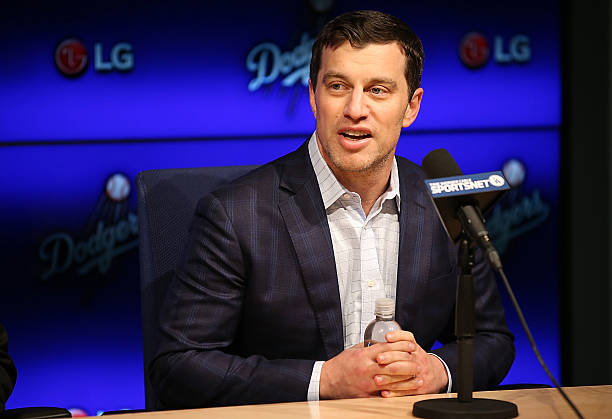
Andrew Friedman chose his words carefully.
Supportive. Partnership. Balance.
On the surface, the Los Angeles Dodgers’ stance on the 2026 World Baseball Classic sounds straightforward: players feel immense pride representing their countries, and the organization respects that.
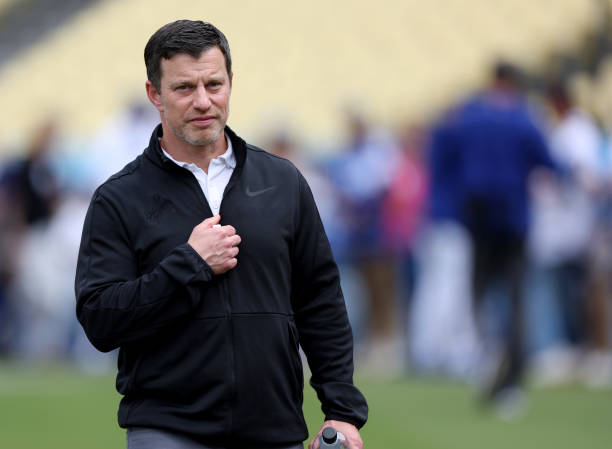
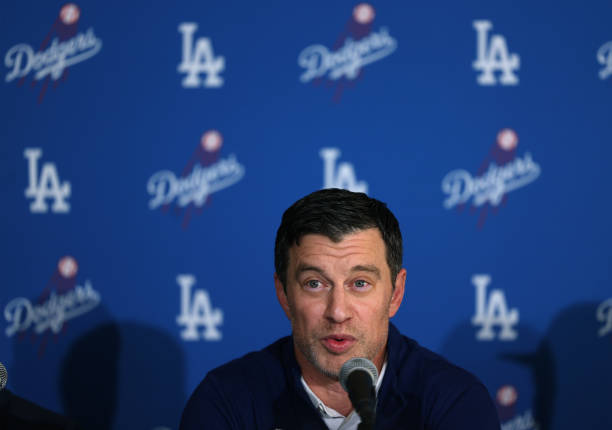
Friedman said as much while addressing the media, emphasizing conversations, collaboration, and long-term planning.
But beneath the diplomacy lies a more complex reality — one shaped by October ambitions and quiet constraints.
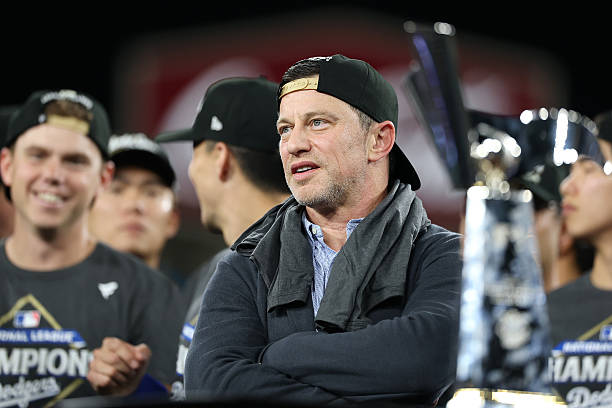
“We have designs to play through October,” Friedman said, framing the challenge not as permission, but as logistics.
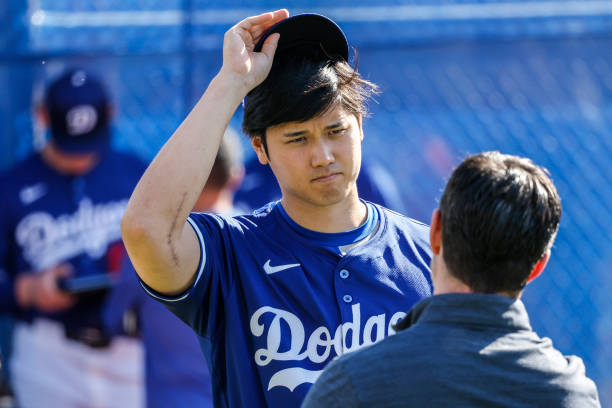
February and March matter, he implied, because the Dodgers don’t view the WBC as a standalone event. They see it as part of a longer arc that ends with championships.
That framing matters.
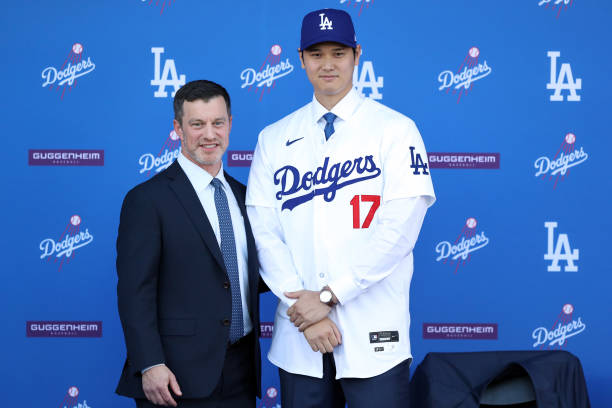
The Dodgers will send stars to the WBC. Shohei Ohtani and Yoshinobu Yamamoto are back with Team Japan. Will Smith will represent Team USA.
Clayton Kershaw, newly retired from MLB, will make his first WBC appearance — a symbolic, low-risk inclusion.
But the absences are just as revealing.
Roki Sasaki isn’t going, after spending much of 2025 on the injured list. Mookie Betts is staying home for a reason that transcends baseball: the birth of his child.
Miguel Rojas is out due to insurance complications. Each case is reasonable. Together, they form a pattern.
This isn’t about blocking players.
It’s about filtering risk.
Friedman stressed “really good conversations” with players, and there’s no reason to doubt that. Yet when an organization as powerful as the Dodgers talks about partnership, it’s never between equals.
The team holds the long view. The players feel national pride. Somewhere in the middle, decisions quietly narrow.
The result is a version of support that’s conditional — flexible in tone, firm in outcome.
That approach reflects the Dodgers’ broader philosophy. They don’t need to dominate headlines in March. They need healthy stars in October. Every WBC decision is weighed against that singular goal.
Consider the contrast. Yamamoto will pitch, confident in his preparation. Ohtani will participate — but not on the mound. Sasaki stays back entirely. Different stars, different thresholds, same logic.
The Dodgers aren’t sending a message publicly. But operationally, they’re making it clear: participation must align with readiness, recovery, and role.
Family decisions underscore that reality even more sharply. Betts’ candid remark about his wife threatening divorce if he left during the birth of their child went viral not because it was funny — but because it highlighted something baseball often overlooks.
Life happens. And even the most powerful franchises must yield to it.
Friedman’s comments framed these realities as balance. In practice, balance means trade-offs.
The Dodgers aren’t alone in this, but they’re more visible than anyone else.
With the deepest roster in baseball and championship expectations baked in, every absence, every appearance, every pitch in the WBC will be interpreted through the lens of risk management.
That scrutiny is the cost of dominance.
More Dodgers could still join the tournament. Rosters aren’t finalized. But the framework is set.
Participation is earned not just through talent, but through timing, health, and alignment with the organization’s endgame.
In that sense, the Dodgers aren’t fighting the WBC. They’re reshaping it — not with ultimatums, but with structure.
Andrew Friedman didn’t say “no.” He didn’t need to.
By talking about October, he made the priority unmistakable.
And as March approaches, that quiet hierarchy — country, club, career — will continue to guide who takes the field, and who stays back, no matter how supportive the language sounds.
Leave a Reply