Joe Thuney didn’t celebrate with a touchdown dance. He didn’t deliver a viral speech. In fact, the moment almost felt too quiet for what it represented.
But that’s fitting.
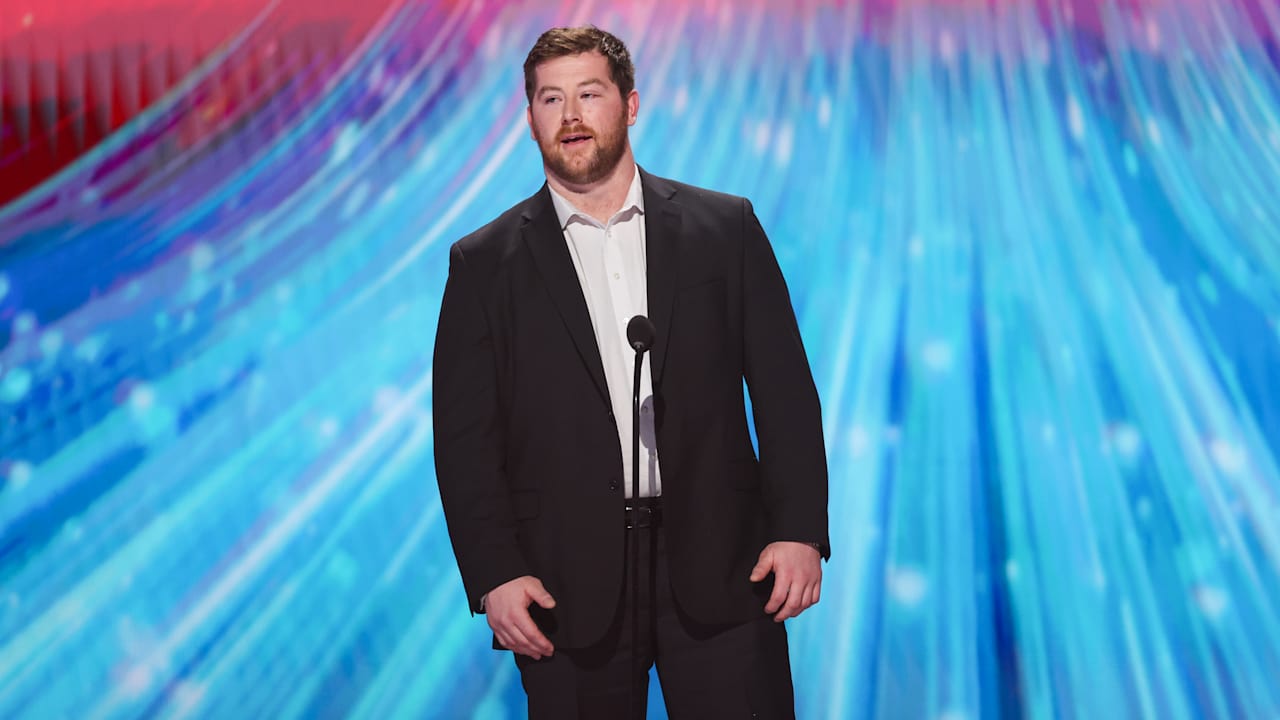
On Thursday night at NFL Honors, the Chicago Bears guard became the first-ever recipient of the NFL Protector of the Year Award — a brand-new honor designed to recognize individual excellence along the offensive line.
For a position group usually evaluated only through collective success, the award marked a shift in how value is acknowledged.
And Thuney was the obvious choice.
The list of nominees was stacked: Penei Sewell, Creed Humphrey, Quinn Meinerz, Garett Bolles, Aaron Brewer. All elite. All respected. Yet none of their teams reached the postseason. Chicago did — and the difference showed up where it rarely gets spotlighted.
Protection.
One year earlier, the Bears allowed a franchise-record 68 sacks. Caleb Williams was under siege. Development felt fragile. Confidence wavered. In 2025, that number dropped to 24 — a transformation so dramatic it bordered on implausible.
Thuney was the constant.
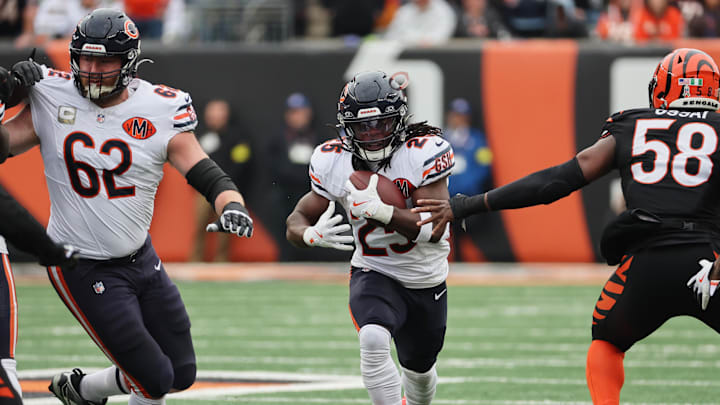
His presence didn’t just stabilize the line; it recalibrated it. With Thuney anchoring the interior, Williams set a Bears record for passing yards. The rushing offense leapt from 27th to third in the league. The unit didn’t just improve — it became functional, then formidable.
That’s why the voters mattered.
This award wasn’t handed out by media members or stat-driven analysts. It was decided by former NFL linemen — LeCharles Bentley, Jason Kelce, Orlando Pace, Andrew Whitworth, Will Shields. Players who understand leverage, footwork, and the difference between surviving a snap and owning it.
They saw what the box score doesn’t show.
Thuney finished No. 1 among guards in ESPN’s pass-block win rate. He was also ranked fourth in run-block win rate among all interior linemen — a reminder that while he’s known for pass protection, his influence stretches well beyond it.
Perhaps the most revealing moment came in the postseason.
When left tackle Ozzy Trapilo went down with a season-ending knee injury, the Bears didn’t scramble. They adjusted. Offensive coordinator Ben Johnson slid Thuney out to left tackle — a move that would terrify most teams, especially with a 33-year-old lineman.
Thuney didn’t blink.
He handled elite edge rushers, including the Rams’ Jared Verse, using technique and anchor rather than speed. Johnson explained the logic plainly: Thuney could absorb power without collapsing the pocket. And once again, Thuney did what was asked without fanfare.
That versatility now creates a quiet dilemma for Chicago.
With Trapilo expected to miss significant time in 2026, the temptation to keep Thuney at tackle will exist. But doing so risks weakening two positions instead of one. Thuney’s greatest value lies inside — next to Pro Bowl center Drew Dalman — where his communication and consistency elevate everyone around him.
That’s the paradox of elite offensive linemen: the better they are, the more tempting it becomes to move them — even when you shouldn’t.
The award also reflects a win for Bears general manager Ryan Poles. Acquiring Thuney from Kansas City for a fourth-round pick now looks like one of the league’s quietest masterstrokes. At 33, heading into his 11th season, Thuney isn’t flashy — but he’s foundational.
Four Super Bowl rings. A transformed offense. And now, a trophy that finally names what players like him do best.
Joe Thuney didn’t just protect the quarterback.
He protected the future.
And for a Bears team trying to build something sustainable, that may be the most valuable accolade of all.
Leave a Reply