For nearly two years, the debate never really stopped. Did the Chicago Bears choose correctly when they used the first overall pick on Caleb Williams in 2024? Or did they pass on the quarterback who mattered most?
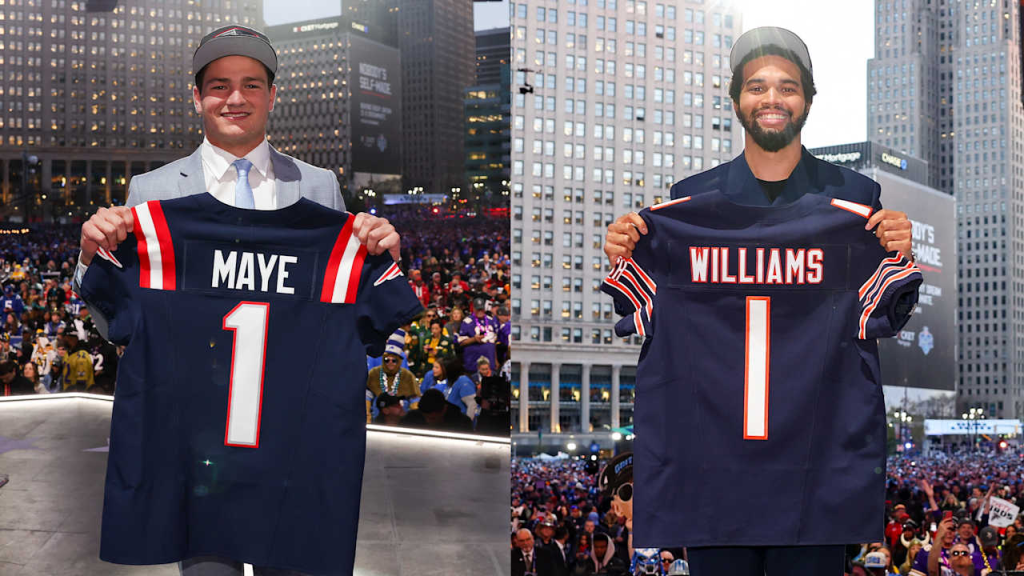
Drake Maye’s Super Bowl appearance with the New England Patriots only intensified the conversation. On the surface, the argument seemed simple. Maye went further. Williams didn’t.
But Super Bowl LX complicated that narrative in a way few expected.
Maye finished the night with volume numbers that looked respectable — 295 passing yards and two touchdowns. Dig deeper, and the story changes. Two interceptions. A lost fumble. Momentum swings that never tilted back in New England’s favor as the Seahawks cruised to a 29–13 victory.
It wasn’t a collapse. It was something quieter. And more revealing.
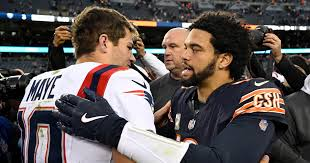
This was the first time Maye stood on the league’s biggest stage without margin for error. The Seahawks’ defense didn’t need him to be reckless — they only needed him to blink. He did.
For Bears fans, the reaction wasn’t gloating. It was relief.
Yes, Maye led the Patriots to the Super Bowl. Yes, Williams exited earlier, falling to the Rams in the NFC Divisional Round. But postseason paths matter — and so does context.
Maye’s road included the Chargers and Texans, two talented teams with postseason histories that often unravel under pressure. Those two games alone produced six turnovers in New England’s favor.
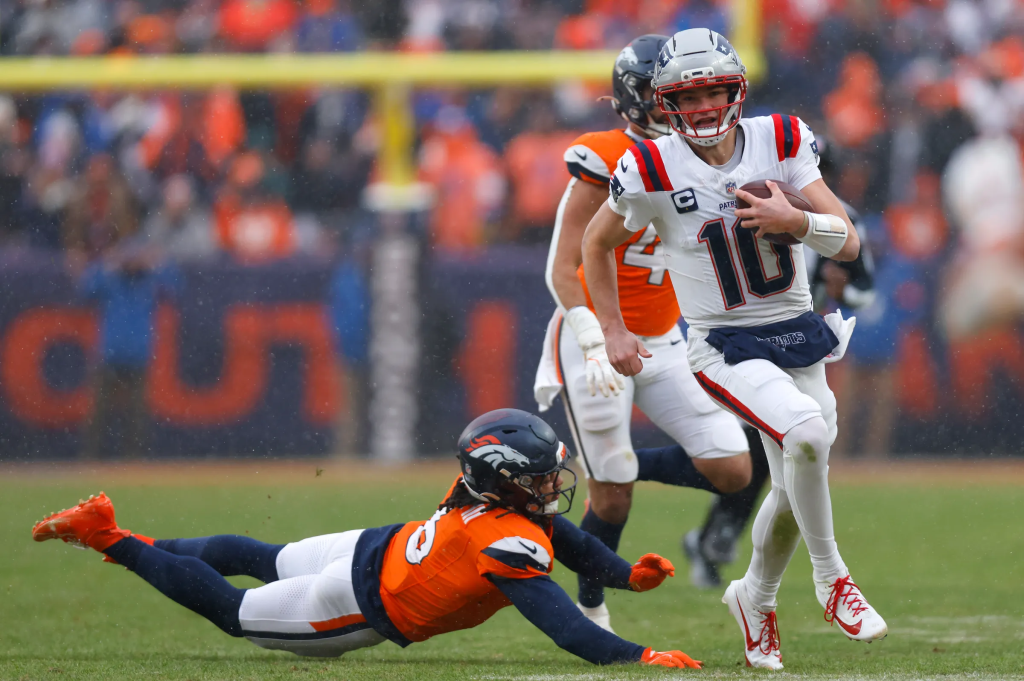
In the AFC Championship Game, Maye faced a Denver team without its starting quarterback. The Patriots scored just 10 offensive points — enough to advance, but hardly dominant.
Williams didn’t get that luxury.
Chicago’s postseason run forced him to face two defenses built to confuse young quarterbacks. Green Bay first. Then the Rams. Both secondaries pressed aggressively, daring Williams to beat them in tight windows.
He didn’t always succeed. But when the moments mattered, he didn’t disappear.
A fourth-down strike to Rome Odunze against the Packers. A game-tying touchdown to Cole Kmet late against the Rams. Throws that didn’t inflate box scores but shifted belief inside the stadium.
Statistically, Maye’s postseason numbers edge Williams’. Efficiency favors Maye. Raw output leans his way.
But football decisions aren’t made in spreadsheets alone.
What Sunday exposed was not a gap in talent, but a difference in stress response. Maye’s mistakes came when structure broke down. Williams’ best moments arrived when structure collapsed entirely.
That distinction is why the Bears drafted Williams first. Not because he was safer — but because he was volatile in a way defenses struggle to predict.
The truth remains uncomfortable for both sides of the debate. There is no clear separation yet. Williams is more athletic, more improvisational. Maye is steadier, more traditional in the pocket.
Neither has won a Super Bowl. Neither has failed outright.
But Super Bowl LX removed one argument Bears fans had grown tired of hearing — that Maye had already proven himself on a stage Williams hadn’t reached.
Reaching the stage isn’t the same as commanding it.
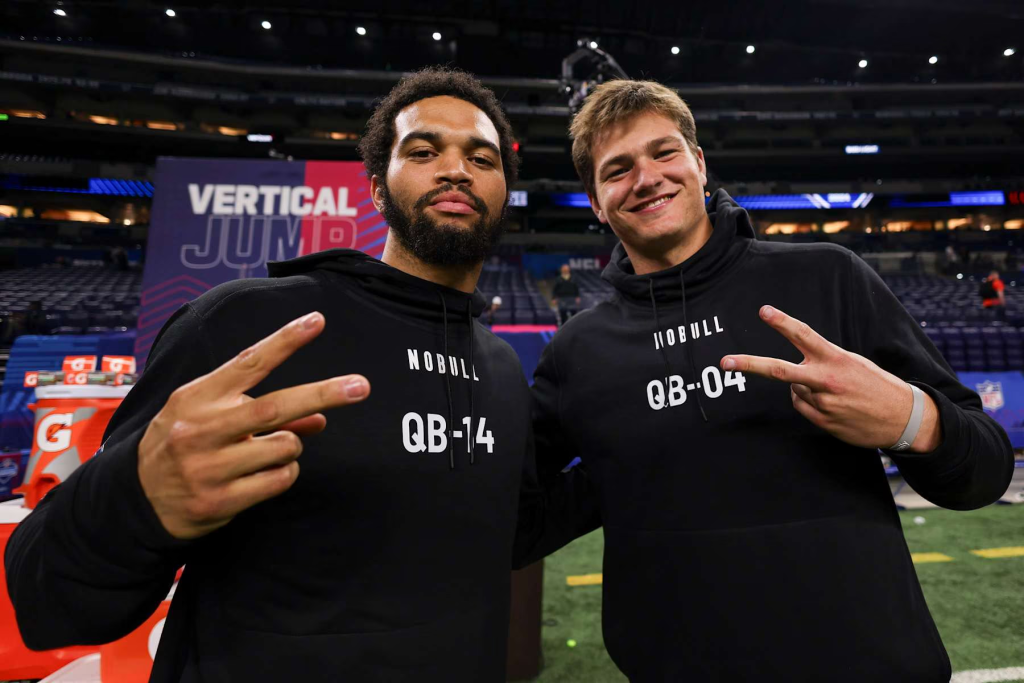
Williams now enters Year 3 with something rare for a young quarterback: clarity. He knows where he fell short. He knows what moments still belong to him. And he knows the comparison isn’t settled — it’s just evolving.
Maye will be back, too. The Patriots aren’t moving on. Nor should they.
But Sunday night made one thing harder to deny.
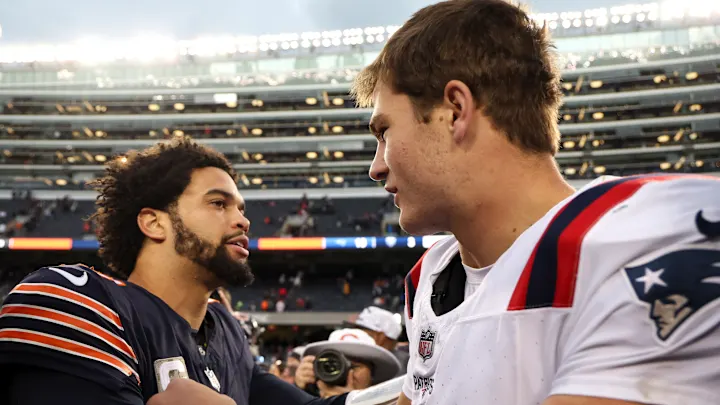
The Bears didn’t miss. They chose a different path — one that still bends games in unpredictable ways. And sometimes, the most validating moments come not when your quarterback wins, but when the alternative finally looks human.
Leave a Reply