At first glance, the White Sox–Red Sox trade felt simple. Familiar, even.
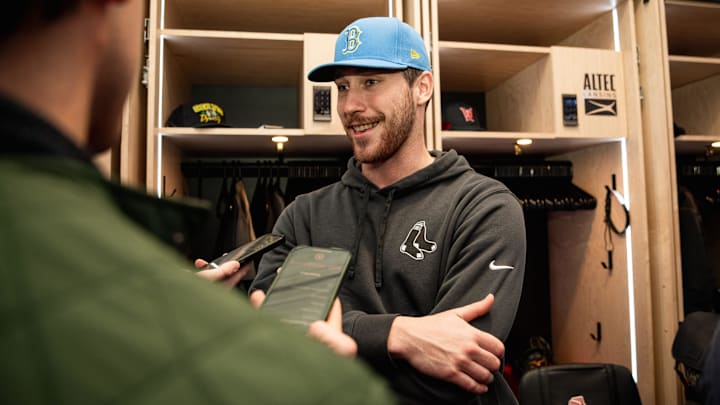
Boston Red Sox prospect David Sandlin answers questions inside the Red Sox clubhouse at Fenway Park during Red Sox Rookie Development Week in Boston earlier this year. | WooSox Photo/Ashley Green / USA TODAY NETWORK via Imagn Images
Jordan Hicks arrives as a buy-low arm. Boston sheds salary. Chicago adds velocity.
That storyline is easy to digest.
It’s also incomplete.
The White Sox didn’t spend this winter chasing one type of pitcher. They collected options.
Anthony Kay. Sean Newcomb. Seranthony Dominguez. Depth before dominance.
Jordan Hicks fits that theme on the surface.
He still throws hard. He still flashes upside. He still feels like a pitcher who might have more left.
But Hicks isn’t the reason this trade matters.
The real intrigue arrived quietly alongside him.
David Sandlin.
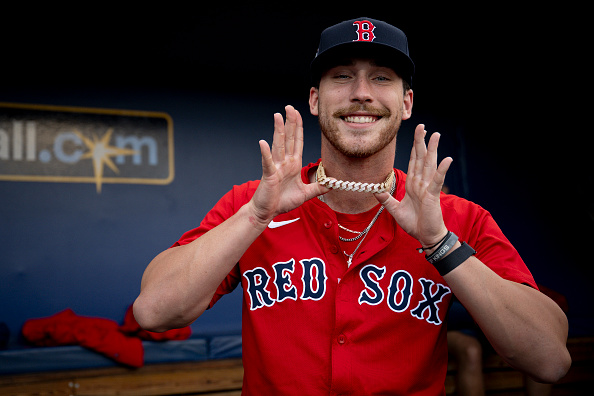
Sandlin doesn’t come with headlines or hype cycles. His path has been uneven. His stat lines messy.
That’s exactly why the White Sox were interested.
Originally an 11th-round pick by Kansas City in 2022, Sandlin signed for well above slot value.
The industry noticed then. It hasn’t stopped noticing since.
His early professional results were promising. A 3.51 ERA across Low-A and High-A in his first full season.
Not dominant. But developmental.
Kansas City moved him before the 2024 season. Boston took the bet next.
Sandlin reached Double-A quickly, but the numbers didn’t cooperate. A 5.34 ERA dulled enthusiasm externally.

Internally, the belief never disappeared.
In 2025, Sandlin set a career high with 106 innings. He bounced between Double-A and Triple-A.
His Double-A starts were encouraging. His Triple-A relief work was not.
That split tells a familiar story.
The stuff is real. The command is not finished.
Sandlin’s arsenal is what separates him from typical throw-ins.
Upper-90s fastball. Occasional triple digits. A slider. A sweeper. A cutter. A sinker. A curveball.
Six pitches that grade above average. One that sometimes grades elite.

Pitchers with that depth usually cost more than a salary dump attachment.
The White Sox know this.
They also know Sandlin’s flaws. The walk rate. The injury history. The inconsistency.
Those are fixable problems. Stuff is not.
At minimum, Sandlin projects as a bullpen arm capable of missing bats late.
At maximum, he’s something far more valuable.
Chicago plans to find out.
The connection matters here.
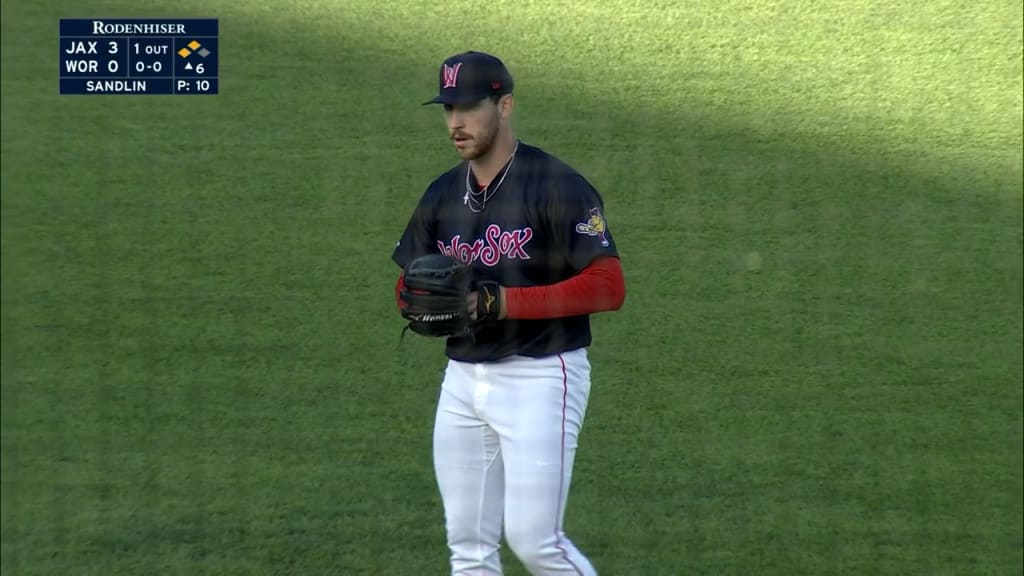
New pitching coach Zach Bove was on Kansas City’s staff during Sandlin’s first full season.
This isn’t a blind acquisition. It’s familiarity turning into opportunity.
General manager Chris Getz has already hinted at urgency.
Sandlin, he said, could impact the rotation as early as this season.
That statement isn’t accidental.
The back end of Chicago’s rotation is open. Roles aren’t locked. Competition is expected.
Sandlin will enter camp competing with Sean Newcomb, Tanner McDougal, Jonathan Cannon, and others.
An impressive spring doesn’t guarantee anything. But it changes conversations.
Meanwhile, Hicks settles into his own evaluation period.
If he rebounds, Chicago gains a weapon. If not, the cost remains manageable.
That’s the balance.
Hicks is the present. Sandlin is the reason for patience.
This trade wasn’t designed to fix 2026 overnight.
It was designed to create a path where upside exists without sacrificing flexibility.
For White Sox fans, that distinction matters.
Jordan Hicks is the name everyone recognizes.
David Sandlin is the reason the deal may still matter years from now.
And sometimes, the smartest trades are the ones that hide their real value in plain sight.
Leave a Reply