On paper, it’s just scouting.
In reality, it feels like something more deliberate — and more unsettling.
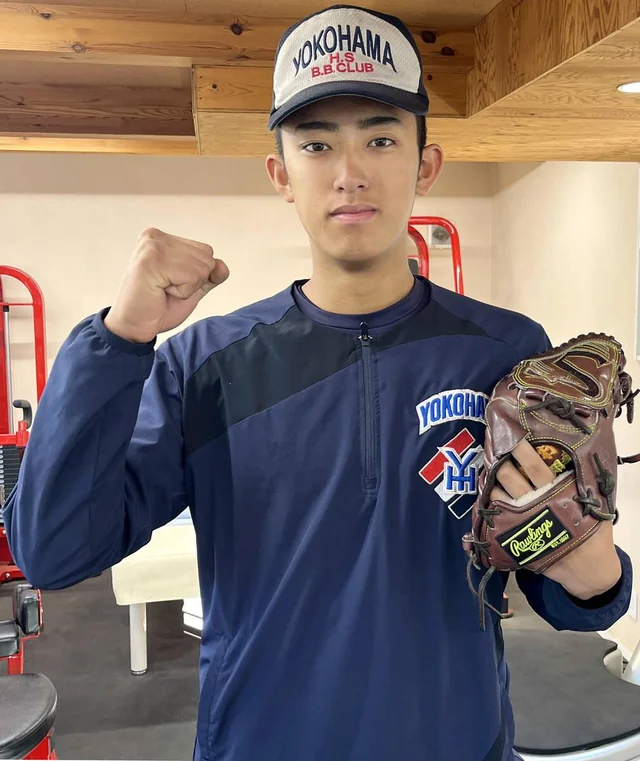
The Los Angeles Dodgers are reportedly in pursuit of Shoki Oda, a 17-year-old pitching prodigy still attending Yokohama High School in Japan.
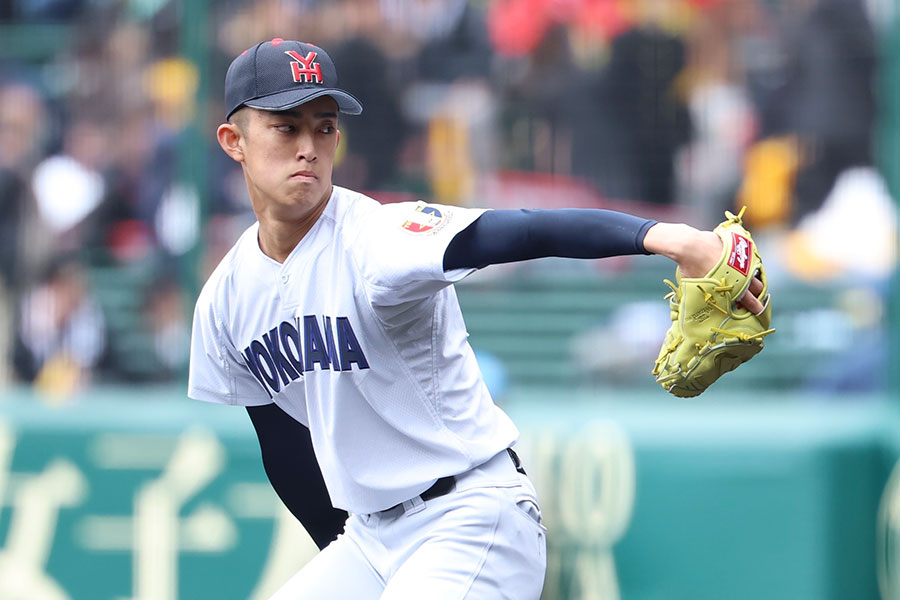
He hasn’t entered the Nippon Professional Baseball draft. He hasn’t signed a professional contract. He’s not supposed to be on the global market yet.
And that’s exactly why this story matters.
Oda represents a rare intersection of talent, timing, and opportunity — not just for a player, but for an organization that knows how to operate inside the margins of international rules.
Because under current regulations, Japanese players who have never been under contract with an NPB team are exempt from the posting system.
In other words: if the Dodgers move now, they bypass the entire structure designed to protect Japanese baseball’s developmental pipeline.
That’s not illegal.
But it is consequential.
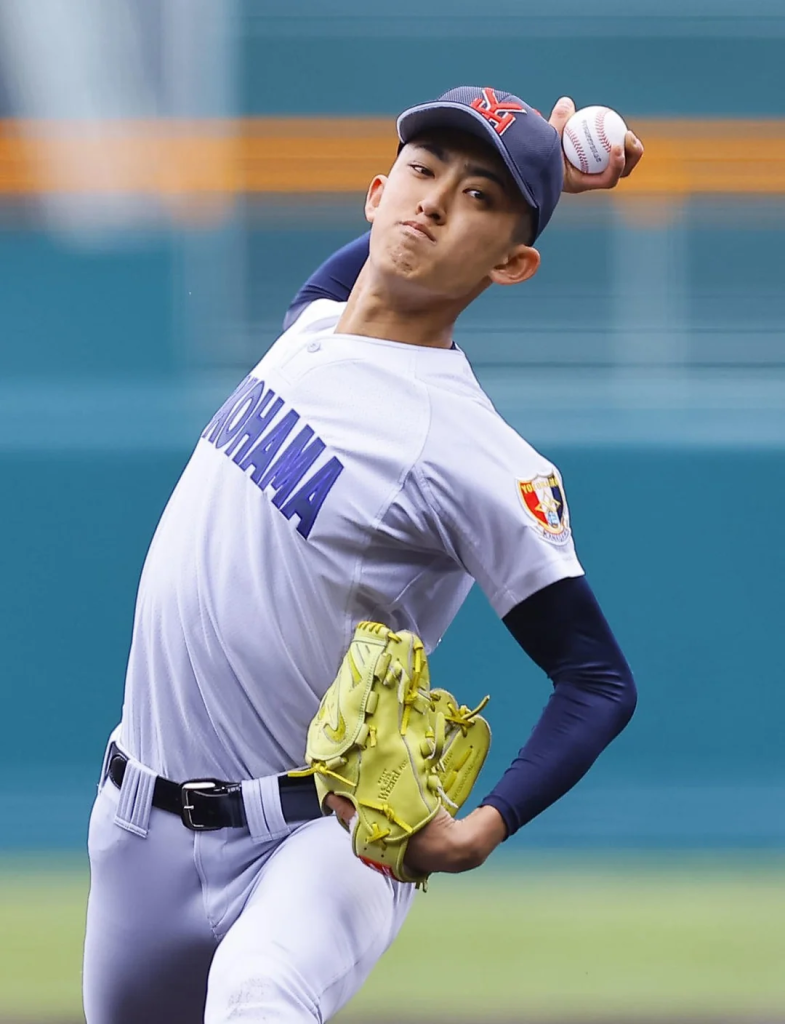
Shoki Oda isn’t a rumor-level talent. He’s already a national name in Japan. A right-hander with a fastball touching the mid-90s, advanced control, and a four-pitch arsenal rarely seen at his age.
Last year, he carried Yokohama High School to a spring tournament championship and threw two complete-game shutouts in the summer tournament — something no underclassman had ever done.

Scouts aren’t projecting potential. They’re observing readiness.
And yet, the quiet part of this story isn’t about velocity or mechanics. It’s about pressure.
At 17, Oda still has a year left in high school. A year before the NPB draft.
A year that traditionally allows Japanese prospects to develop without the weight of global contracts hovering over them. But now, that bubble appears to be thinning.

Multiple teams are reportedly monitoring Oda, but only the Dodgers have been openly linked to an early move — a pattern that feels familiar.
Los Angeles has built an international reputation not just for development, but for anticipation. They don’t wait for markets to open. They position themselves before others are allowed to act.
That strategy has paid off before. But it also raises a question that baseball rarely confronts head-on:
Just because you can — should you?

Japan has seen this movie once. In 1993, Makoto “Mac” Suzuki jumped directly from high school to MLB, signing with the Mariners. His career never unfolded as hoped.
Injuries, delayed development, and cultural displacement followed. He eventually returned to Japan, his potential forever framed by what-ifs.
More recently, the Athletics signed 18-year-old Shotaro Morii, a two-way high school player, to a modest deal. His progress has been cautious, incremental, and tightly managed. Even then, the experiment is still unfinished.
The Dodgers aren’t a cautious organization.
They are a machine built to absorb risk — and Oda fits that profile perfectly. Young. Moldable. Legally accessible. Free from posting fees. A potential ace developed entirely under their system.
From a competitive standpoint, the logic is flawless.
From a human one, it’s murkier.
What happens when a teenager is forced to choose between national tradition and global opportunity before he’s even eligible to be drafted?
What pressure exists behind closed doors? What voices are loudest — the ones advising patience, or the ones promising a faster path?
None of this suggests wrongdoing. But it does suggest a shift.
Baseball’s talent race is no longer waiting for adulthood.
It’s accelerating toward adolescence.
If Shoki Oda signs early, it won’t just be a win for the Dodgers. It will be a signal — to Japan, to MLB, and to every elite high school player watching closely — that the rules haven’t changed, but the urgency has.
And once that line is crossed, it’s rarely uncrossed.
Leave a Reply