The Chicago White Sox took a meaningful step forward in 2025, improving by 19 wins and finally giving fans a reason to look ahead instead of looking back.
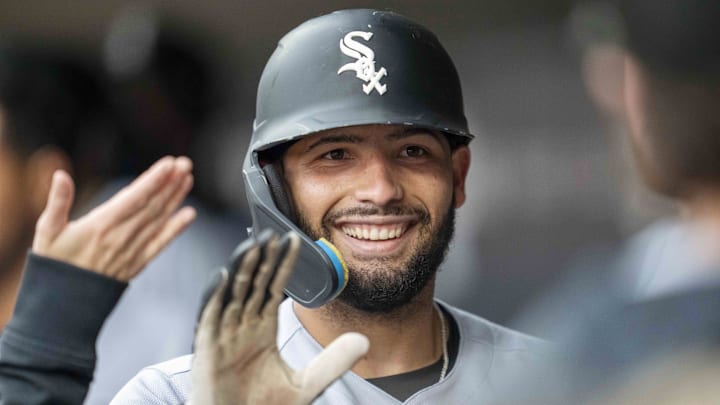
Sep 3, 2025; Minneapolis, Minnesota, USA; Chicago White Sox catcher Edgar Quero (7) celebrates hitting a home run against the Minnesota Twins in the second inning at Target Field. Mandatory Credit: Jesse Johnson-Imagn Images | Jesse Johnson-Imagn Images
The season was defined by the arrival of young talent — the kind of prospects that don’t just fill roster spots, but reshape the entire direction of the franchise.
Colson Montgomery. Kyle Teel. Shane Smith. Those names grabbed the headlines, and for good reason.
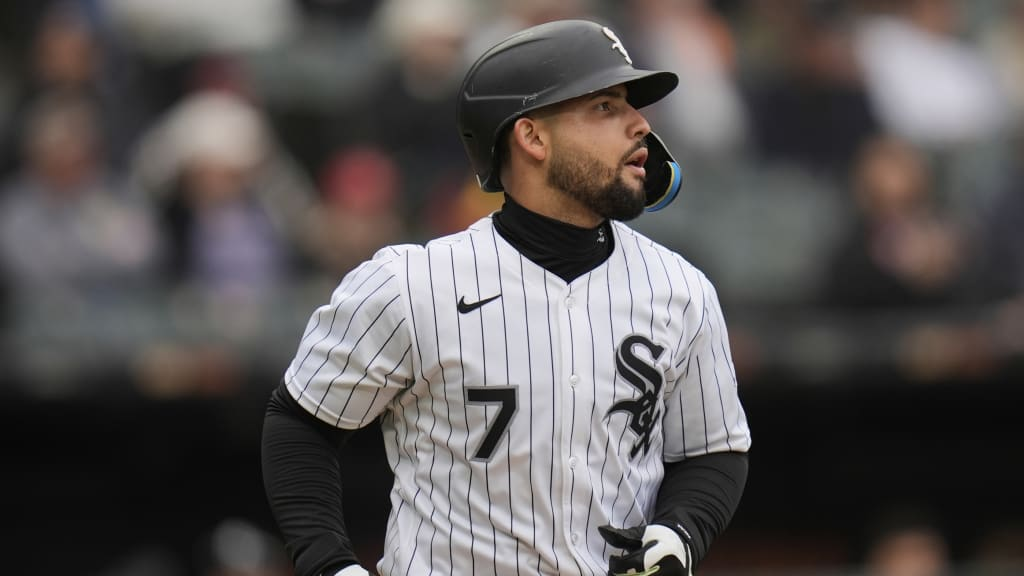
But buried underneath the bigger storylines was a debut that felt quieter, younger, and more complicated — the arrival of catcher Edgar Quero, who spent most of the season as the youngest player on the White Sox roster.
His rookie year wasn’t a clean highlight reel. It was a mix of flashes and frustration. Moments that hinted at something real… followed by stretches where it felt like the power simply wasn’t there.
And that’s exactly why the most important part of Quero’s story might not be what happened in 2025.
It might be what he did after it ended.
Edgar Quero’s “fix” isn’t a motivational quote — it’s a measurable plan
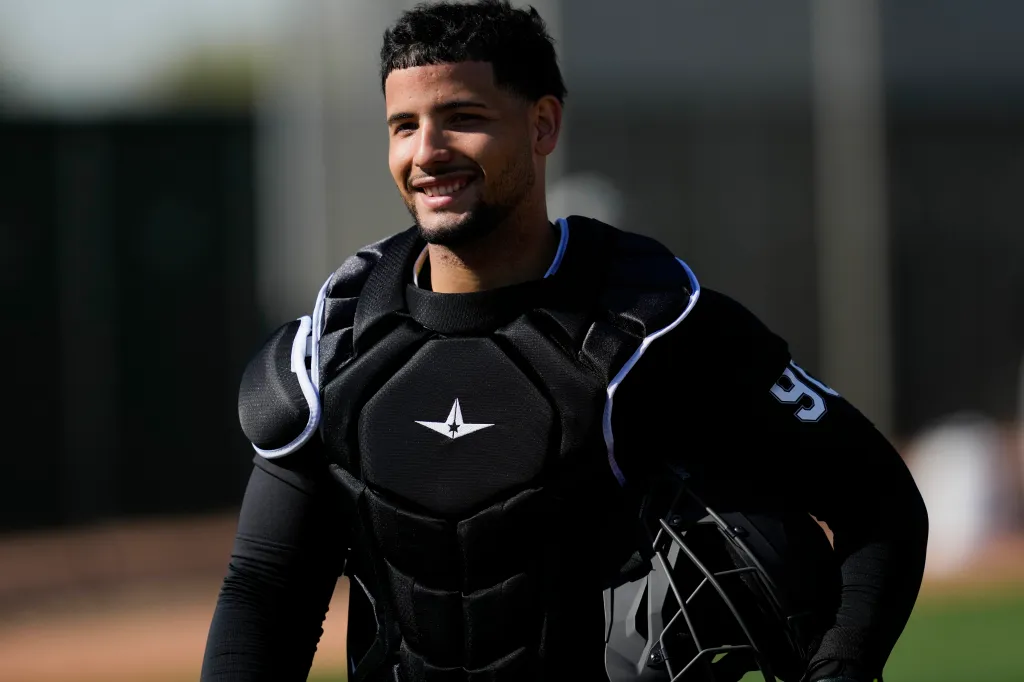
This winter, Quero headed to Driveline, the Arizona-based training facility that has become baseball’s most famous laboratory for turning weaknesses into weapons.
According to ESPN’s Alden Gonzalez, Quero went there with a clear goal: increase his bat speed and improve his launch angles — two changes that both he and the White Sox believe could unlock a new level of power.
That matters because the raw 2025 numbers tell you the problem instantly:
Quero hit just five home runs in 365 at-bats.
For a catcher, that isn’t catastrophic. But for a player with his reputation — advanced strike zone awareness, contact skills, the ability to compete against big-league pitching at a young age — it feels like a ceiling that shouldn’t exist.
The ball was coming off his bat… but not jumping.
And the White Sox seem to believe that’s fixable.
Driveline isn’t hype anymore — it’s where careers get rewritten
Driveline has become one of the most trusted development spaces in baseball over the last few years, with stars like Shohei Ohtani and Corbin Carroll among the names connected to its rise.
That doesn’t mean every player who walks through the doors comes out transformed.
But it does mean this: when a player goes there, they’re not guessing. They’re measuring. They’re dissecting movement patterns, swing efficiency, body sequencing — the kind of details fans don’t see, but pitchers absolutely feel when it changes.
In Quero’s case, the adjustment isn’t framed as a complete rebuild.
It’s a tune-up.
A power unlock.
The focus is on strengthening the lower body, getting it more involved in his swing, and speeding up hip rotation so the barrel gets to the zone quicker.
The concept is simple, but the execution is everything — because in MLB, adding even a couple miles per hour of bat speed can change a hitter’s entire output.
The Driveline staff reportedly believes that if Quero maintains his batted-ball quality and increases bat speed, he could develop into a 20–25 home run hitter over time.
That’s not a small leap.
That’s a different player.
Why this feels different than the usual offseason noise
Every year, fans hear the same recycled storylines:
- “Best shape of his life”
- “Changed his swing”
- “More confident than ever”
- “This year is the year”
And most of the time, it fades the second the season starts.
But what makes Quero’s case more believable is that the plan is specific. It’s not a vague promise of improvement — it’s an identified weakness with targeted mechanical solutions.
And maybe even more importantly: the White Sox know it’s his biggest flaw, and Quero knows it too.
That kind of honesty tends to matter.
The catcher situation is crowded — and that might help him
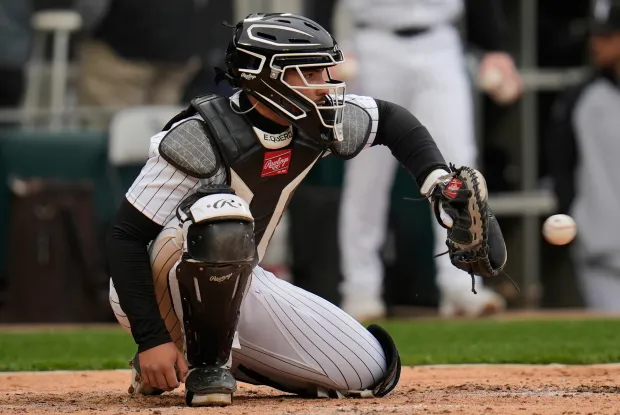
The White Sox don’t have to force Quero into an every-day workload if he isn’t ready. Kyle Teel is also in the mix, and both catchers are expected to get significant playing time. There’s even a real chance they’re in the lineup together at times, depending on matchups and roster construction.
That creates a subtle advantage for Quero in 2026:
He can develop without being crushed by expectation every single day.
But make no mistake — the breakout signs will show early if they’re coming.
What White Sox fans should watch for in 2026
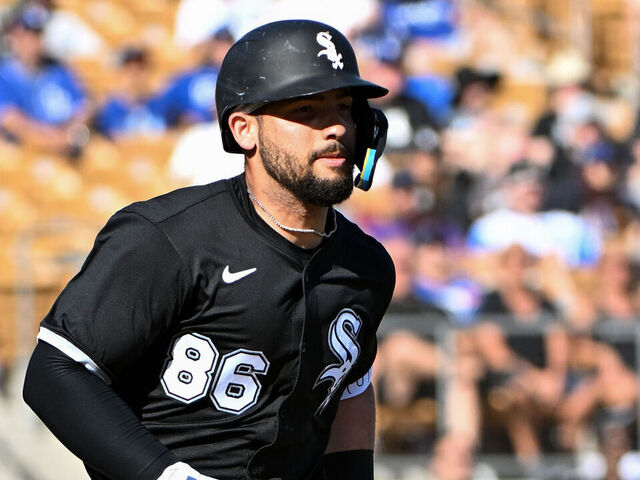
The most telling indicator won’t be batting average.
It won’t even be home runs at first.
It’ll be the things that show the power is arriving before the box score catches up:
- improved bat speed
- stronger exit velocities
- better launch angles
- more balls driven into gaps instead of dying in the infield
If those numbers rise early, the rest can follow.
Quero doesn’t need to become an instant star. He doesn’t need to hit 25 homers this season to justify belief.
But if the Driveline work starts showing up — even subtly — it could mean the White Sox aren’t just developing a catcher.
They’re developing a lineup weapon.
And if that happens, the most uncomfortable realization for the rest of the league might be this:
Edgar Quero’s rookie season wasn’t his ceiling.
It was the quiet beginning of something the White Sox have been waiting to unleash.
Leave a Reply