For most of the season, the spotlight in Seattle belonged to Jaxon Smith-Njigba. The young receiver exploded into superstardom, putting up numbers that quietly pushed him into Offensive Player of the Year conversations.
On defense, familiar stars continued to flash. And yet, over the final stretch of the season and into the playoffs, another truth became harder to ignore.
Kenneth Walker III has often looked like the best player on the field.
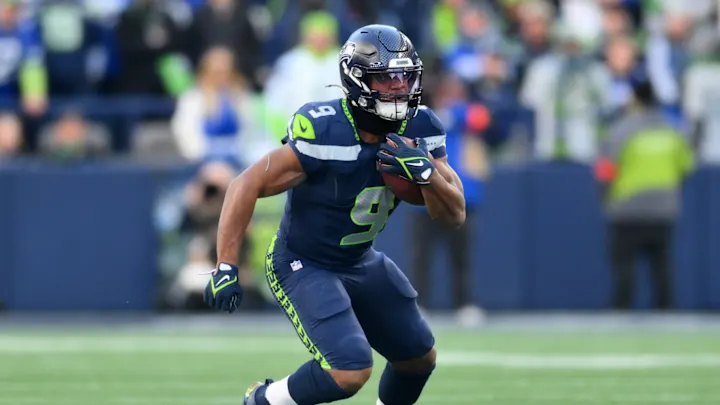
This wasn’t just another hot streak. It felt like a shift. After four seasons defined by tantalizing flashes and frustrating inconsistency, Walker finally began to play with a level of decisiveness and control that transformed Seattle’s offense.
Runs that once ended in negative yardage were suddenly flipped into first downs. Broken plays turned into momentum-changing moments. The chaos that once defined his style started to look… intentional.
And just as Walker reached this level, the calendar quietly moved closer to March.
With free agency looming, Seahawks general manager John Schneider addressed Walker’s future using a line that sounded supportive on the surface.
He praised Walker’s explosiveness, noted his improved decisiveness, and said the team would “love to have him back.” It was calm. Professional. Reassuring.
It was also deeply familiar.
For longtime Seahawks observers, those words carry a strange weight. Over the past decade and a half, Schneider has used nearly identical language to describe countless talented players approaching free agency.
Many of them were cornerstones. Some were among the best at their positions. And more than a few ultimately walked away from Seattle feeling undervalued, disappointed, or quietly dismissed.
No accusations were ever made. No bridges publicly burned. Just a pattern that fans learned to recognize.
That’s what makes Walker’s situation feel uneasy rather than celebratory.
On paper, the case for keeping him is stronger than ever. The modern NFL has tilted back toward balance. While teams no longer believe a single running back can carry an offense alone, the ability to control tempo, move the chains, and punish light boxes has become essential.
Seattle knows this better than most, as their recent success has come alongside one of the league’s most run-heavy approaches.
Walker isn’t just benefiting from that system—he’s elevating it.
According to Pro Football Focus, Walker’s 91.1 overall grade leads all running backs this season. Beyond the numbers, his growth has been obvious in the details.
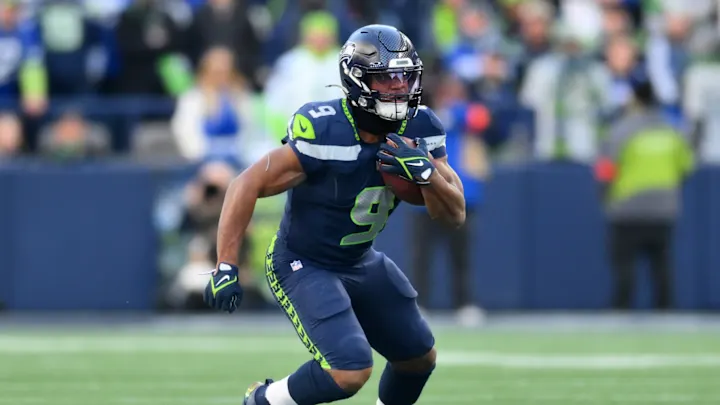
Pass protection, once the weakest part of his game, no longer looks like a liability. His patience behind the line has improved. His vision feels sharper. The raw athleticism that once flashed unpredictably is now paired with discipline.
This is the version of Walker scouts imagined. The version teams pay for.
And yet, Seattle’s history with second contracts for running backs looms in the background. The organization has long resisted committing big money at the position, preferring flexibility and caution.
From a business standpoint, that philosophy has often been praised. From a human one, it has sometimes left scars.
That’s why the timing matters. Walker isn’t asking for belief based on potential anymore. He’s delivering production at the highest level, during meaningful games, when defenses know what’s coming and still can’t stop it.
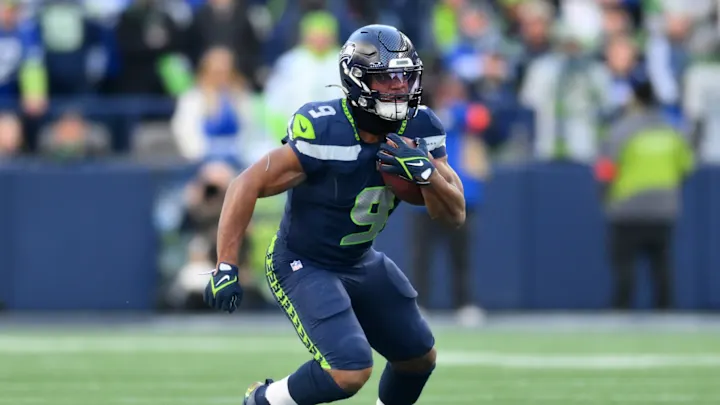
So when Schneider says the Seahawks would “love to have him back,” the words land softly—but the silence around them feels heavy.
Is this the start of a genuine effort to keep a cornerstone player? Or simply the opening note in a familiar process that ends with Walker wearing a different uniform, his prime years unfolding somewhere else?
Nothing has been decided. Nothing has been promised. But as Walker continues to dominate, the question grows louder with every carry:
If not now—then when?
Leave a Reply