For years, the World Baseball Classic lived in an awkward space.
Loved by fans. Respected by players. But quietly debated by executives who never quite knew how seriously it would be taken. That uncertainty evaporated Thursday night.
When MLB Network unveiled the official rosters for the 2026 World Baseball Classic, the tone shifted instantly. This wasn’t a celebration. It was a declaration.

Aaron Judge. Shohei Ohtani. Bryce Harper. Juan Soto. Clayton Kershaw. Paul Skenes. Across 20 national teams, the game’s most recognizable faces didn’t hesitate. They committed.
And suddenly, the WBC stopped feeling like a side event.
Team USA’s roster set the mood early. Judge, the reigning AL MVP, headlines a lineup built for dominance rather than experimentation.
Harper, Schwarber, Bobby Witt Jr.—this isn’t a “try it once” group. It’s a response. After finishing second in 2023, Judge made the motivation clear: “We’re going to go change that.”

Japan, the defending champion, answered quietly—but just as forcefully. Shohei Ohtani returns, this time as a designated hitter only, joined by Yoshinobu Yamamoto, Masataka Yoshida, and Seiya Suzuki. The names carry history. The expectations carry weight.
And they remember 2023.
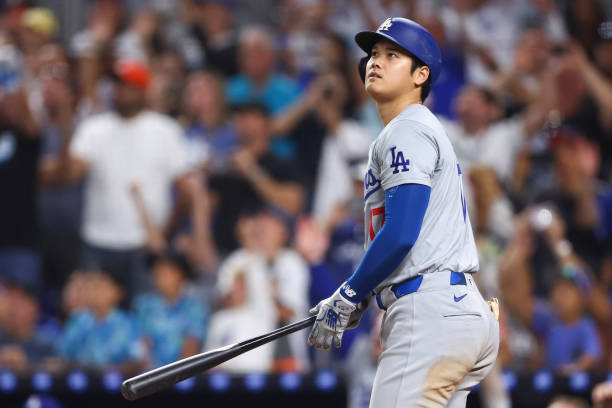
That final—Ohtani striking out Mike Trout to seal Japan’s title—still lingers as one of baseball’s most emotionally charged moments. Now, the rematch energy feels unavoidable.
But it’s not just the U.S. and Japan.
The Dominican Republic’s roster reads like an All-Star ballot, led by Juan Soto and guided by Albert Pujols from the dugout. Venezuela brings Ronald Acuña Jr., Luis Arraez, Salvador Pérez, and a roster that feels built to overwhelm.

Puerto Rico, even without Francisco Lindor and Carlos Correa due to insurance constraints, still fields depth and experience under Yadier Molina.
Even the so-called “dark horses” feel less distant.
Mexico returns with unfinished business after pushing Japan to the brink in 2023. The Netherlands blends MLB talent with Hall of Fame leadership in Andruw Jones.
Canada, Australia, Korea, Chinese Taipei—this isn’t regional pride anymore. It’s global pressure.
What makes this WBC different isn’t just star power.

It’s intent.
Paul Skenes summed it up without flair: “If I ever get the chance to do this, I’m never saying no.” That sentiment echoed across interviews. Players aren’t treating this as optional. They’re treating it as meaningful.
And that makes teams nervous.
Insurance issues already sidelined stars like Lindor, Correa, Jose Altuve, and others. Front offices know the risks. But the players—especially the elite ones—seem increasingly willing to carry them.
Because the WBC offers something MLB can’t always manufacture: urgency without routine. National identity without contracts. Legacy without season-long erosion.

The format reinforces it. Four pools across Tokyo, San Juan, Houston, and Miami. Short windows. Single-elimination brackets. One bad night, and it’s over.
There’s no hiding in this tournament.
And maybe that’s why the mood feels heavier this time around.
Baseball is global now. The talent always was. But the willingness to show it—fully, publicly, and at the same time—has never felt this aligned.
So as March approaches, the question isn’t whether the World Baseball Classic matters.
It’s whether the sport is ready for how much it now means.
Because once stars stop treating something like an exhibition, everyone else has to adjust.
Leave a Reply