One quiet position… could become the Patriots’ biggest hidden risk.
And if they ignore it now, it might cost them later.
-544x306.jpg)
A Subtle Shift in New England’s Defense
The New England Patriots made a bold decision this offseason — and not everyone noticed.
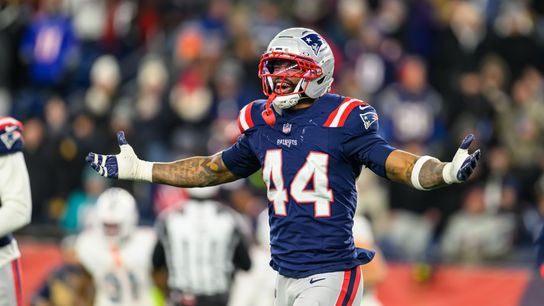
They moved on from Jaylinn Hawkins, a younger presence, and brought in veteran Kevin Byard, a player deeply respected and closely tied to Mike Vrabel’s system.
At first glance, it feels like a stability move.
But look closer — and questions start to surface.
Because while Byard brings leadership and reliability, he also brings something else:
Age.
Kevin Byard: Leadership vs Longevity
Byard will turn 33 years old this season.
He’s still productive — recording 93 tackles last year — and remains one of the smartest safeties in the game. His experience and discipline should reduce the kind of coverage breakdowns that occasionally plagued Hawkins.
But there’s a trade-off.
He’s no longer the same athlete.
His range isn’t what it used to be, and asking him to consistently battle in the box against bigger, faster players could wear him down quickly.
That raises a critical question:
How long can he hold up?
Craig Woodson’s Rise Changes the Equation
Late last season, Craig Woodson emerged as a surprising bright spot.
Operating closer to the line of scrimmage, he showed physicality and instincts that may allow the Patriots to adjust their defensive structure.

Instead of forcing Byard into high-contact situations, New England could lean more heavily on Woodson in those roles.
It’s a smart short-term solution.
But it doesn’t fully solve the long-term problem.
Depth Isn’t the Same as Security
On paper, the Patriots have options behind their starters:
- Dell Pettus (undrafted but promising)
- Mike Brown (recent addition)
- Brenden Schooler (hybrid special teams weapon)
- John Saunders Jr. (practice squad depth)
But none of these names scream “future cornerstone.”
They provide depth.
Not certainty.
And in today’s NFL, uncertainty at safety can quickly become a liability.
So… Should the Patriots Draft Another Safety?
The answer isn’t simple — but the logic is clear.
New England likely won’t target a safety on Day 1 of the draft.
However, beyond that?
The door is wide open.
Because this isn’t just about filling a roster spot.
It’s about preparing for what comes next.
The Elite Tier: Game-Changers (But Likely Out of Reach)
Caleb Downs (Ohio State)
Widely considered the best safety in college football, Downs brings elite instincts, coverage ability, and immediate impact potential. Even with concerns about a knee issue, he’s expected to go top 10.
Dillon Thieneman (Oregon)
A fast, physical playmaker who skyrocketed up draft boards after an impressive combine. He hits hard, reacts quickly, and could become a Day 1 starter.
Emmanuel McNeil-Warren (Toledo)
A disruptive force with a knack for forcing turnovers (8 forced fumbles in college). Not perfect in coverage, but extremely dangerous near the line of scrimmage.
The reality?
All three are likely gone before the Patriots even get a chance.
The Middle Ground: Where the Real Decision Lies
After the top tier, the safety class becomes unpredictable.
There’s no clear consensus — just a group of players with different strengths, styles, and ceilings.
This is where front offices earn their reputation.
Do the Patriots:
- Play it safe and wait?
- Or take a calculated swing on a developmental prospect?
Because finding value here could define the future of their secondary.
The Bigger Picture: A Position They Can’t Ignore
This isn’t about panic.
It’s about planning.
The Patriots have:
- A veteran nearing the end of his prime
- A rising player still proving himself
- Depth pieces without long-term certainty
That combination creates a quiet but real need.
And in the NFL, the teams that stay ahead are the ones that address problems before they become obvious.
A Decision That Could Define the Defense
Drafting a safety may not grab headlines.
But it could shape the identity of the Patriots’ defense for years.
Ignore it — and risk instability.
Address it — and secure the future.
Sometimes, the smartest moves are the ones no one sees coming.
Leave a Reply