When the Blue Jays lost out on Framber Valdez, the reaction was predictable.
Disappointment. Frustration. A familiar sense that Toronto once again came close—but not close enough—to landing a marquee arm.
For a fan base watching rivals flex financial muscle, missing on a frontline starter felt like another reminder of how narrow the margins have become.

Then came the next move.
No splash. No press conference. No expectations attached. Just a minor league deal with a spring training invite for left-hander Josh Fleming.
On the surface, it barely registered. But inside the organization, this wasn’t a consolation prize. It was a pivot.
Toronto’s offseason pitching strategy has been about volume and options rather than singular bets. Dylan Cease headlined the rotation additions. Cody Ponce added stability.

Tyler Rogers brought leverage relief. Around them, the front office quietly stockpiled arms—Spencer Miles, Chase Lee, Jorge Alcala, Connor Seabold, Brendan Cellucci, Nic Enright, Josh Winckowski.
Fleming fits squarely into that pattern.
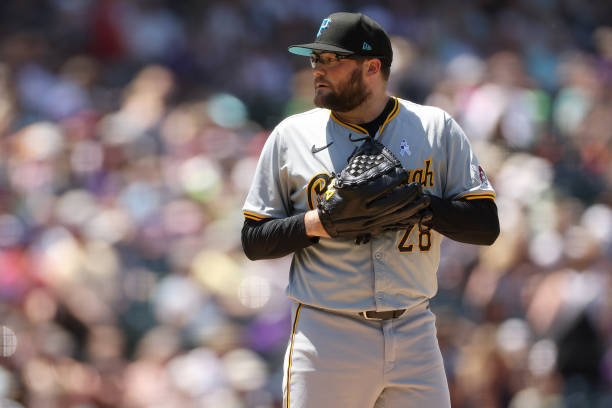
At 6-foot-2 and 220 pounds, the 29-year-old lefty doesn’t overwhelm hitters with velocity. His fastball sits in the low 90s. His ERA numbers don’t jump off the page.
His MLB track record—4.77 ERA across 80 appearances with the Rays and Pirates—doesn’t scream upside.
But that’s not what Toronto is betting on.
What they’re buying is control.
Fleming’s scouting reports have been consistent dating back to his prospect days in Tampa Bay. Clean delivery. Advanced feel for pitching.
A fastball with late sink and run that plays better than the radar gun suggests. The ability to live at the bottom of the zone and generate ground balls rather than chase strikeouts.

Even as recently as Triple-A last season, Fleming struck out 44 hitters in 84 ⅓ innings—not dominant, but steady. One save. Three holds. A role that shifted depending on need.
That flexibility matters in an organization that has already signaled it values adaptability over labels.
Fleming’s path to Toronto hasn’t been linear. Drafted by the Rays in 2017. Waiver claim. Free agency. Short stops with the Phillies, Pirates, and Mariners’ Triple-A affiliate.

He’s been moved, evaluated, and repurposed repeatedly. Players like that don’t survive without something teams keep seeing.
In Fleming’s case, it’s command.
Toronto’s pitching development group has made a habit of targeting arms with one elite trait rather than full packages. Sometimes that’s spin. Sometimes it’s deception.
Sometimes it’s durability. With Fleming, it’s precision.

He was once projected as a back-end starter. Others saw him as a bulk-inning reliever. The Blue Jays don’t need to decide that now. A minor league deal buys them time—and a look.
That’s the subtle shift happening here.
After missing on Valdez, Toronto didn’t scramble for the next biggest name.
They doubled down on depth. On competition. On letting spring training decide who earns space rather than paying for certainty that might not exist.
Fleming isn’t guaranteed anything. He may never throw a meaningful inning in Toronto.
But he represents something the Blue Jays increasingly value: pitchers who can be molded, moved, and trusted to execute a plan.
In a season where injuries will test depth and bullpen games will become unavoidable, arms like this often surface when least expected.
This signing won’t sell jerseys. It won’t move odds. It won’t quiet critics.
But it does reveal how Toronto is thinking right now.
Less about chasing names.
More about building layers.
More about control—on the mound and in the margins.
And sometimes, that’s where seasons quietly turn.
Leave a Reply