The Mets are going to look unfamiliar in 2026.
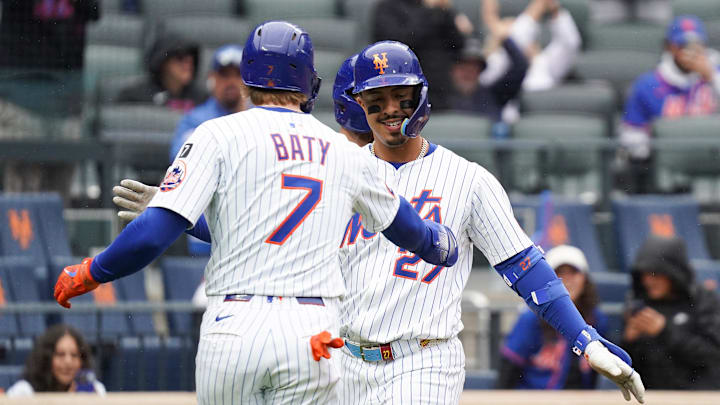
May 28, 2025; New York, New York, USA; New York Mets third baseman Mark Vientos (27) celebrates with New York Mets third baseman Brett Baty (7) after hitting a home run during the third inning against the Chicago White Sox at Citi Field. Mandatory Credit: Lucas Boland-Imagn Images | Lucas Boland-Imagn Images
Not in the subtle, “new bench piece” way. In the kind of way that changes the entire mood of a lineup. Pete Alonso is gone, signing with the Baltimore Orioles.
Brandon Nimmo and Jeff McNeil are gone too, shipped out in trades. The names that used to anchor the Mets’ identity have been peeled away, one by one, leaving New York to rebuild the shape of its offense in real time.
To their credit, the Mets didn’t sit still.
They responded by signing Bo Bichette and Jorge Polanco in free agency, and by pulling off a major trade for Luis Robert Jr. Those moves give the lineup star power again — but they don’t solve every question.
Because even with all that activity, one position remains strangely unresolved:
Designated hitter.
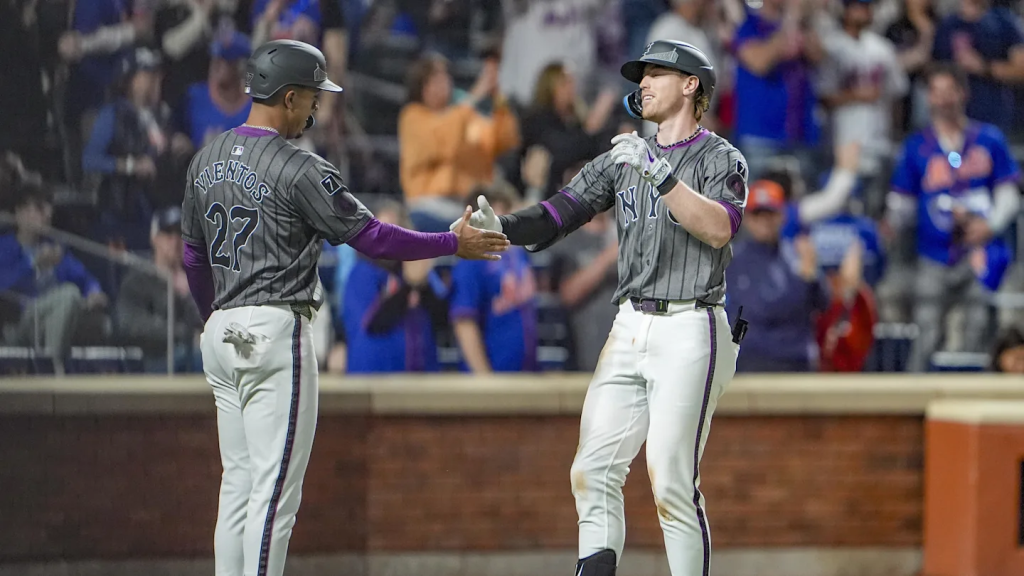
Since MLB permanently added the DH to the National League in 2022, the Mets have never truly committed to an everyday answer there. It’s been a rotating chair, a patchwork solution, a place to hide slumps or rest legs rather than a spot built for production.
And with spring training about a month away, it appears New York is leaning into that same approach again.
The Mets’ 2026 DH Plan: A Platoon, Not a Star
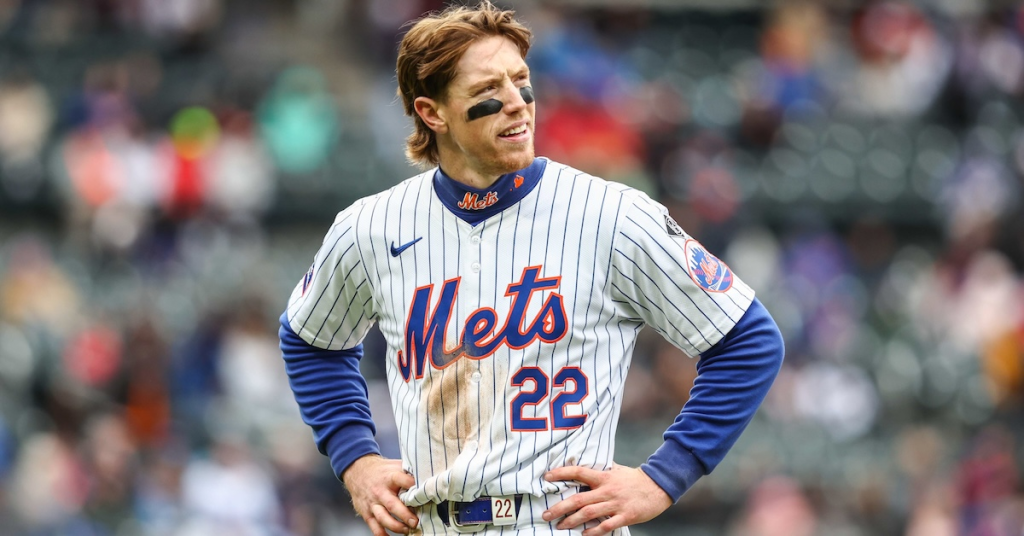
In a January 26 roster projection for The Athletic, Will Sammon and Tim Britton suggested the Mets are expected to rotate players at DH, with Brett Baty and Mark Vientos emerging as the most likely candidates to form a platoon.
On paper, it makes sense.
In reality, it’s a gamble disguised as flexibility.
Baty, 26, finally looked like the player the Mets have been waiting for in 2025. He didn’t just improve — he stabilized.
Over 130 games, he hit .254/.313/.435 with 18 home runs, 50 RBIs, and a .748 OPS. He also took a real step forward defensively, appearing to win the third base job over Vientos.
Then the Mets did something that changed everything.
They signed Bo Bichette… to play third base.
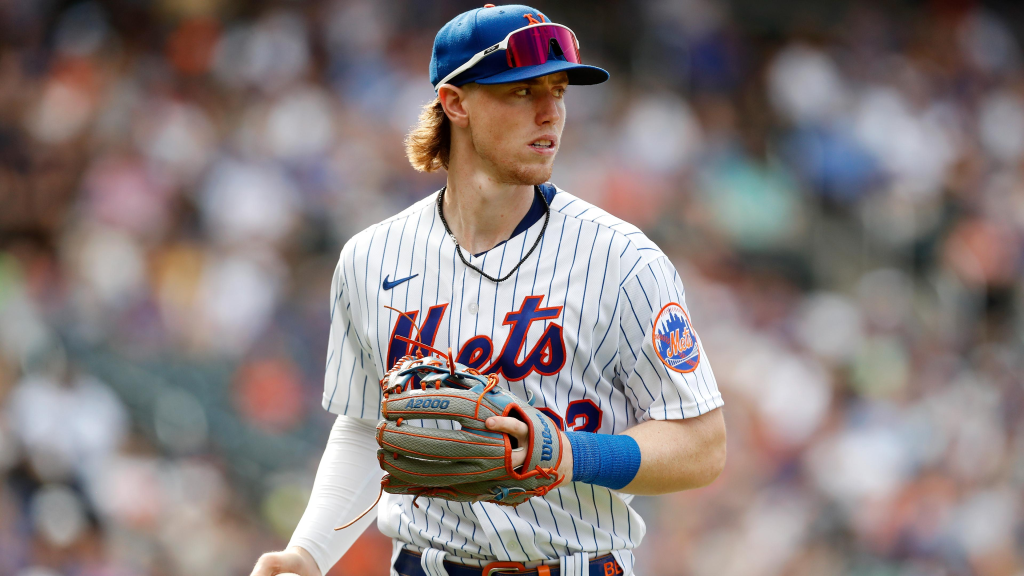
Yes, that Bo Bichette — a shortstop by trade who has never played third base at the major league level.
New York is essentially choosing a high-risk defensive transition in exchange for the offensive upside and star presence Bichette brings.
Which means Baty, even after a career year, suddenly doesn’t have a clear home.
And that’s where the DH spot becomes less of a plan and more of a pressure valve.
Sammon and Britton also noted Baty is a “serious option” to play left field if top outfield prospect Carson Benge isn’t ready yet.
So Baty could end up as a DH, a left fielder, or a rotating piece — but the one thing he can’t be is what he thought he earned: the everyday third baseman.
Mark Vientos: The Other Half of the Bet
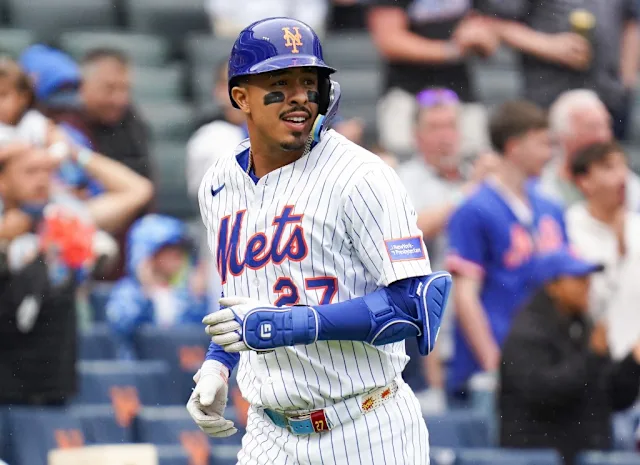
Vientos, also 26, is expected to split DH duties with Baty — especially now that Jorge Polanco is slated to start at first base. That move squeezes Vientos out of the infield again, forcing him toward a bat-first role.
But Vientos enters 2026 with a different kind of pressure.
After a breakout 2024 season, his 2025 campaign was a step back. He slashed .233/.289/.413 with 17 home runs, 61 RBIs, and a .702 OPS across 121 games. Not a disaster, but not a breakout continuation either.
Now he’s being asked to rebound at the exact moment the Mets need him most.
And he still might see time at first base if needed — but the expectation is clear:
Hit, or you don’t matter.
That’s the harsh truth of the DH spot.
Why This Matters More Than Mets Fans Want to Admit
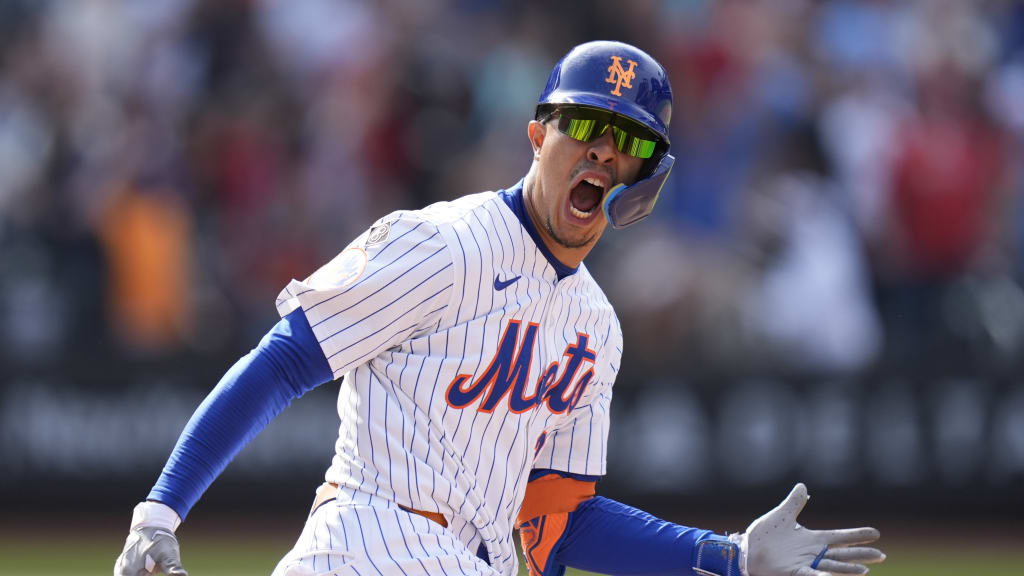
This isn’t just a depth chart question.
It’s a philosophy question.
The Mets have reshaped their roster in a way that demands internal hitters step up. Losing Alonso, Nimmo, and McNeil removes more than production — it removes familiarity. It removes the sense of “we know who we are.”
Luis Robert Jr. adds electricity. Bichette adds star power. Polanco adds stability.
But if the Mets don’t get real impact from the Baty/Vientos DH rotation, the lineup could still feel incomplete — especially when the season tightens and the offense needs a reliable threat in the middle.
A platoon DH works when it’s a luxury.
It becomes dangerous when it’s a necessity.
Because now, the Mets aren’t just “finding at-bats” for Baty and Vientos.
They’re betting on them.
And with so much change already baked into the roster, 2026 may come down to a quiet question the Mets have avoided answering since the DH arrived in the National League:
Is rotating the spot a smart strategy…
or is it what teams do when they don’t have a real solution?
Leave a Reply