There are no highlight reels for protection. No postgame interviews. No end-zone celebrations. And yet, every offensive breakthrough in the NFL begins in the same place—silently, up front.
This week, the league finally acknowledged that reality.
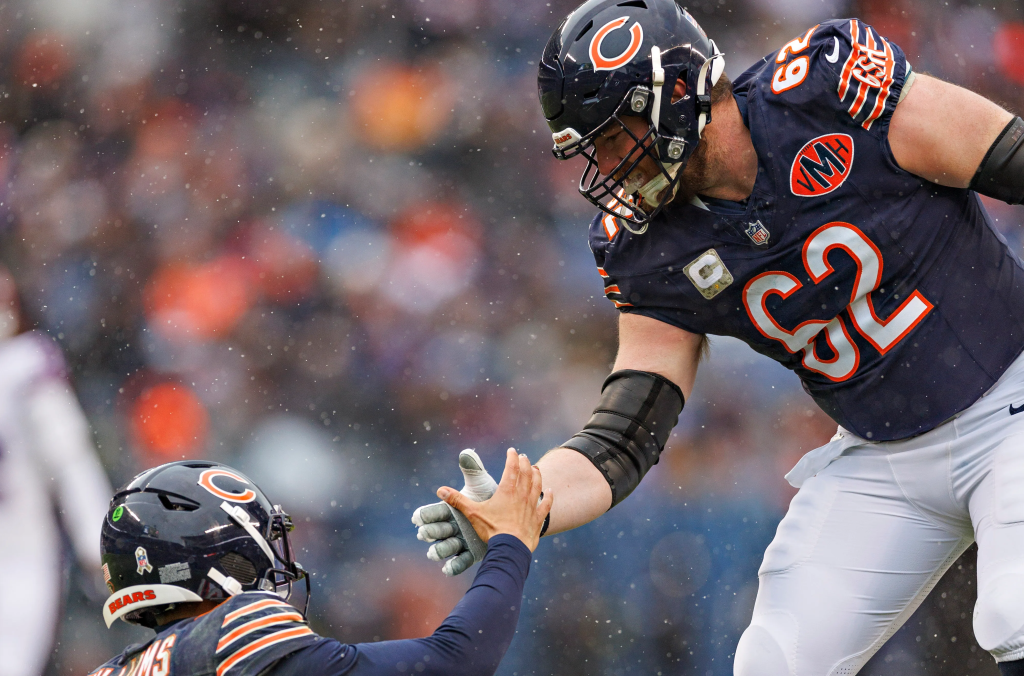
Chicago Bears guard Joe Thuney has been named a finalist for the NFL’s inaugural Protector of the Year Award, a new honor designed to recognize the league’s most outstanding offensive lineman. For a position group long defined by anonymity, the timing feels significant. For the Bears, it feels validating.
Thuney’s first season in Chicago didn’t arrive with fireworks. It arrived with expectations. Winning expectations. Consistency expectations. Accountability expectations.
And that’s exactly what followed.
The award itself is no vanity prize. Championed by Buffalo Bills tackle Dion Dawkins, Protector of the Year is decided by a selection committee of former elite offensive linemen—players who understand the physical and mental grind of the position better than anyone. The criteria go far beyond surface stats, focusing on durability, weekly consistency, quality of competition, discipline, and film-validated performance across pass protection and run blocking.
In other words: the things that actually win games.
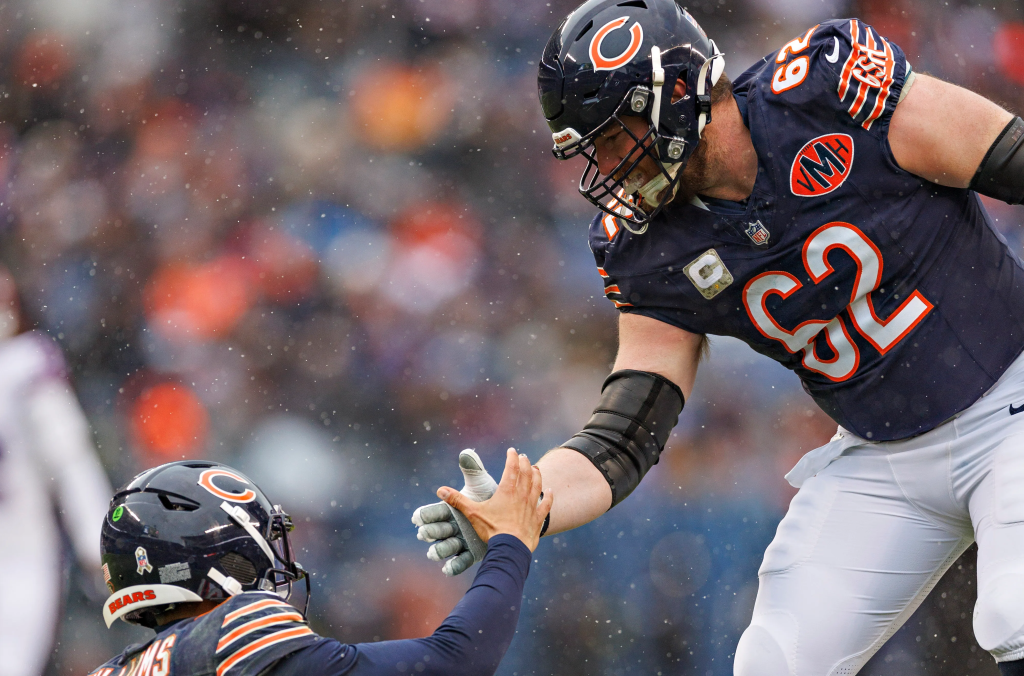
Ben Johnson didn’t hesitate when asked about Thuney’s influence earlier this season.
“He’s just a winner,” the Bears head coach said. “The model of consistency… the same guy every single day.”
That consistency became the foundation of Chicago’s offensive transformation in 2025.
A year earlier, rookie quarterback Caleb Williams absorbed a league-high 68 sacks. This season? Just 24—third-fewest in the NFL. That’s not an adjustment. That’s a shift in identity.
Thuney anchored an offensive line that didn’t just protect better—it controlled games. Chicago finished with the fewest giveaways in the league, ranked third in rushing offense, and became the only NFL team with multiple rushers eclipsing 750 yards on the ground. That balance didn’t happen by accident.
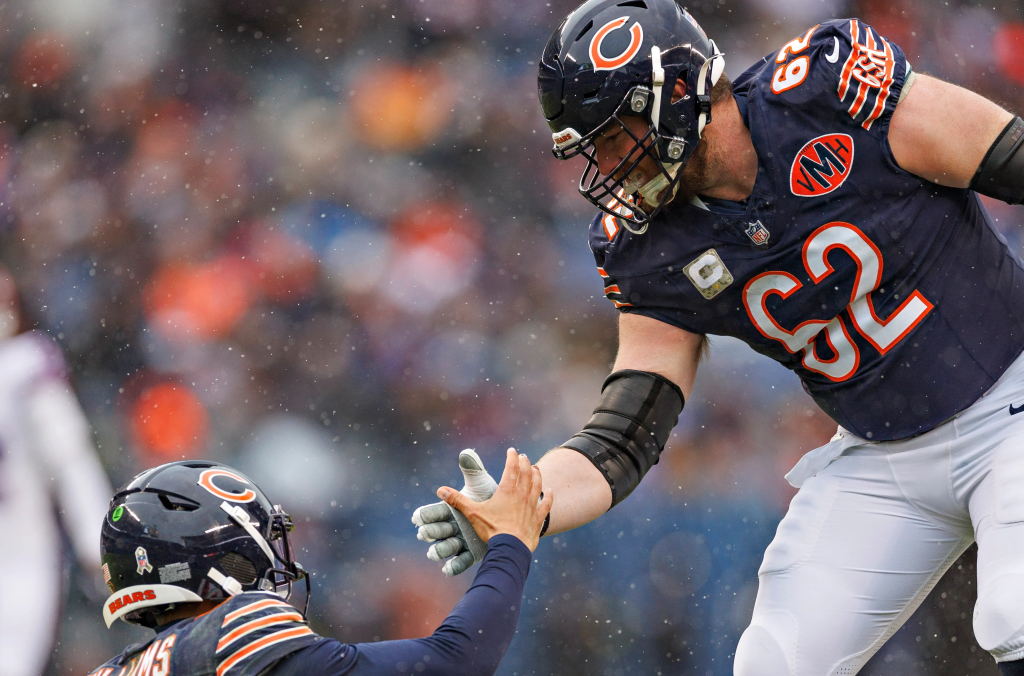
It happened because the pocket stopped collapsing.
Declan Doyle, the Bears’ offensive coordinator, emphasized that Thuney’s value extended beyond the field. In meetings. In communication. In culture. He brought the habits of winning organizations into a locker room still learning how to sustain success.
“He knows what winning looks like,” Doyle said. “And guys listen when someone like that talks.”
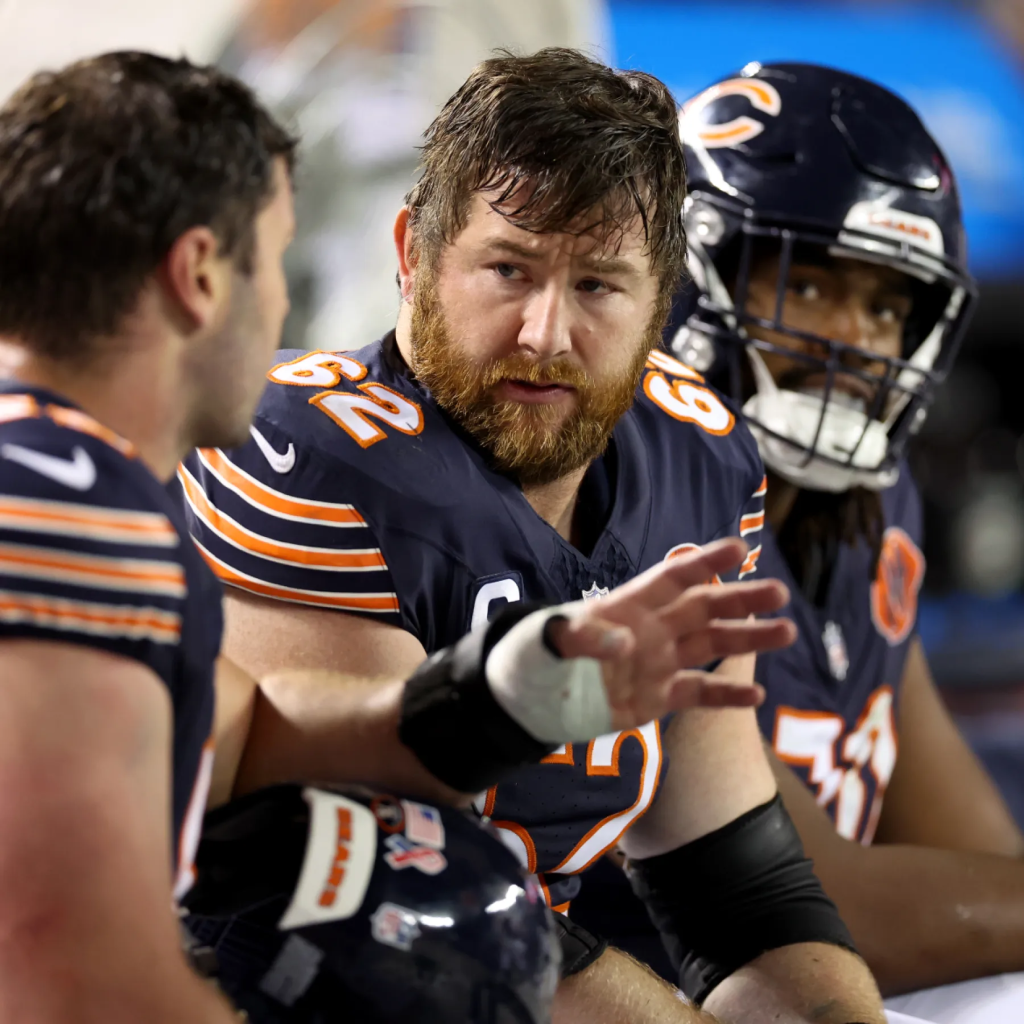
That listening mattered.
Chicago didn’t just win the NFC North for the first time since 2018—they did it by protecting their most important investment. Williams started all 17 games, set a franchise passing record, and played the entire season upright. That alone changes the trajectory of a young quarterback’s career.
The other finalists—Penei Sewell, Creed Humphrey, Garett Bolles, Quinn Meinerz, and Aaron Brewer—underscore the caliber of company Thuney now keeps. These are players who define offenses without demanding attention.
And that’s the point.
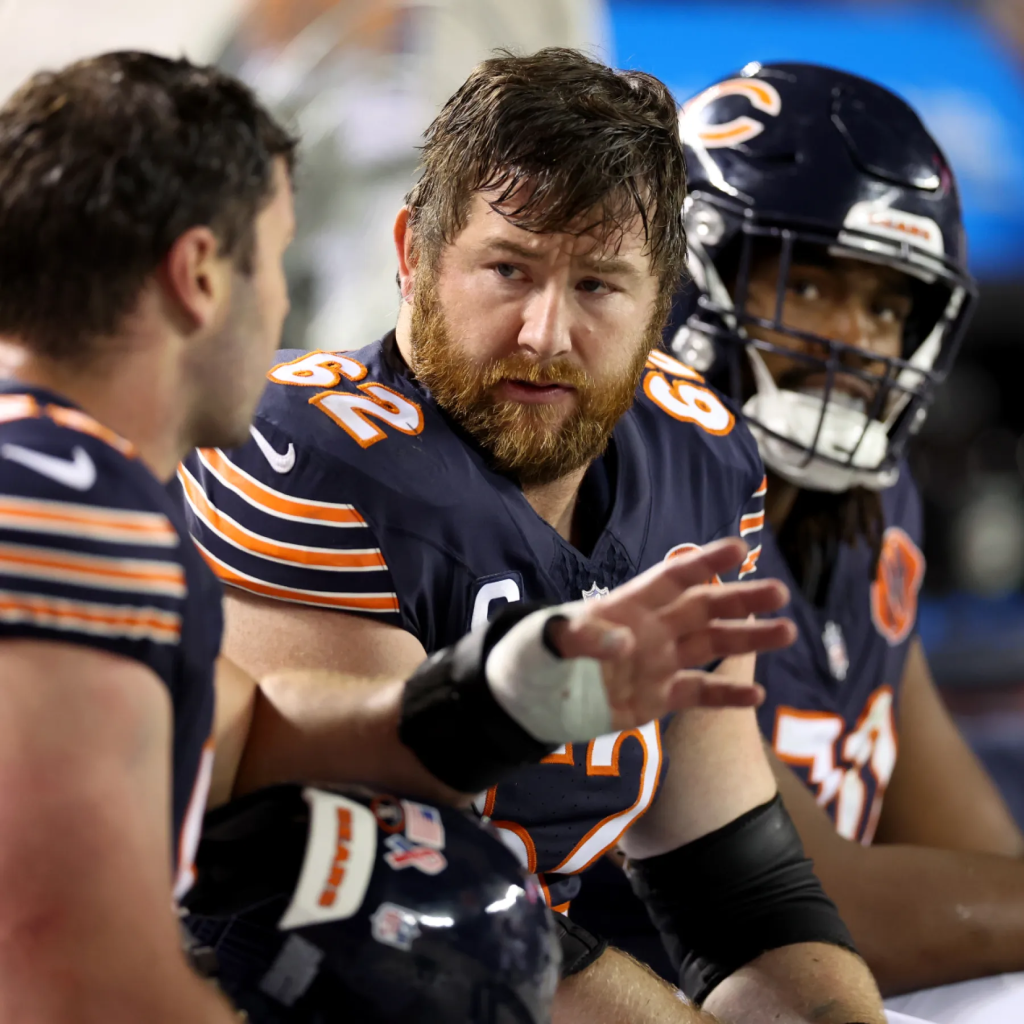
The NFL has spent decades celebrating the results without acknowledging the source. Protector of the Year is a correction. A spotlight on the work that doesn’t trend—but transforms teams.
Thuney has already been named First-Team All-Pro and selected to the Pro Bowl. But this nomination feels different. It ties individual excellence to collective stability.
It tells a quieter story.

Chicago’s resurgence didn’t begin with a throw. It began with trust in the pocket.
And now, the league is finally watching where it started.
Leave a Reply