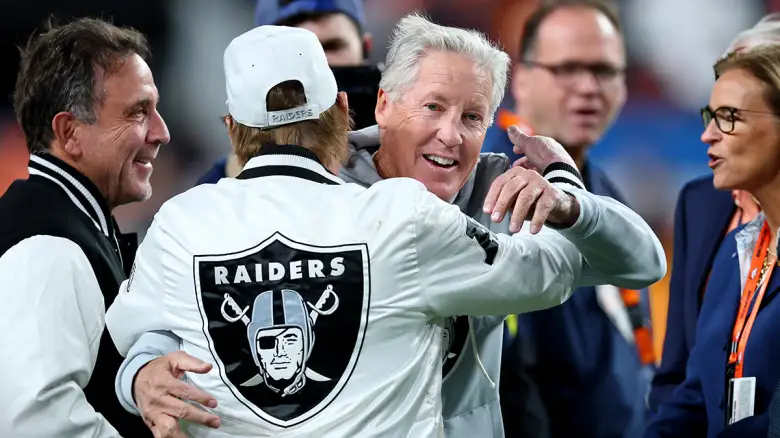
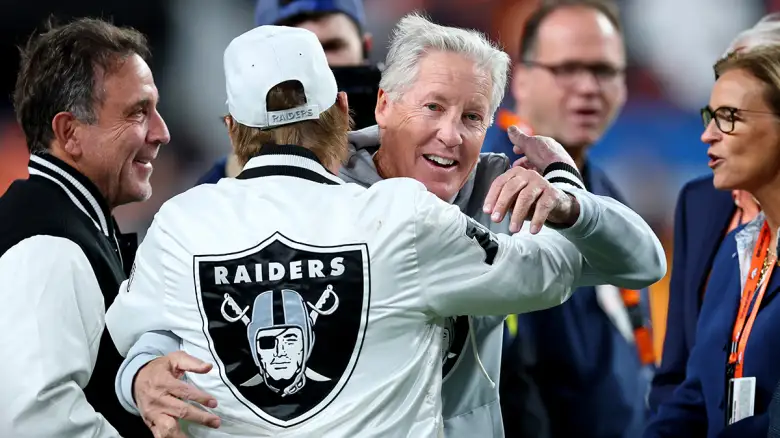
When the Las Vegas Raiders hired Pete Carroll last offseason, the move felt symbolic. Experience over experimentation. Familiarity over risk. In a franchise searching desperately for stability, Carroll represented a return to something proven.
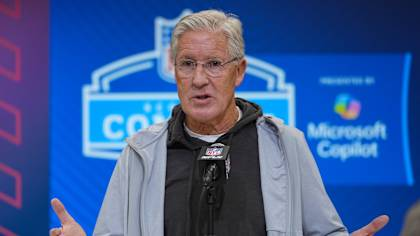
Instead, the hire has now earned a distinction that feels less reassuring—and more revealing.
Carroll’s one-year stint in Las Vegas will be remembered not for revival, but for contradiction. He arrived as the oldest head coach in NFL history, a record he extended just weeks into the season. The irony followed him the rest of the way. The Raiders didn’t look seasoned. They looked stuck.
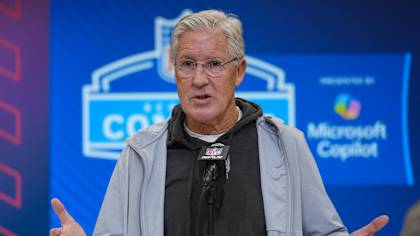
From the opening weeks, the team struggled to find balance. Carroll’s defense never established consistency, routinely failing to stop opposing offenses in meaningful moments. The issues weren’t subtle. They were structural. And as losses piled up, the response became reactive.
Midseason, Carroll fired both special teams coordinator Tom McMahon and offensive coordinator Chip Kelly—two high-profile moves that signaled urgency rather than clarity. Instead of stabilizing the program, the changes highlighted how unsettled it already was.
This wasn’t the vision Raiders fans were sold.
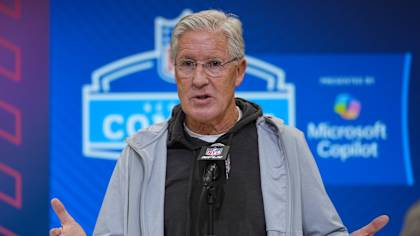
Carroll’s résumé elsewhere remains unquestioned. He’s a Super Bowl winner. A program builder. A culture setter. But Las Vegas exposed a different truth: past success doesn’t guarantee present alignment. What worked in other environments didn’t translate here—and quickly.
The Raiders’ season never recovered from its rocky start. Losses stacked. Adjustments failed to stick. And by the time the year ended, Carroll’s exit felt less like a surprise and more like a conclusion everyone had quietly accepted.
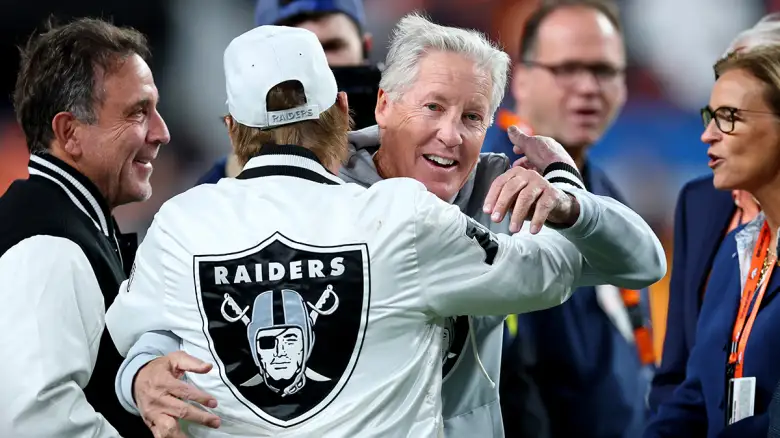
Now, Las Vegas finds itself searching for its fourth head coach in four seasons.
That number alone tells a story.
General manager John Spytek, speaking candidly after Carroll’s dismissal, offered insight into a relationship that was functional—but not seamless. He denied operating on different timelines, emphasizing communication and collaboration. Offices were shared. Decisions were discussed. But even Spytek acknowledged the obvious: “We didn’t get everything right.”
That understatement may be the most honest evaluation of the Carroll era.
The Raiders hoped Carroll’s presence would steady the franchise. Instead, it reinforced how fragile the foundation already was. His tenure has since been labeled by analysts as one of the most top-heavy hires in recent league memory—big on reputation, light on sustainable results.
And that’s the distinction.
Not the age record. Not the firings. But the realization that Las Vegas looked backward when it needed to look forward.
Now, the focus shifts again. Rumors point toward Klay Kubiak as a potential replacement—another reset, another philosophical pivot. Spytek has stressed the importance of alignment moving forward, of shared vision rather than borrowed identity.
The Pete Carroll chapter in Vegas doesn’t erase his legacy. But it does underline a hard truth about the Raiders’ recent history: stability can’t be hired—it has to be built.
And until Las Vegas stops mistaking experience for direction, the carousel will keep spinning.
Leave a Reply