The Minnesota Twins didn’t fire Derek Falvey.
They didn’t extend him either.
Instead, they chose the most corporate phrasing possible — and one of the most telling ones in professional sports: a mutual agreement to part ways.
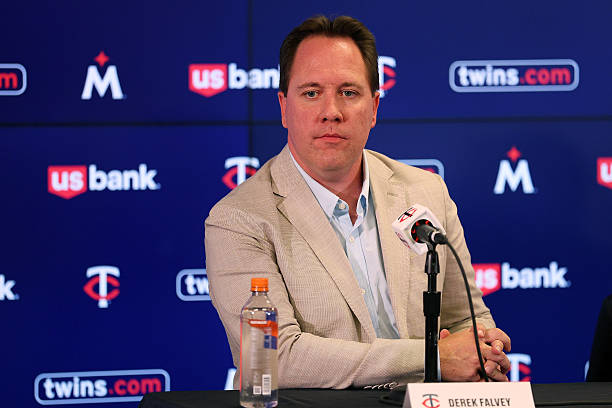
On Friday, less than two weeks before pitchers and catchers are scheduled to report to spring training, the Twins announced that Falvey is no longer the club’s president of baseball operations. The timing alone raised eyebrows. The context made it unavoidable.
This wasn’t about one bad season.
It was about power, direction, and a franchise recalibrating under new ownership.
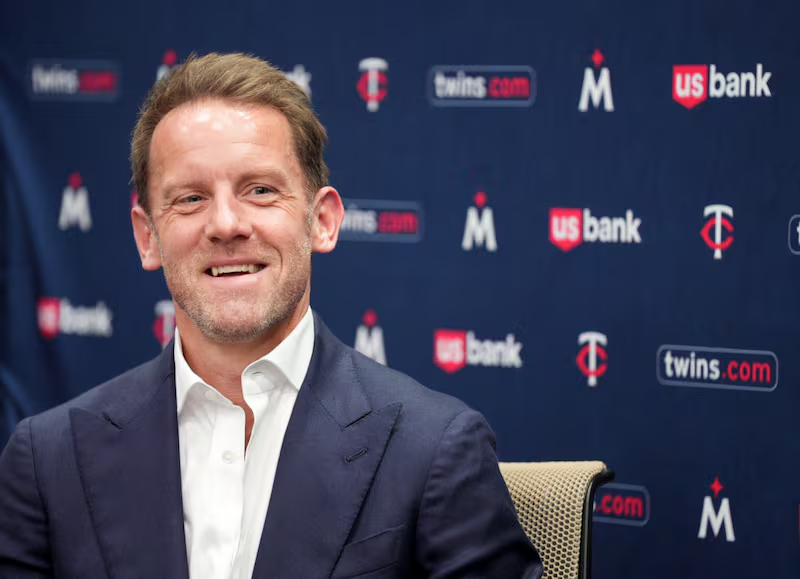
Falvey had been one of the defining architects of modern Twins baseball since arriving from Cleveland in 2016. Over nearly a decade, he helped drag the organization into the analytics era, modernized player development, and built a culture rooted in long-term process rather than short-term noise.
Under his watch, Minnesota won three division titles and reached the postseason four times.
By most traditional measures, it worked.
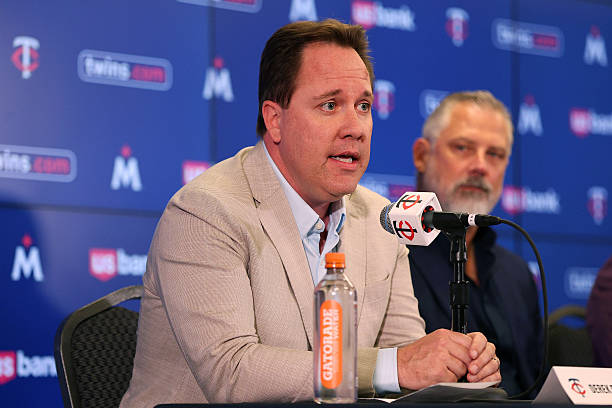
But ownership changed in December — and with it, the questions changed too.
New owner Tom Pohlad made it clear in his statement that this decision wasn’t sudden. Conversations had been happening quietly for weeks, centered on “leadership, structure, and the future of the club.” That language matters. It suggests alignment issues, not performance failures.
In other words: the Twins didn’t just want results.
They wanted a different roadmap.
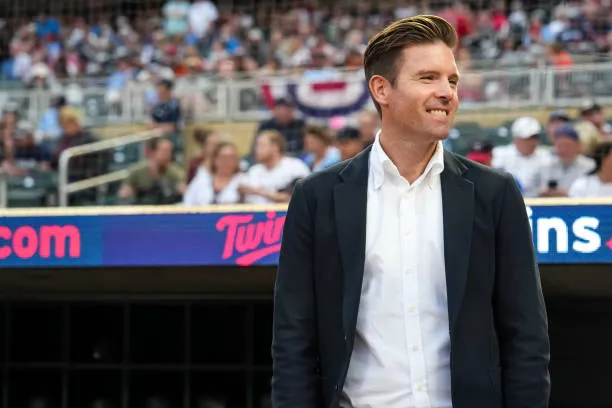
Pohlad was complimentary — almost excessively so — calling Falvey’s tenure “transformational” and praising his values, integrity, and impact. That kind of language often accompanies exits that are less about blame and more about philosophical divergence.
Falvey echoed the sentiment, acknowledging that ownership transitions “naturally create moments for reflection” and that both sides agreed it was “the right time.”
What he didn’t say is just as revealing as what he did.

There was no mention of a next role. No timeline. No transition period. Just space.
For now, executive vice president and general manager Jeremy Zoll will assume leadership of baseball operations. Whether that’s a temporary bridge or a longer-term signal remains unclear.
What is clear is that the Twins are choosing change at a delicate moment.
Spring training is days away. Roster decisions are imminent. The competitive window is open — but fragile. And removing the top decision-maker this close to the season is not a move teams make unless they believe the status quo no longer fits where they’re going.
Falvey’s departure also closes a full-circle chapter. His MLB career began in Cleveland in 2007 as an intern. Nearly 20 years later, he leaves Minnesota having helped shape two organizations’ identities — and now stands at another crossroads.
“I’m looking forward to taking some time with my family,” Falvey said. “I don’t have specific plans yet.”
That pause feels intentional.
In baseball, front offices don’t reset lightly. And they don’t walk away from stability unless they believe evolution requires disruption.
The Twins didn’t just lose an executive on Friday.
They signaled that a new era — defined by new voices, new priorities, and new power structures — has already begun.
Leave a Reply