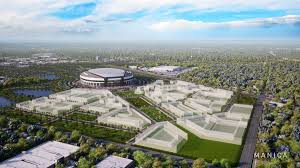
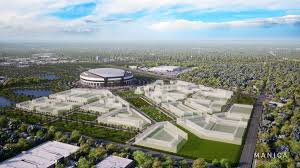
Hammond, Indiana — While Indiana political leaders have enthusiastically supported a proposal to bring the Chicago Bears to a new stadium in northwest Indiana, some taxpayers in the region are raising serious concerns about how the project would be funded.

The plan, which would build a new stadium in Hammond near Wolf Lake, relies heavily on new taxes that many residents say they cannot afford.
Taxpayers Question New Taxes
The stadium proposal includes several new revenue sources, including:
- 1% food and beverage tax in Lake and Porter counties
- 5% increase in hotel taxes in Lake County
- 12% admissions tax for events
- Creation of a special tax district to fund stadium-related expenses
These taxes would help finance the project, which could cost up to $3 billion.
Under the proposal, the Bears would contribute about $2 billion, while the state of Indiana would cover up to $1 billion through public financing.
Residents Say Priorities Are Misplaced
Some residents say lawmakers are moving too quickly to support the stadium while ignoring everyday financial struggles facing many households.

Local radio host Chuck Pullen of WJOB-AM in Hammond criticized the state’s priorities.
“A lot of blue-collar people in the area are struggling to get by,” Pullen said. “They’re asking why government leaders moved so fast to help the Bears but haven’t addressed rising utility bills.”
Recent protests over soaring utility costs in northwest Indiana have highlighted the economic challenges facing many residents.
Some households say they are already forced to choose between paying utility bills or buying groceries.
Advocacy Groups Oppose the Plan
The organization Americans for Prosperity Indiana, which initially remained neutral, has now come out against the stadium proposal after reviewing the tax increases involved.
In a letter sent to state lawmakers, the group argued that stadium subsidies often fail to produce meaningful economic growth.
“Decades of research show stadium subsidies rarely generate net economic benefits,” the group wrote. “This proposal exposes taxpayers to major financial risk while providing limited public value.”
Lawmakers Still Strongly Support the Proposal
Despite these concerns, the legislation supporting the stadium project passed with overwhelming bipartisan support in the Indiana legislature.
State leaders, including Governor Mike Braun and House Speaker Todd Huston, have backed the plan as a historic opportunity to bring an NFL franchise into Indiana.
Some political observers also note the move carries symbolic significance by potentially relocating a major team from Illinois to a Republican-led state.
Questions About the Stadium Site
Residents also worry about how the stadium might affect their neighborhoods.
The proposed location near Lost Marsh Golf Course in Hammond raises several concerns, including:
- Existing flooding issues in the area
- Nearby industrial sites and environmental concerns
- Possible traffic and infrastructure strain
- Uncertainty about property impacts for nearby homeowners
“People are asking if their homes could end up becoming parking lots,” Pullen said. “And they aren’t getting clear answers.”

Illinois Still Fighting to Keep the Bears
Meanwhile, Illinois officials are working to prevent the Bears from leaving the state.
An Illinois House committee recently approved legislation that would allow the team to negotiate tax incentives with local governments, though the proposal still faces debate.
Former Illinois Governor Pat Quinn has also launched a public campaign urging team ownership to keep the franchise in Chicago.
His new initiative, BearDownforIllinois.com, encourages fans to sign a petition asking the Bears to remain in the state.
“We want the owners to hear the voice of the fans,” Quinn said.
Is Indiana Just Leverage?

Some skeptics believe the Indiana proposal may simply be leverage for the Bears in negotiations with Illinois.
The team previously purchased the Arlington Park property in Arlington Heights for $197 million and has proposed a massive $5 billion mixed-use development there.
If Illinois agrees to provide infrastructure funding—estimated at $855 million—the Bears could still build their next stadium within the state.
For now, the future home of the franchise remains uncertain.
But one thing is clear: while lawmakers may be eager to welcome the Bears, many Indiana taxpayers are far less enthusiastic about paying for it.
Leave a Reply