DUNEDIN, Fla. – Addison Barger sleeping on the creaky pullout couch in Davis Schneider’s hotel room before coming off the bench in Game 1 to deliver the World Series’ first-ever pinch-hit grand slam made a great post-season story.
The prelude, covering Oct. 20-22, might be even better.
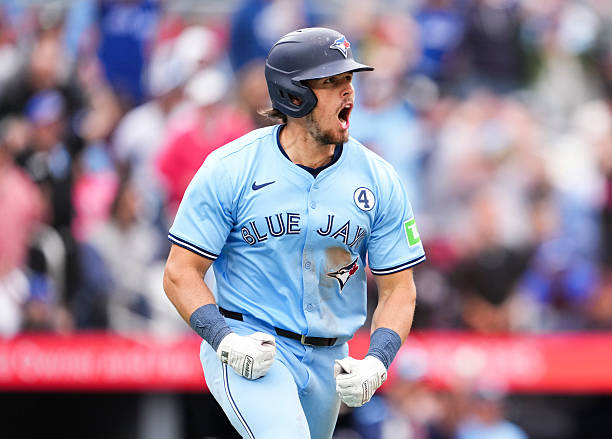
“After winning the pennant (in Game 7 against the Seattle Mariners), I didn’t sleep for like 40 hours straight,” Barger recalled Sunday at the Toronto Blue Jays’ Player Development Complex. “Stayed up all night celebrating getting to the World Series, flew home early in the morning, got home, my wife was like, ‘I’ve got to go to the hospital now – let’s go.’
Got in the car, went to the hospital, baby was born and then had to get back to the airport at four in the morning the next day, so I just stayed up, all the way until I got back to Toronto on whatever day it was. Took a nap for like three hours and then we had a practice, so right to the field for practice.
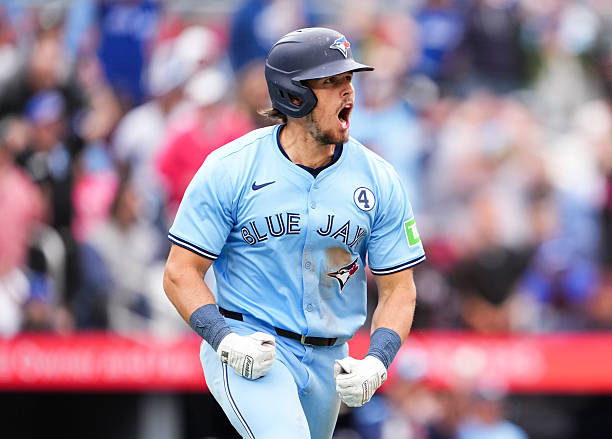
“It was a lot.”
For sure, and just in case you weren’t already convinced, well, there’s another example of how Barger is simply built different.
The nap after that madcap stretch came on the couch of Myles Straw, who hosted the 26-year-old for a couple of nights before he started crashing with Schneider, as Barger’s wife Zephina tended to son Ellison, the couple’s third child, back home.
- Watch Blue Jays in spring training on Sportsnet
- Watch Blue Jays in spring training on SportsnetThe Blue Jays begin their ramp up to the 2026 with spring training action in Florida. Sportsnet will broadcast 23 spring training games on TV and Sportsnet+.Broadcast schedule

His homer, off Anthony Banda in the sixth inning to break open what finished as an 11-4 win, kicked off a strong World Series in which he hit a tick under .500 (12-for-25) and reached base 15 times in 28 plate appearances.
Barger ripped two doubles in Game 6, including one in the ninth inning that preposterously lodged into the base of the wall in left-centre. He then reached four more times in Game 7, including in those unfulfilled ninth and 11th innings.
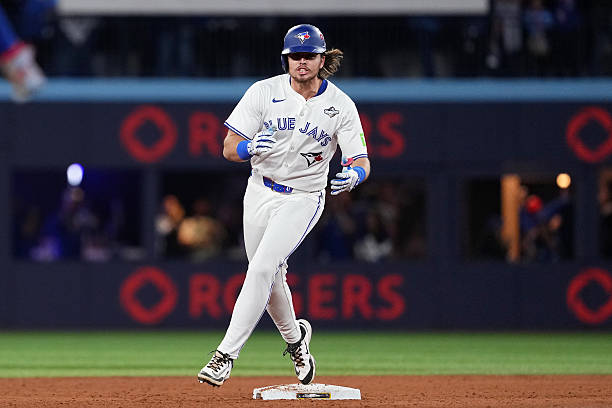
Little wonder then that by the time he got home the very next day, “I was pretty messed up in the head a little bit.”
“I would talk to Davis, we’d come in for the 200th day in a row and be like, ‘Dude, I don’t know how much longer we can do this,’” he continued. “I’ve never played that deep, ever.
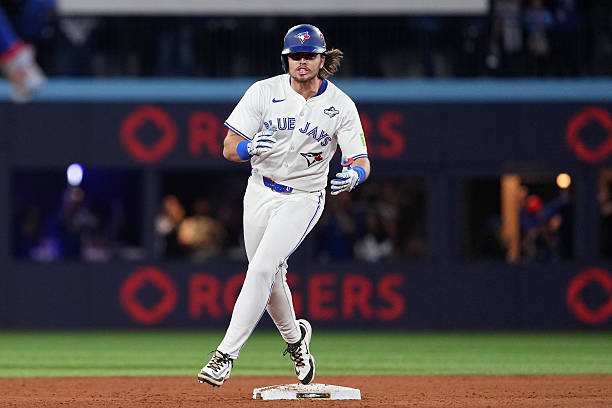
I was like, my thoughts are so much different than they were before the season started, and like, I’m kind of a different human at that point of the year, the brain chemistry, something ain’t right.
Then to lose in Game 7, it’s obviously totally depressing, but I just didn’t know what to do with myself. I just felt like a zombie for probably a week. And tired. My body was just feeling it.”
Regardless, Barger found solace in “the one thing I’m structured about,” lifting weights. Game 7 was on a Saturday, he flew home Sunday, and by Monday, he was back in the gym, which was vital for him in shaking off the pain.

“Do baseball players need to lift a ton and look like bodybuilders or something? Probably not. But for me, it really helps mentally for battling things, it’s somewhere I can go and just clear my mind,” he explained.
“It’s like therapy. I’m really OCD about it. My house is messy. I wake up whenever in the off-season. But each day is a certain lift and it’s always on program and I have to do that lift on that day.
I don’t go into the gym, like, I feel like doing this today. It’s going to be part of the program. And if I miss a lift or something like that, I freak out. It’s bad.”

By the looks of things, Barger didn’t miss many lifts this winter as he geared up for another run with the Blue Jays, this time in a very different situation.
In previous springs, he came to camp trying to force his way onto the Opening Day roster, nearly breaking through last year, only for the club to pick since-traded Alan Roden out of the gate instead.
The Blue Jays recalled him April 15 when Nathan Lukes went on the paternity list and after a slow start, as manager John Schneider worked through how to fit him in the puzzle, Barger had a big series in Seattle with six hits, including a homer, and didn’t look back.
By the time the post-season arrived, Barger was a regular in the heart of the order, third on the club with 21 homers and fifth with 74 RBIs in 135 games, 91 of them at third base, 57 more in right field, the position where the bulk of his reps are projected this year.
All of that is allowing Barger to feel that he doesn’t “have to put so much pressure on myself to get hits,” and “beat up my body” as much, “knowing that I can use spring to get ready for the season and that’s what’s important.”
Pivotal to being ready for 2026 is applying the many lessons he learned a year ago.
While he didn’t spend much time appreciating what he accomplished – “I was so pissed about losing (Game 7) I didn’t really think about my season that much,” he said – Barger did cement in his mind the elements that led to his success.
On the physical end, hitting coach David Popkins freed him up to swing the way he always had after Barger made some changes in the summer of 2024, and that allowed him to be himself.
At the same time, he also started “understanding that I have the ability, as Pop puts it, ‘To use all the clubs in your golf bag.’”
“You have your driver, which is sick – that’s the homers,” Barger continued. “But do you have the wedge? Can you shoot a ball the other way when you’re not feeling good? That’s been a big thing for me.
I thought I did a good job with that in the World Series, where it’s like, you know what, I’m not trying to pull a fastball here, I might be looking breaking ball away and then they throw me fastball and I’m beat, but I have ability to shoot it the other way for a hit.
Trusting that I have that ability gives you a ton of confidence in the box, where it’s like I don’t have to be perfect. I can take my hits the other way. Battle with two strikes. Spoil some pitches. That’s really crucial in your development as a hitter.”
Barger intends to couple that with the singular focus on winning the Blue Jays rode through the post-season, which he feels helped bring out his best.
Growing up, he “thrived on playing games to win,” overcoming tools that weren’t as loud then as they are now by “being ultra-competitive and knowing I could outwork other guys and play harder than them.”
During the parts of seven seasons he spent in the minors, where the priority is development over winning, he feels he lost some of that element while focused on his own growth.
Then, like for any young player once they transition to the big-leagues, “it’s like, hey, I’ve got to put up numbers for myself, that’s how it is if you want to stay.”
“But in the playoffs, you just play to win again, not worry about stats, not worry about anything else and it turns out I play better like that,” Barger continued. “That is something for me to remember.
There are so many ways to win a baseball game. It doesn’t have to be two, three hits every night. So be super-competitive and try to win a ballgame.”
Makes sense, and that’s what the Blue Jays did team-wide a year ago. There’s no telling whose couch Barger may end up sleeping on this October if they can do it again.
Leave a Reply