The Chicago Bears entered the 2026 offseason knowing a difficult conversation was coming. Now, that conversation has taken a sharp and unexpected turn.
For months, DJ Moore’s future in Chicago has felt increasingly unstable. Declining production, a looming cap hit, and the rapid emergence of younger pass-catchers have quietly shifted the Bears’ priorities.
Rome Odunze, Luther Burden, and Colston Loveland are all on rookie deals—and all demanding larger roles. Something had to give.
Declan Doyle’s exit may have just provided the opening.
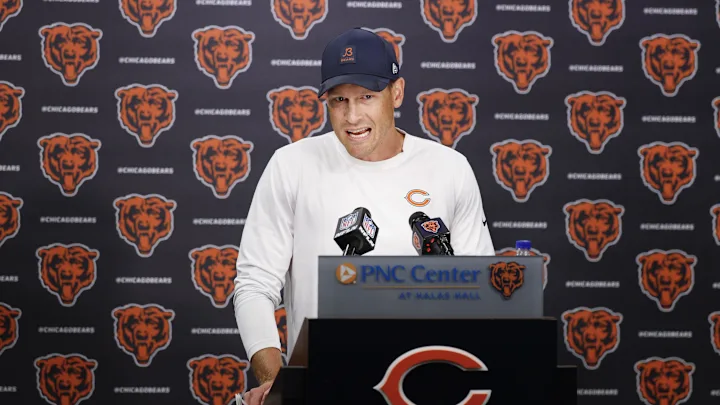
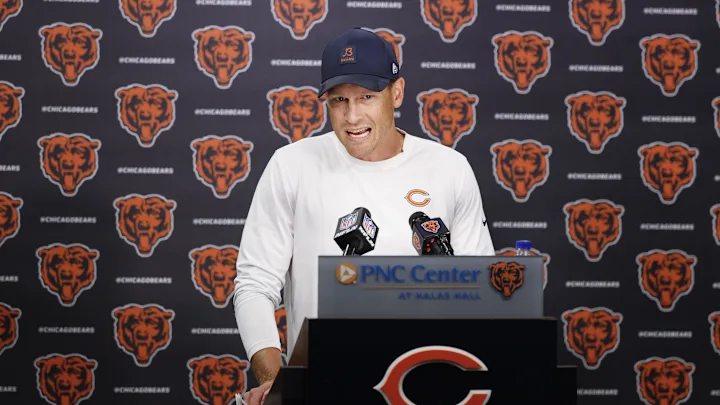
Doyle, Chicago’s former offensive coordinator, left the Bears to take over playcalling duties for Lamar Jackson and the Baltimore Ravens.
On its own, the move made sense. It’s a promotion, greater control, and a chance to work with a former MVP quarterback. But in the aftermath, it created something else entirely: a clean, logical bridge between Chicago and Baltimore.
And DJ Moore suddenly sits right in the middle of it.
Baltimore’s need is obvious. Lamar Jackson is coming off a down year by his elite standards, and while Zay Flowers has developed into a reliable weapon, the Ravens lack a true second option who can consistently win outside and command defensive attention.
Moore, even in a reduced season, still profiles as that type of receiver.
At his best, Moore wouldn’t just complement Flowers—he’d change the structure of the offense. He would allow Flowers to slide into a more natural secondary role, creating a legitimate one-two punch that Baltimore has been chasing for years.
For Chicago, the logic cuts just as clean.
Moore’s contract, once manageable, now stands out sharply against a roster being reshaped around cost-controlled talent.
Trading him would open cap space, simplify the depth chart, and remove a potential bottleneck in the development of Burden and Odunze. This isn’t about giving up on Moore as a player. It’s about timing—and fit.
That’s where Doyle’s presence matters.
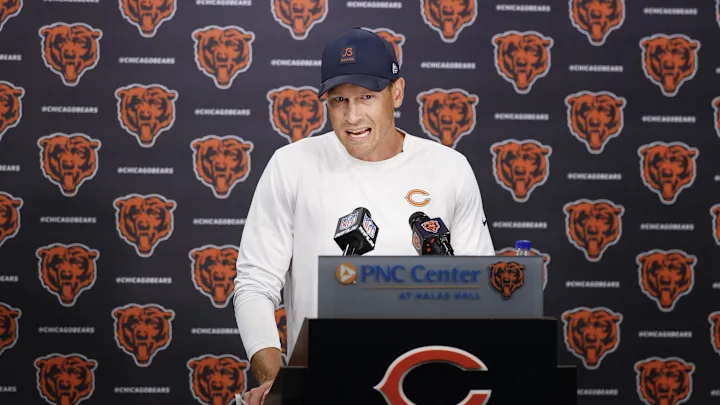
While there’s no public indication that Doyle is actively pushing for a reunion, familiarity changes conversations.
He knows Moore’s strengths, how he responds to certain route concepts, and how to deploy him within a structured offense. For Baltimore, that knowledge reduces risk. For Chicago, it increases leverage.
Financially, the Ravens are one of the few teams positioned to make it work without contorting themselves. Spotrac projects Baltimore with $22.6 million in cap space, a number flexible enough to absorb Moore’s deal with minimal disruption. That flexibility is rare—and valuable.
This also reframes Moore’s situation on a personal level.
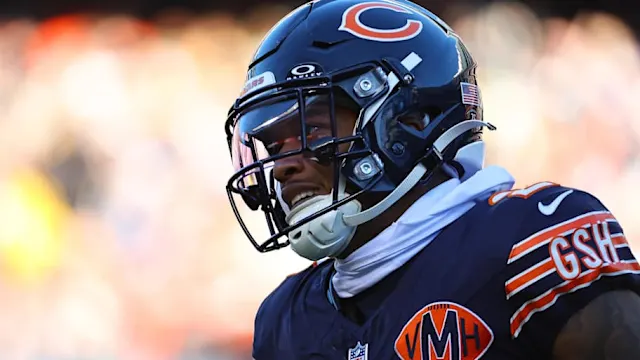
A fresh start matters. Moore arrived in Chicago as a cornerstone. He now finds himself part of a crowded room, with younger players clearly being groomed as the future. A move to Baltimore wouldn’t be a demotion—it would be a reset, placing him in a contender’s offense with immediate purpose.
None of this guarantees a deal. Trades of this magnitude never move quickly, and the Bears won’t part with Moore without meaningful return. But what changed this week is clarity. The hypothetical now has shape. The dots connect cleanly.
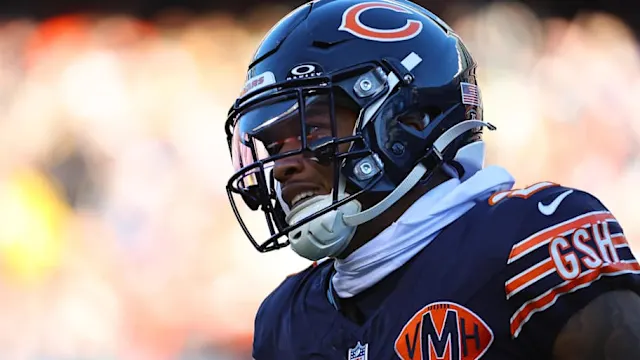
Chicago wants flexibility. Baltimore needs a weapon. Doyle sits in the middle with insight into both sides.
That combination doesn’t always produce action—but when it does, it tends to happen quietly and decisively.
DJ Moore hasn’t said anything. The Bears haven’t tipped their hand. And the Ravens are focused on refining an offense that knows it came up short.
But as the offseason begins to take form, one thing is becoming harder to ignore:
This trade idea isn’t speculative anymore.
It’s plausible.
And thanks to one coaching move, it suddenly feels close.
Leave a Reply