At first, the idea feels almost poetic.
A former top prospect. A team still searching for offensive balance. A name that never fully disappeared from the city’s memory.
But the sudden reappearance of CJ Abrams in Padres trade conversations isn’t just a feel-good reunion story. It’s something quieter — and far more complicated.
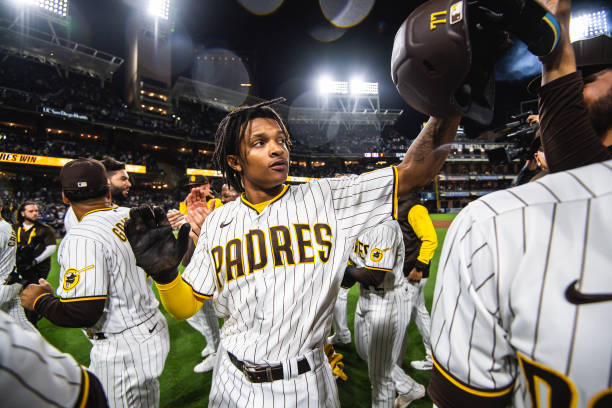
Abrams is coming off the best offensive season of his big-league career. At 25 years old, he’s finally starting to look like the player many believed he could become when San Diego first invested in him. Improved production, refined plate discipline, elite speed — the growth is real. And yet, despite that progress, he’s now being mentioned as a possible trade chip in Washington.
That alone raises questions.

The Nationals are in transition again. A new regime. A retooled vision. The recent decision to move MacKenzie Gore signaled that long-term planning has taken priority over short-term certainty. In that context, Abrams’ name landing near the trade block feels less like an indictment of his talent and more like a reflection of timing.
For the Padres, timing is everything.

San Diego’s offensive struggles in 2025 weren’t subtle. They were structural. Contact issues. Lack of speed. A lineup that often felt predictable. On paper, Abrams doesn’t solve everything — he isn’t a traditional slugger, and his splits against left-handed pitching remain a concern. But that’s not why he’s intriguing.
Abrams represents contrast.
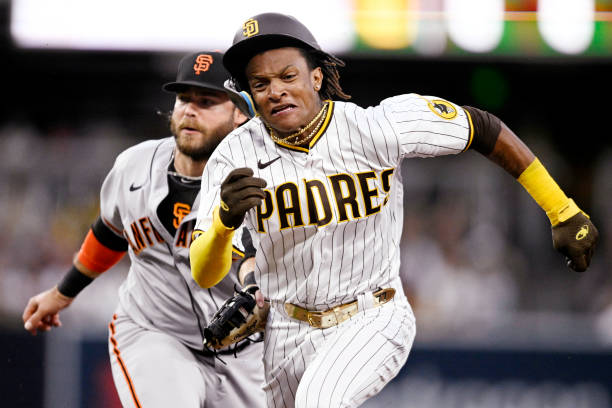
Where Luis Arraez brings control, Abrams brings chaos. Speed that changes defensive positioning. Baserunning that pressures mistakes. A bat path and attack angle that suggest untapped power rather than a finished product. His 116 stolen bases in under four full seasons quietly tell a story no box score fully captures.
Still, there’s a silence surrounding the most uncomfortable part of this discussion: role and value.
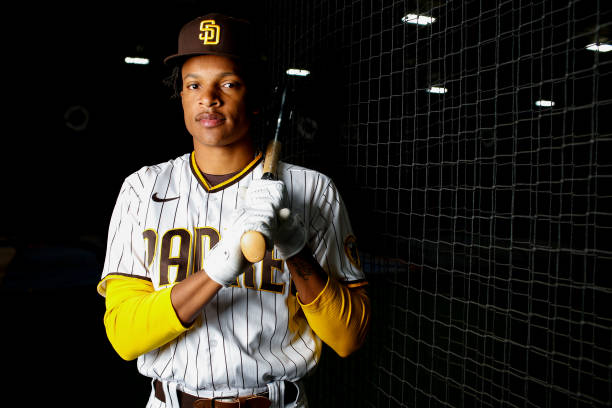
Washington would likely view Abrams as a young shortstop with upside. San Diego wouldn’t. In a Padres uniform, he projects more cleanly as a second baseman — or even something else down the line. That subtle disconnect matters. It changes how each side evaluates the price, and it reframes what this move actually means.
Because this wouldn’t be a cheap reunion.
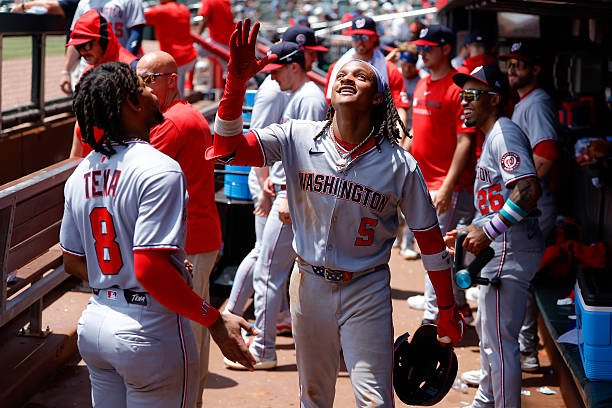
MacKenzie Gore’s return brought the Nationals five top-20 prospects. Abrams doesn’t carry ace-level pitching mystique, but his years of team control could inflate his value in similar ways. The rumored cost — three to five of San Diego’s remaining top prospects — isn’t trivial for a system that has already been thinned by years of aggressive moves.
And that’s where the discomfort sets in.
Abrams is better. He’s still improving. But a 111 OPS+ isn’t elite, especially when paired with defensive limitations at shortstop. The Padres would be betting not just on what Abrams is, but on what he might become once removed from the pressure of being “the guy” in Washington.
That’s a projection — not a guarantee.
Protected by All-Star caliber hitters, encouraged to focus on contact and patience, Abrams could thrive. Or he could simply remain a solid, versatile piece whose value never fully matches the price paid to reacquire him.
With a potential lockout looming, this feels like the kind of move general manager A.J. Preller has made before: decisive, bold, and impossible to reverse once executed.
So this isn’t really about bringing a former prospect home.
It’s about whether the Padres are willing to spend what little future they have left on a player who represents possibility — not certainty — and whether this quiet confidence hides a deeper urgency the organization hasn’t publicly acknowledged yet.
And if Abrams does return to San Diego, the real question may not be how he performs — but what the Padres were afraid of standing still without him.
Leave a Reply