The Chicago Bears entered the 2026 offseason knowing difficult decisions were coming. But few expected one of the clearest signals about DJ Moore’s future to arrive not through a press conference or a trade rumor—but through a coaching departure.
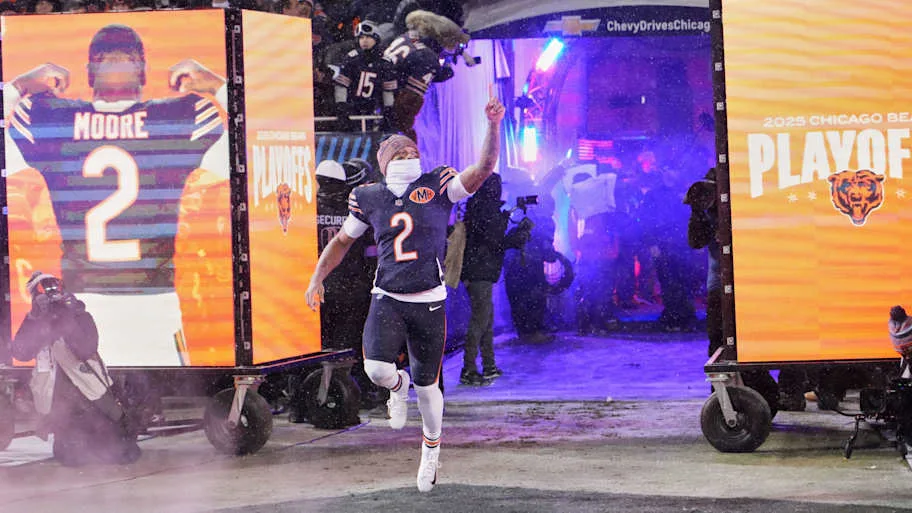
When offensive coordinator Declan Doyle left Chicago to take the same role with the Baltimore Ravens, the move was framed as a promotion. New city. A former MVP quarterback. Full playcalling control. Perfectly reasonable.
Quietly, though, it changed the math for DJ Moore.
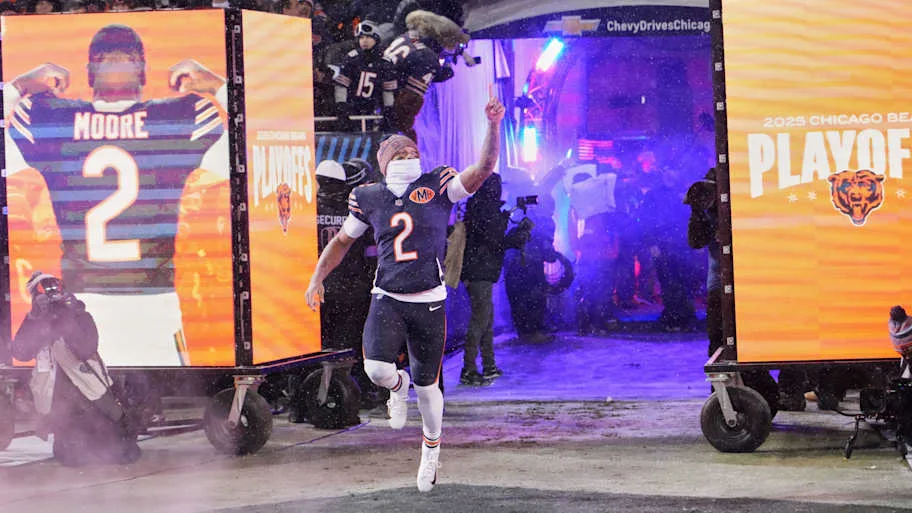
Moore’s name has hovered around trade discussions for months. His production has dipped. His cap hit looms large. And perhaps most telling, the Bears’ offensive identity has begun to drift away from him.
Rome Odunze, Luther Burden, and Colston Loveland are all on rookie contracts, all ascending, and all increasingly central to Chicago’s long-term vision.
That alone made Moore expendable.
Doyle’s exit may have made him movable.
In Baltimore, Lamar Jackson is coming off a season that would be considered disappointing by his own standards.
The Ravens’ offense lacked consistency and, at times, urgency in the passing game. Zay Flowers flashed, but beyond him, the Ravens lacked a true difference-maker who could consistently tilt coverage.
That’s where Moore enters the conversation.
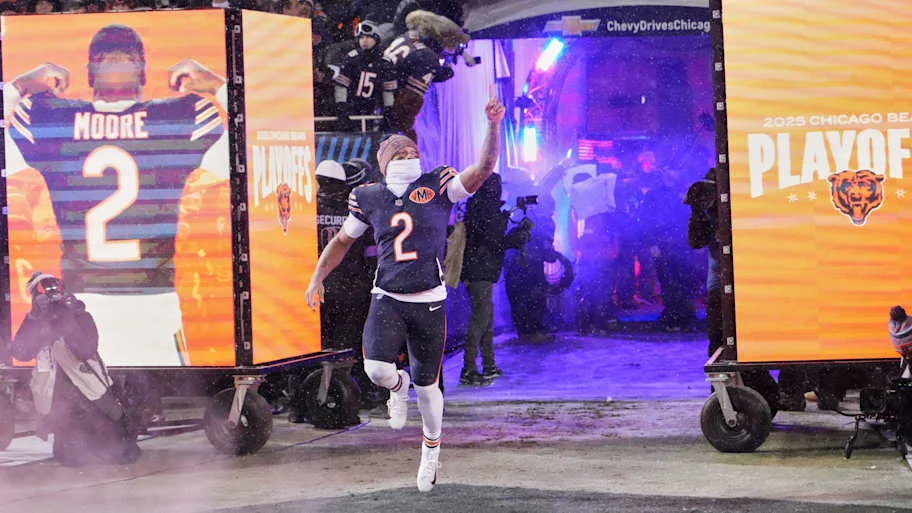
At his best, Moore isn’t a complementary piece. He’s a focal point. A receiver capable of commanding attention, winning after the catch, and functioning as a quarterback’s security blanket.
Pairing him with Flowers would give Baltimore something it’s lacked—a legitimate one-two punch that doesn’t require Lamar Jackson to be perfect on every snap.
The familiarity with Doyle only sharpens the idea.
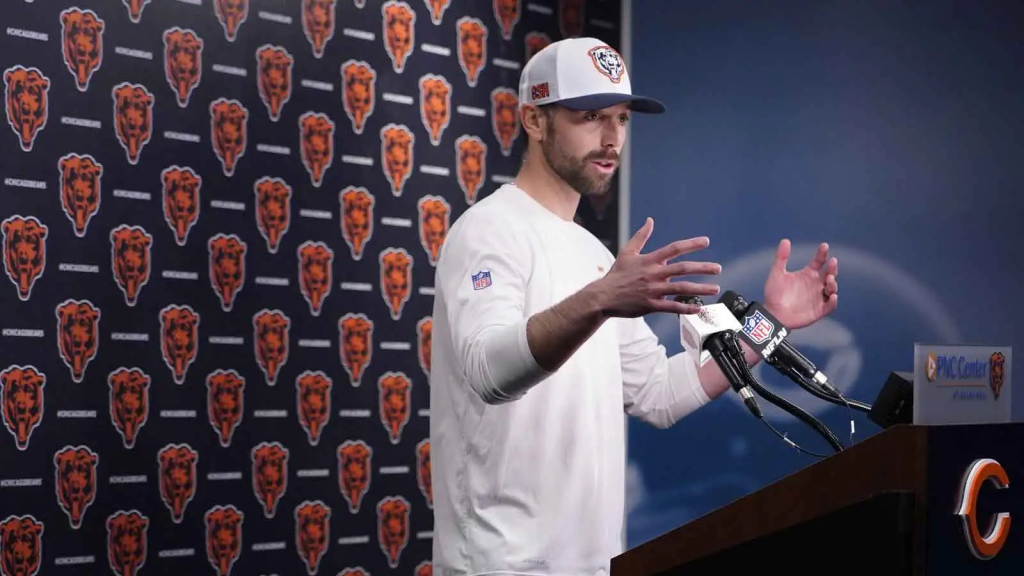
Doyle knows Moore. He’s seen what works—and what doesn’t. He understands how Moore fits into a system built around mobility, spacing, and improvisation. That comfort matters when teams are evaluating not just talent, but risk.
From Chicago’s side, the logic is cold but clear.
Moore carries a massive cap number for a team shifting toward younger, cheaper skill players.
Moving him would free up space, reduce redundancy in the receiver room, and accelerate the transition toward an offense built around Odunze and Burden. It would also signal a philosophical shift: production alone isn’t enough—timing matters.
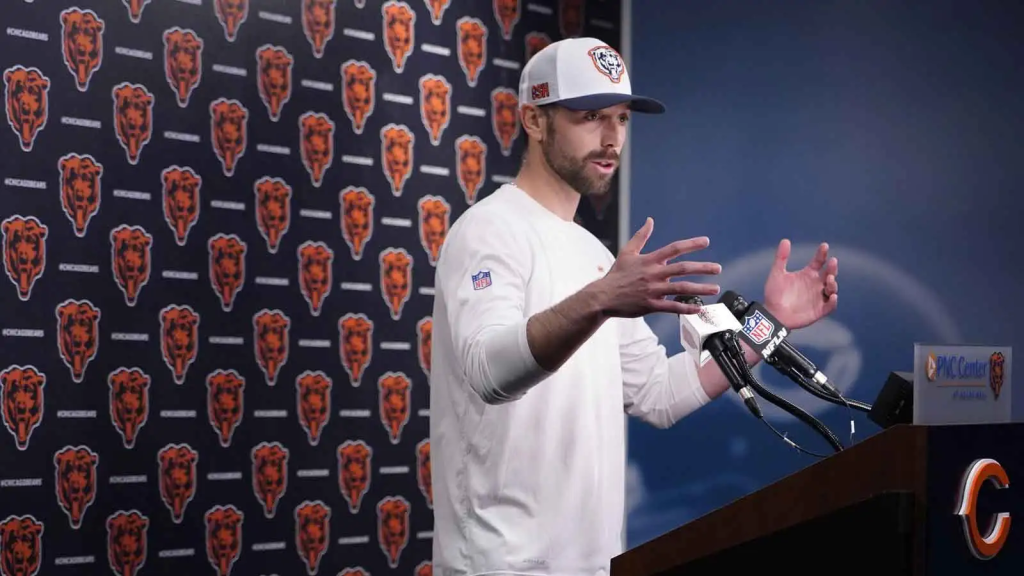
Baltimore, meanwhile, has room to operate. Spotrac projects the Ravens with over $22 million in available cap space, flexibility that could easily be manipulated to absorb Moore’s contract.
For a team chasing contention, spending that space on a proven receiver rather than a draft gamble makes sense.
And for Moore himself, the appeal may be personal.
Chicago’s offense is evolving. Targets will be spread thinner. The spotlight will move. In Baltimore, Moore wouldn’t just be another name in the rotation—he’d be an answer to a problem. A veteran presence on a team built to win now, not later.
None of this guarantees a trade will happen. Chicago hasn’t committed publicly. Baltimore hasn’t acknowledged interest. But the alignment is difficult to ignore.
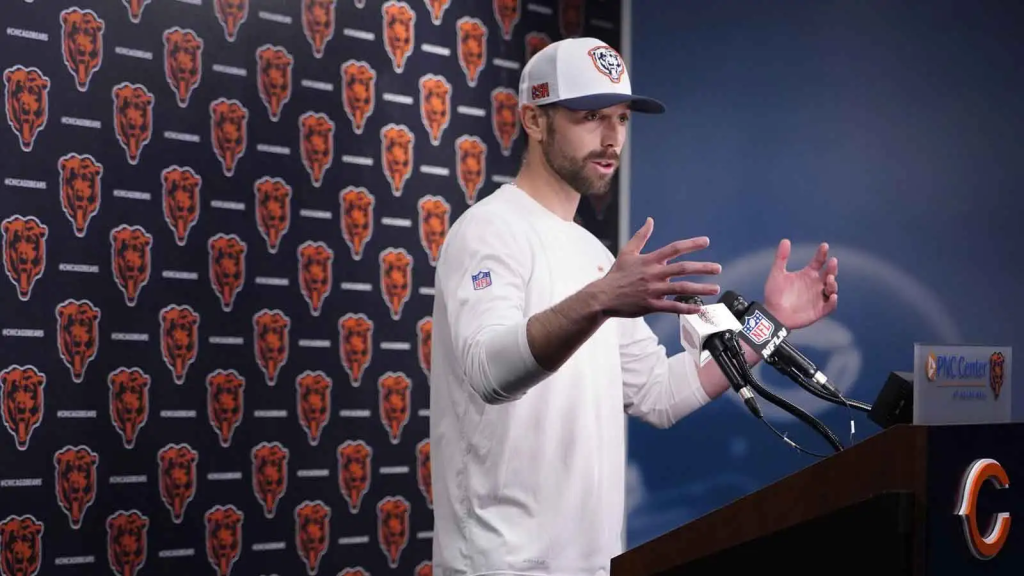
A former coordinator leaves town. A new quarterback situation demands urgency. A receiver sits at the intersection of cost, fit, and timing.
Sometimes, trades aren’t sparked by conflict. They’re sparked by opportunity.
And Declan Doyle’s departure may have quietly created the cleanest one yet.
If DJ Moore does leave Chicago, it likely won’t be framed as a failure. It will be framed as a reset—for a team ready to turn the page, and a player who might benefit from doing the same.
The Bears didn’t announce a rebuild.
They didn’t announce a fire sale.
But with one coaching move, they may have just tipped their hand.
Leave a Reply