The Las Vegas Raiders are on the brink of a reset that feels both inevitable and uncomfortable. With Klint Kubiak expected to take over as head coach following the Super Bowl, the franchise’s direction is coming into focus.
And at the center of that clarity is a decision many around the league already see as unavoidable.
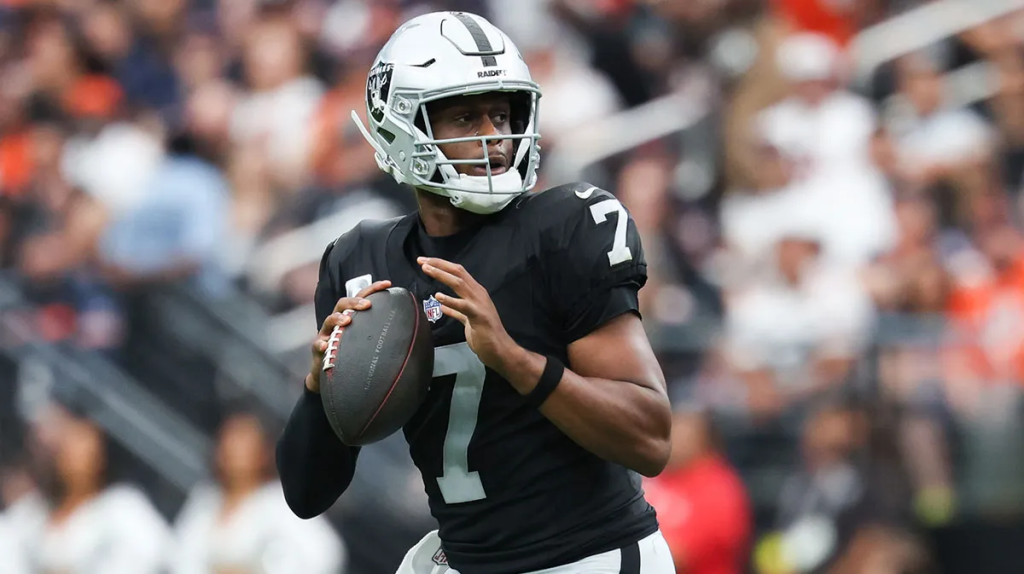
Geno Smith is running out of time in Vegas.
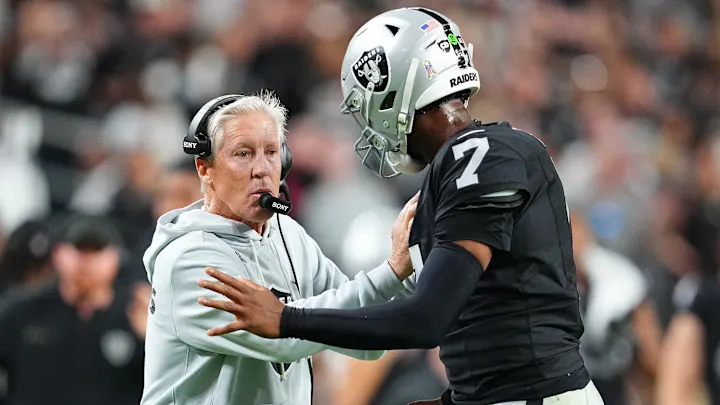
Smith’s first season with the Raiders was supposed to stabilize the position. Instead, it exposed how fragile the plan really was.
He was benched multiple times. The offense never settled. And the confidence that once surrounded his career revival quietly evaporated.
Kubiak’s arrival only sharpens the picture. Despite coming from Seattle, he has no real professional attachment to Smith.
The quarterback was extended under Pete Carroll’s vision, not Kubiak’s. And with the Raiders holding the No. 1 overall pick in the upcoming draft—widely expected to be used on Fernando Mendoza—the writing is starting to appear on the wall.
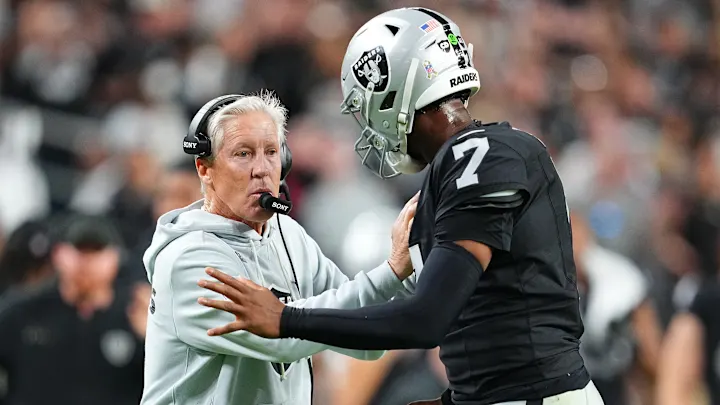
From a football standpoint, the separation makes sense. From a financial one, it’s more complicated.
Smith is owed $18.5 million next season, money already committed through bonuses. Cutting him doesn’t free the Raiders from the hit. Trading him, while more expensive on paper, offers something cuts do not: flexibility and assets.
Once the Raiders replace Smith with a rookie quarterback on a cost-controlled contract, the cap math suddenly becomes survivable.
And there’s another layer quietly driving this situation—timing.
Even after a dreadful campaign, Smith isn’t valueless. Quarterbacks with nearly 100 career starts don’t come cheap, especially in a league where desperation routinely inflates the market.
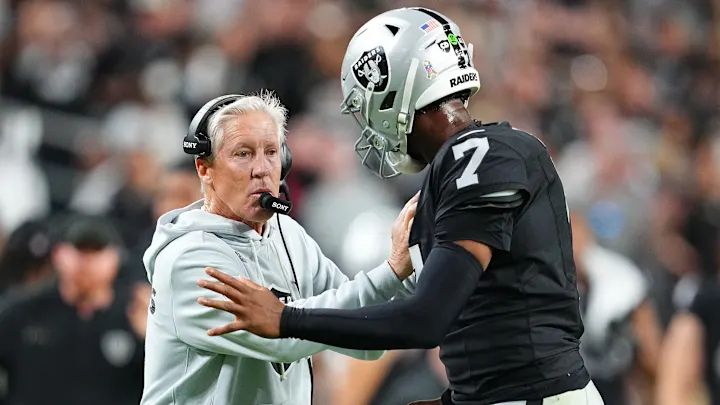
Compared to free-agent alternatives making north of $20 million per year, Smith’s deal is relatively modest. That alone keeps him in the conversation.
Which is why Atlanta emerges as a logical, almost eerie fit.
The Falcons are staring at uncertainty of their own. Kirk Cousins is likely on his way out. Michael Penix Jr. has shown flashes but remains inconsistent and turnover-prone.
Kevin Stefanski, entering his first season as head coach in Atlanta, needs stability—whether temporary or transitional.
Smith offers exactly that.
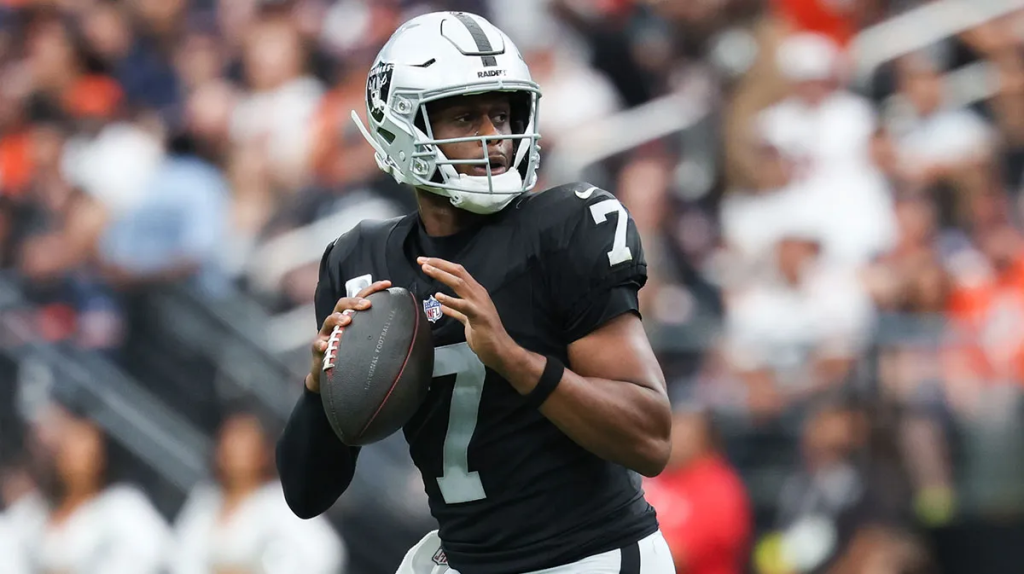
There’s familiarity in the building, too. Falcons passing game coordinator Tanner Engstrand has worked with Smith before.
He understands the highs and lows of Smith’s career arc. He’s seen what happens when the environment is right—and when it isn’t.
A trade package doesn’t need to be flashy. In fact, it shouldn’t be. A sixth-round pick in 2026 and a Day 2 selection in 2027 would likely satisfy Las Vegas, especially given the strength projected in future quarterback classes.
For the Raiders, it’s not about winning the trade—it’s about turning the page.
For Smith, it’s about survival.
Entering his age-36 season, he can’t afford another year of benchings and uncertainty. Ball security has to improve.
Decision-making has to sharpen. The margin for error is gone. Atlanta, with weapons like Bijan Robinson, Drake London, and Kyle Pitts, offers something Vegas never truly did last season: insulation.
The Falcons don’t need Smith to be a savior. They need him to be competent, controlled, and competitive.
If he fails, Penix Jr. is waiting. If he succeeds, Atlanta suddenly looks like more than an 8–9 afterthought.
Back in Las Vegas, the future is already moving forward. Kubiak will build around his quarterback. The rookie contract will define the roster. Geno Smith, once the bridge, now feels like the final remnant of a plan that didn’t work.
No announcement has been made. No trade finalized.
But the Raiders’ rebuild has a starting point.
And it doesn’t include Geno Smith.
Leave a Reply