The number hasn’t changed.
181 saves.
Emmanuel Clase still owns the Cleveland Guardians’ all-time record.
And for now, the record books remain unmoved—even as the ground beneath the achievement feels increasingly unstable.
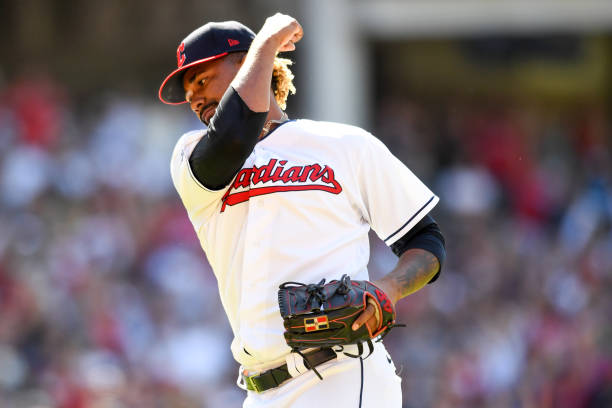
A question raised quietly by a fan has exposed a reality baseball has faced before and never fully resolved: what happens to history when its authors fall under suspicion?
Clase, along with teammate Luis Ortiz, is scheduled to stand trial on May 4 following federal indictments related to gambling allegations.
The charges do not target the act of saving games itself, but rather alleged conduct that—if proven—cuts against the sport’s core integrity.
Beyond potential criminal consequences, both pitchers face the possibility of a lifetime ban from Major League Baseball.

And yet, the record stands.
That’s not speculation. That’s precedent.
When asked whether Clase’s place atop the Guardians’ saves list would carry an asterisk, the answer was blunt: history doesn’t revise itself easily.
The numbers endure, even when the stories surrounding them become uncomfortable.

Baseball has been here before.
The 1919 White Sox—eight players banned for life for throwing the World Series—remain etched into the statistical ledger without annotations. Pete Rose, permanently ineligible for gambling on the game, is still officially MLB’s all-time hits leader with 4,256.
Baseball punishes people. It rarely punishes numbers.

That separation—between achievement and accountability—is what makes this moment feel heavy. Because if Clase is found guilty, the Guardians won’t lose a record. They’ll lose clarity.
Fans want moral symmetry: wrongdoing erased, history corrected, legacies reconsidered. Baseball offers something colder.
The game records outcomes, not intent. What happened on the field remains what happened—no matter what followed.

That doesn’t mean the consequences won’t be severe. A lifetime ban would effectively end Clase’s career. It would redefine how fans remember him. It would alter the Guardians’ identity, both competitively and culturally.
But it would not rewrite the saves column.
And that tension—between justice and permanence—is what makes the question linger.

Adding to the unease is timing. Clase and Ortiz have already been barred from reporting to spring training. They remain on the restricted list. Clase’s remaining guaranteed money is unresolved. The team waits. The league waits. The fans wait.
Meanwhile, the record sits untouched.
Commissioner Rob Manfred’s recent decision to remove deceased players from the permanently ineligible list reopened debates about redemption, legacy, and historical judgment. It signaled something subtle but important: baseball prefers to let time, not edits, do the work.
So if Clase’s case ends badly, the Guardians may be left with an all-time saves leader they cannot celebrate—and cannot erase.
That’s the quiet cost.
Records are supposed to be anchors. Fixed points. Proof that something happened and mattered. But when those records outlive the trust placed in the people who set them, they become something else entirely—uncomfortable reminders that the game remembers differently than its fans do.
For now, Emmanuel Clase’s name stays where it is.
No asterisk.
No footnote.
No verdict—yet.
And that unresolved space may be the loudest part of the story.
Leave a Reply