At first glance, it sounds like a minor staff update. The Chicago Bears need a new running backs coach after Eric Bieniemy departed to reunite with Andy Reid in Kansas City. It’s the kind of move that rarely stirs much emotion.
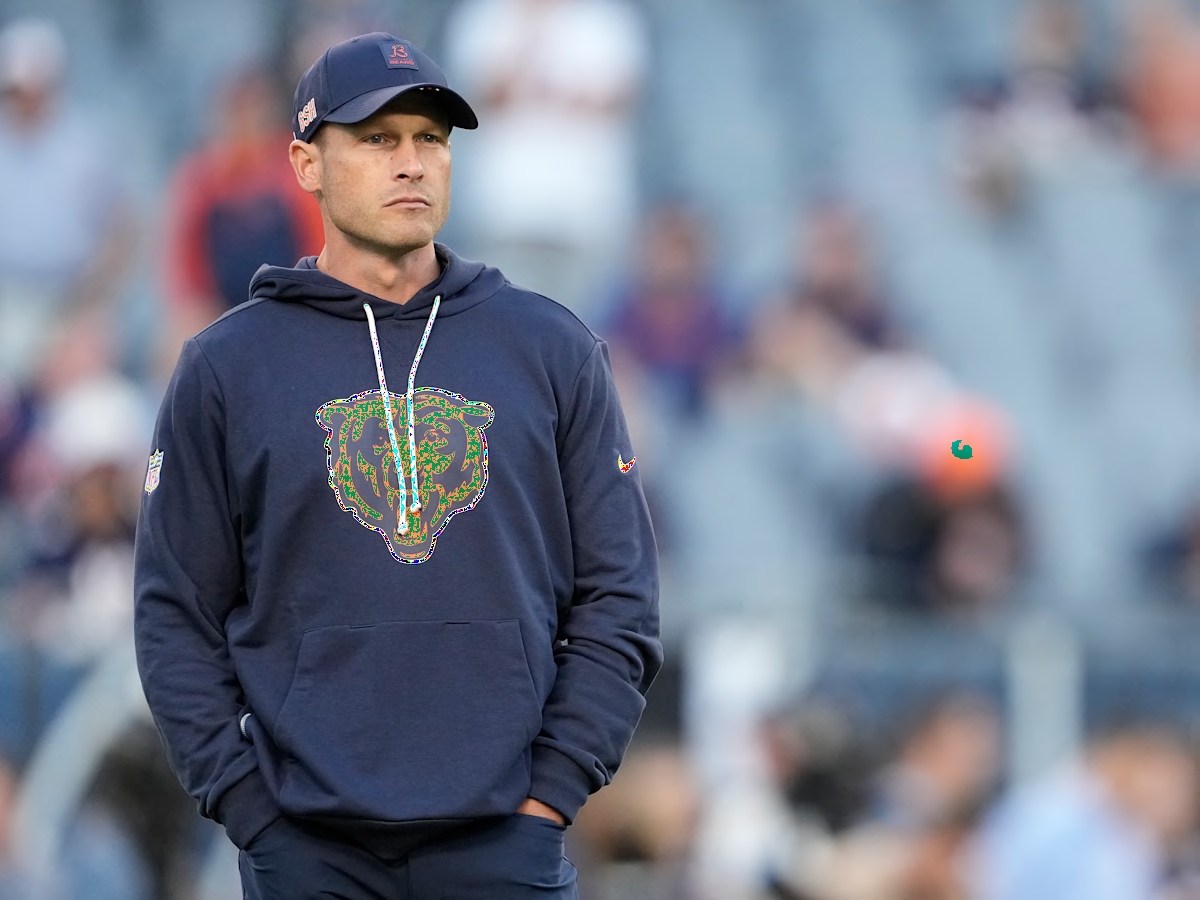
But one name quietly mentioned this week suggests something more intentional may be happening behind the scenes.
Eric Studesville.
When longtime Chicago Tribune reporter Brad Biggs flagged Studesville as “a name to keep an eye on,” it landed with weight — not because of hype, but because of history. Studesville isn’t a rising assistant looking for his first break. He’s a survivor. A stabilizer. A coach whose career has been defined less by flash and more by trust.
And in the NFL, that’s rare.
Studesville is widely regarded as one of the league’s most respected running back coaches, a reputation earned across decades and multiple franchises. Since 2017, he’s been a fixture in Miami, outlasting three head coaching tenures while quietly expanding his role. He’s currently the Dolphins’ associate head coach and previously served as co-offensive coordinator — responsibilities far beyond the running back room.
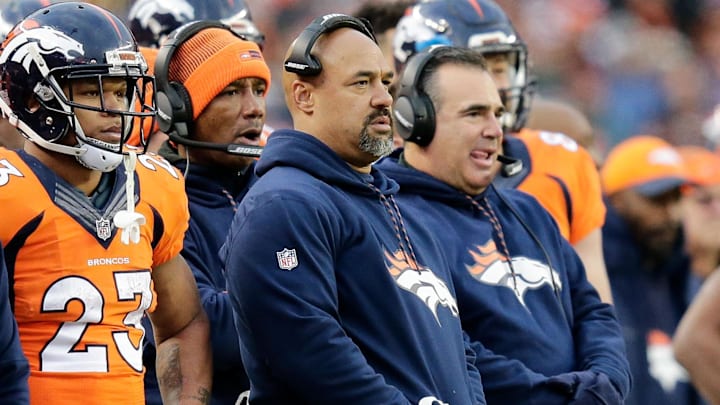
Before Miami, he spent seven years in Denver, surviving four head coaches and even stepping in as interim head coach during the 2010 season. Before that, Buffalo. Before that, Chicago.
That pattern tells its own story.
Studesville doesn’t just coach players — he coaches through instability. He adapts. He fits. And most importantly, he stays.
So why would someone with that résumé consider stepping into a narrower role in Chicago?
That’s where the intrigue begins.
The Bears aren’t just filling a vacancy. They’re building a staff identity under head coach Ben Johnson, whose credibility has already drawn experienced voices willing to take roles below their perceived market value. Bieniemy did it last year. Studesville might be next.
The two worked together in Miami, and that familiarity matters. Coaches at Studesville’s stage of their career don’t chase titles — they chase alignment. Process. Belief in what’s being built.
There’s also something quieter at play.
Chicago is where Studesville’s NFL coaching career began. Back in 1997, the Bears hired him as an offensive quality control coach. He stayed through 2000, coaching wide receivers and assisting on special teams. It was his first professional opportunity.
Nearly 30 years later, the idea of returning isn’t sentimental — but it isn’t meaningless either.
Studesville is from Madison. He played college football at UW–Whitewater. The Midwest isn’t foreign territory; it’s home. And while it would be a stretch to say geography alone would drive a decision, context matters when choices are close.
The Bears, meanwhile, are in a delicate phase. Young talent. Big expectations. A coaching staff still forming its final shape. Replacing Bieniemy requires more than technical expertise — it requires credibility. Someone players listen to immediately. Someone coaches trust without hesitation.
Studesville checks those boxes quietly.
He doesn’t generate headlines. He doesn’t campaign. He doesn’t leak interest. He simply keeps being mentioned — and that alone is telling.
Nothing is official. No interviews announced. No offers confirmed. But when Brad Biggs tells Bears fans to “keep an eye” on a candidate, it usually means the conversation is already happening somewhere out of view.
And if Studesville does make his way back to Chicago, it won’t feel like a gamble.
It will feel like a choice rooted in experience — and the belief that sometimes, the safest hands belong to the coach who’s already seen everything.
Leave a Reply