For the Kansas City Chiefs, the 2026 NFL Draft doesn’t feel like a rebuild moment. It feels more dangerous than that.
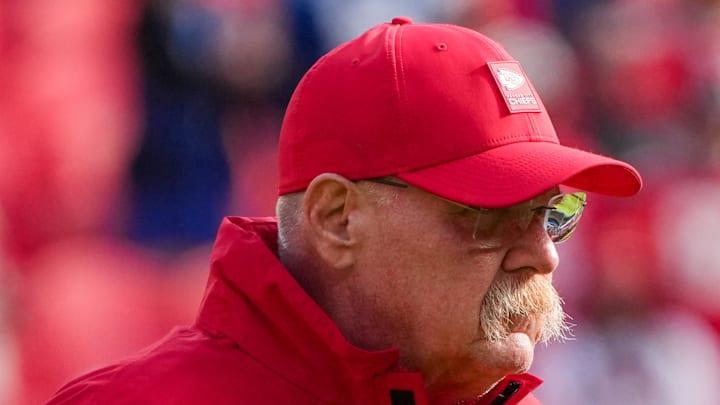
They’re still close. Still relevant. Still led by Patrick Mahomes.
But for the first time in years, they’re drafting inside the top ten—and that alone tells a story the franchise can’t ignore.
The instinctive move would be offense. Another weapon. Another spark. Someone like Jeremiyah Love, if available, would immediately juice a unit that struggled with consistency last season. But that instinct may be exactly what the Chiefs need to resist.
Mahomes is reuniting with Eric Bieniemy. History suggests that alone stabilizes the offense. The Chiefs don’t need to save their quarterback. They need to protect what has quietly kept them competitive for nearly a decade.
Their defensive line.
Ryan Wilson of CBS Sports projected Kansas City selecting Florida State defensive lineman Caleb Banks in his latest mock draft—a pick that feels less exciting on the surface, but far more revealing underneath.
Banks isn’t flashy. He’s massive.
At 6-foot-6 and 330 pounds with 35-inch arms, he looks like a traditional interior anchor. But the surprise comes after the snap. Wilson described him as “pretty much unblockable” during Senior Bowl practices, noting his explosion, power, and relentless motor—traits that don’t often coexist at that size.
There’s risk, of course.
Banks dealt with a foot injury during parts of the 2025 season. Drafting him in the top ten would require belief not just in his upside, but in his health. The Chiefs have made that bet before. Sometimes it works. Sometimes it doesn’t.
But context matters.
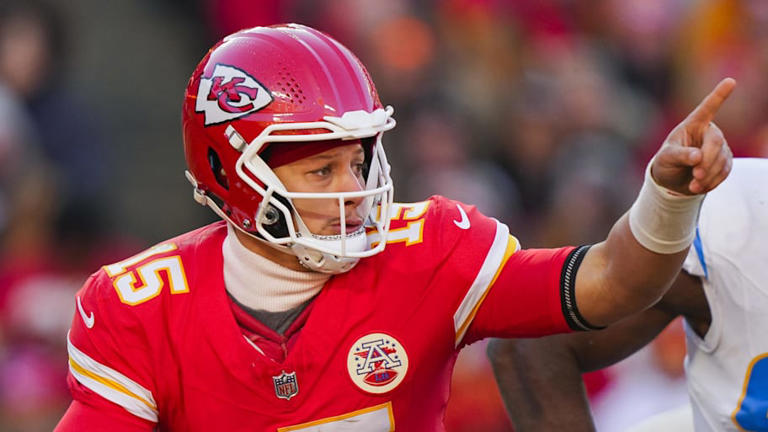
Chris Jones is no longer the force he once was. His dominance from 2018 through 2023 set a standard that’s been difficult to sustain. The sacks have dipped. The disruption isn’t constant anymore. He’s still valuable—but no longer inevitable.
That decline hasn’t been loud. It’s been gradual. Almost polite.
And that’s what makes it dangerous.
Kansas City’s defensive line is positioned to regress faster than any other unit over the next few seasons. Not because of one hole—but because of timing. Age. Wear. The accumulation of deep playoff runs.
Selecting Banks wouldn’t be about replacing Jones immediately. It would be about preparing for the moment when “not yet” quietly turns into “too late.”
Banks’ film suggests he could handle that transition. He moves tackles off their spot with surprising ease. His motor doesn’t shut off. And his presence would allow the Chiefs to rotate more aggressively—something they’ve struggled to do consistently up front.
This isn’t the kind of pick that sells jerseys. It’s the kind that extends windows.
That’s the real tension for Kansas City. They’re no longer drafting for survival. They’re drafting for sustainability. And that requires choices that feel uncomfortable in the moment.
Offense will always be tempting with Mahomes under center. But the truth is, Kansas City’s dynasty wasn’t built solely on scoring. It was built on pressure. On collapsing pockets. On making quarterbacks uncomfortable when it mattered most.
That edge is slipping.
A top-ten pick doesn’t come around often for contenders. When it does, it forces honesty. About what’s declining. About what’s irreplaceable. About what needs to be addressed before it becomes obvious.
Caleb Banks may not be the name fans circle in April.
But he might be the reason the Chiefs are still circling February in the years that follow.
Leave a Reply