Shohei Ohtani is expensive.
That’s the part everyone sees. The contract figures. The long-term commitment. The sticker shock that still makes rival fans shake their heads every time the Dodgers add another star.
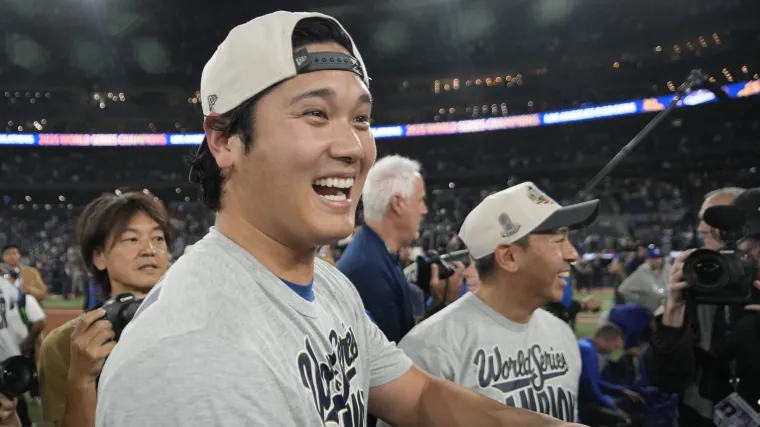
But what’s becoming harder to ignore is the quieter truth behind it all: Ohtani isn’t costing the Dodgers money. He’s fundamentally changing how much money they’re capable of making.
According to Dodgers beat reporter Jack Harris, the franchise’s revenue jumped by more than $200 million in Ohtani’s first season with the team. That surge pushed Los Angeles past the $1 billion revenue mark, a number that places the Dodgers in a different category than almost every other team in baseball.

This isn’t about jersey sales alone. It’s about scale.
Ohtani didn’t just bring fans—he brought markets. Entire regions. International sponsorships. Broadcast interest that stretches far beyond the borders of North America. In practical terms, the Dodgers didn’t sign a player; they acquired a global economic engine.
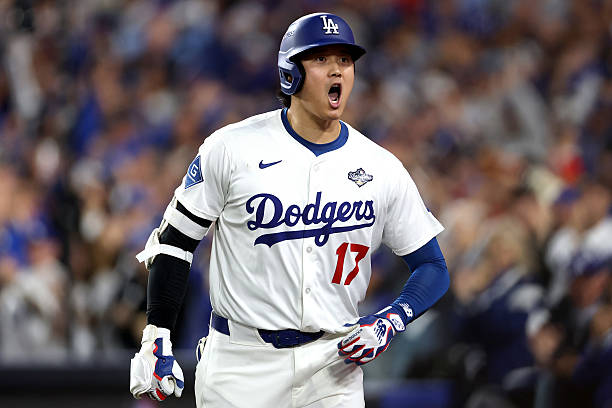
That’s why the rest of MLB keeps misreading what Los Angeles is doing.
When the Dodgers “shock baseball” by handing out another massive contract—like the Kyle Tucker deal this winter—it’s framed as reckless spending. But internally, it’s not spending at all. It’s reinvestment.
“We’re the DODGERS. All caps,” team president Stan Kasten said. The line sounds like bravado. In reality, it’s a financial explanation.
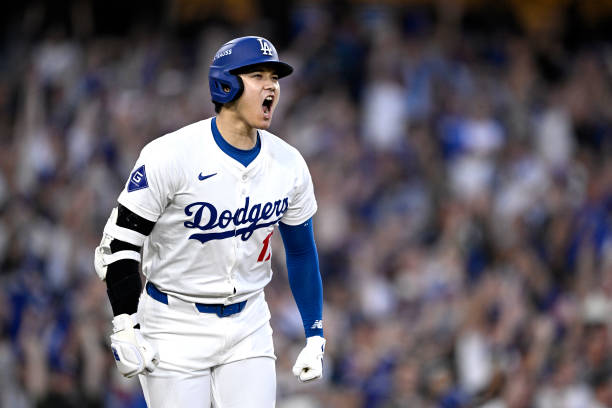
Harris adds a detail that quietly reframes everything: the Dodgers’ sponsorship business alone is now believed to generate as much revenue as roughly half of MLB teams make in total. Not in sponsorships. In everything.
That’s the gap Ohtani helped create.
This is where the conversation gets uncomfortable for the rest of the league. Because competitive balance in baseball has always been fragile, but Ohtani may have pushed it into a new phase—one where a single player doesn’t just tilt games, but tilts economies.

As long as Ohtani is in Dodger blue, the franchise doesn’t operate under the same constraints as most teams. Payroll becomes flexible. Risk becomes tolerable. Aggressive spending stops being a gamble and starts looking inevitable.
In that sense, Ohtani is more than an MVP or even a once-in-a-century talent. He’s leverage.
The Dodgers can justify nearly any move because Ohtani absorbs the shock. New stars don’t strain the budget—they ride the wave he created. Winning fuels visibility. Visibility fuels revenue. Revenue fuels more winning. It’s a loop that’s brutally hard to interrupt once it starts.
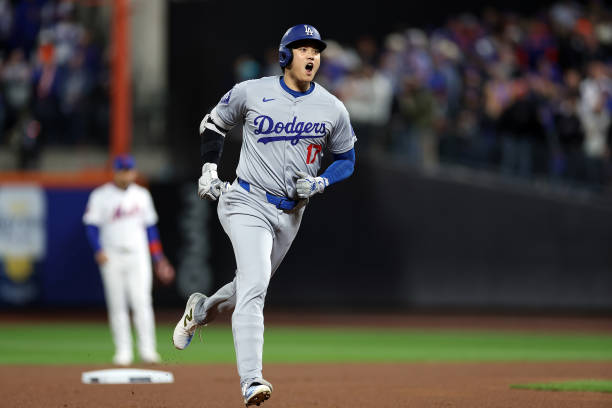
And this is where the rest of MLB starts asking questions it doesn’t love answering.
What happens when one franchise can essentially self-finance dominance?
What happens when payroll ceilings exist in theory, but not in practice?
And what happens when a single player widens the gap not by $20 million—but by hundreds?
The Dodgers aren’t hiding the strategy. They’re leaning into it. Consecutive championships weren’t just validation—they were proof of concept. Ohtani didn’t merely fit into the system. He expanded it.
For fans, this creates two reactions at once. Awe at what they’re witnessing, and unease at where it leads. Because if Ohtani truly allows the Dodgers to “do whatever they want,” as some insiders quietly admit, then the league isn’t just competing against a team anymore.
It’s competing against a business model.
And the most unsettling part? That model works.
As long as Shohei Ohtani is healthy, visible, and productive, the Dodgers aren’t just chasing titles. They’re operating on a different economic plane—one where the question isn’t can they afford it? but why wouldn’t they?
That’s what makes Ohtani worth even more than anyone expected.
Not because of what he does at the plate.
But because of what he unlocks everywhere else.
Leave a Reply