Caleb Williams spent the 2025 season rewriting expectations in Chicago.
But somehow, one familiar criticism refuses to go away.
Completion percentage.
Despite leading the Bears to an NFC North title, their first playoff win in 15 years, and setting a franchise record for passing yards, Williams continues to be nitpicked for a stat that, according to NBC Sports analyst Chris Simms, is wildly misunderstood in today’s NFL.
Speaking at Radio Row during Super Bowl week, Simms didn’t mince words when asked about Williams’ second season and the noise surrounding it.
“Please stop with the stupid completion percentage crap,” Simms said. “This isn’t 2008 anymore.”
It was a blunt defense — and a revealing one.
Williams finished the 2025 season with a 58.1 completion percentage, a dip from his rookie year and well below head coach Ben Johnson’s ideal benchmark. On paper, that number sticks out. In context, Simms argues, it’s almost meaningless.
“This is a different league,” Simms explained. “It’s about making plays, changing field position, explosive plays. That’s where he’s special.”
And special is hard to argue with.
After a chaotic rookie season marked by coaching instability and a fractured roster, Williams flourished in his first year under Johnson. He threw for 3,942 yards, narrowly missing the 4,000-yard milestone, and became the engine behind Chicago’s most relevant season in over a decade.
More importantly, he became the closer.
Williams earned the nickname “Iceman” for a reason. He led the NFL with seven fourth-quarter comebacks across the regular season and playoffs, including a dramatic wild-card victory over Green Bay that ended Chicago’s long postseason drought.
Those moments don’t show up in completion percentage charts. They show up on scoreboards.
Simms placed Williams squarely in rare company when discussing his skill set.
“There’s only a few people in the sport that can do what Caleb Williams does,” he said, calling the Bears quarterback a “super star.”
That assessment aligns with how the modern NFL evaluates quarterbacks. Players like Patrick Mahomes, Josh Allen and Lamar Jackson have never been defined by pristine stat lines alone. Their value comes from creativity, off-script brilliance and the ability to tilt games when structure breaks down.
Williams fits that mold.
Yes, there are areas to clean up. Williams himself has acknowledged the need to be more consistent on short and routine throws. Ben Johnson has been clear about wanting better efficiency in the quick game. But neither Simms nor the Bears see that as a red flag — only unfinished business.
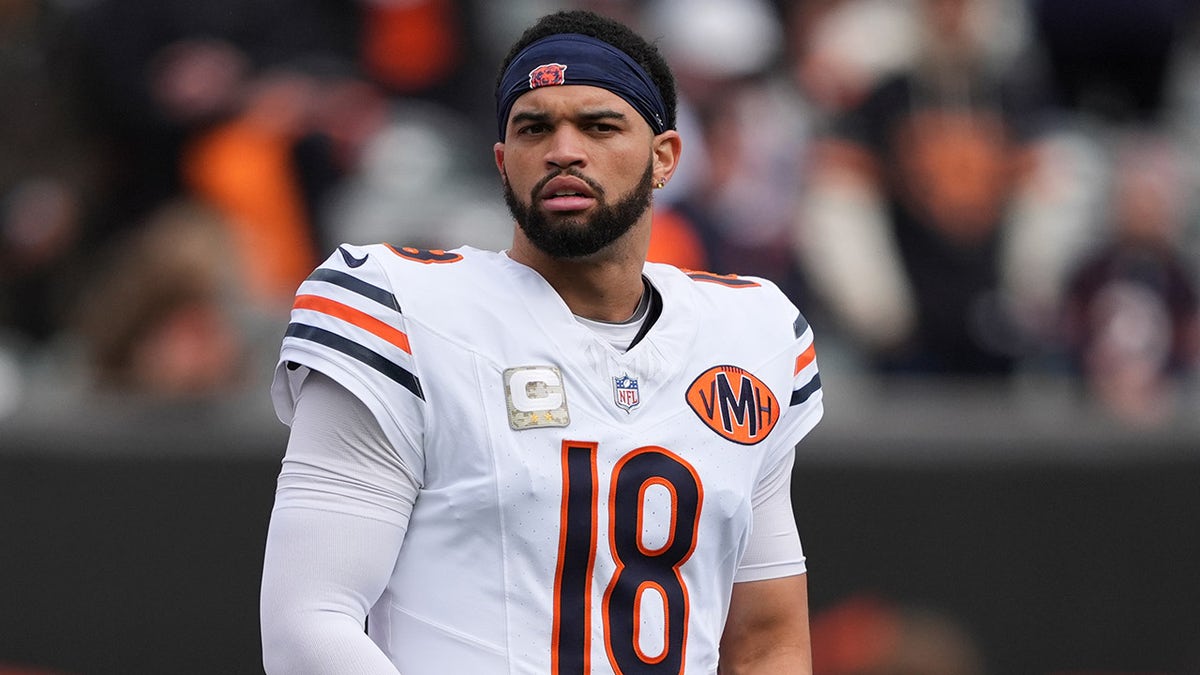
“The other stuff is coming,” Simms said. “He’s just going to get better and better in the pocket as Ben Johnson rewires a robot.”
That phrase — rewires a robot — captures the optimism around Williams’ development. His raw ability is already evident. The refinement, the timing, and the easy completions are the final layers, not the foundation.
What often gets lost in the completion percentage debate is how much Williams was asked to do. Chicago’s offense leaned on him to create, to stretch the field, and to take calculated risks — often with little margin for error. That burden inflates difficulty, not inefficiency.
And yet, he delivered wins.
Williams didn’t just improve statistically in 2025. He altered how the Bears are viewed league-wide. Chicago is no longer rebuilding. It’s competing. And Williams is the reason defenses never felt safe, even with a lead late in the fourth quarter.
Completion percentage may remain an easy talking point. But as Simms made clear, it’s a shallow one.
The league has changed.
Quarterbacks have changed.
And Caleb Williams is exactly the kind of player this era rewards.
The scary part for everyone else?
He’s still just getting started.
Leave a Reply