Let’s start with the obvious, because it needs to be said clearly and without hedging:
Bill Belichick belongs in the Pro Football Hall of Fame.
Keeping him out — even temporarily — is absurd.
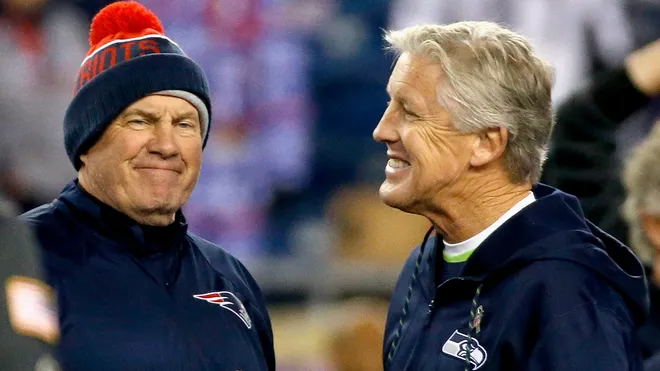
He’s the most successful head coach of the modern era, the architect of a dynasty that redefined winning in the NFL. If the Hall of Fame is meant to honor greatness, Belichick checks every box.
And yet, he wasn’t a first-ballot inductee.
That uncomfortable truth opens the door to a much more interesting conversation — one that may ultimately benefit Pete Carroll, the former Seattle Seahawks head coach who will become eligible for the Hall of Fame in 2028.
Same Résumé Tier, Very Different Relationships
On paper, Belichick’s case is overwhelming. Championships. Longevity. Influence. Tactical brilliance. No serious football mind disputes his qualifications.
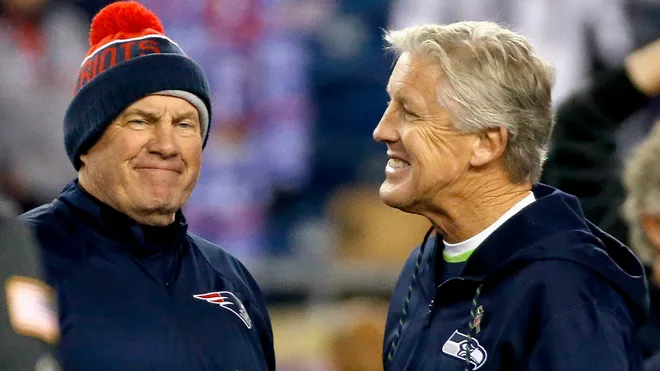
So why the delay?
The uncomfortable answer isn’t about football.
Belichick was never beloved by the league’s ecosystem. He was respected — feared, even — but not liked. His press conferences were curt. His relationships with media were hostile. His demeanor toward colleagues was transactional at best.
Add in the shadow of controversies — Spygate, Deflategate — and you get a figure who, fairly or not, accumulated enemies over decades.
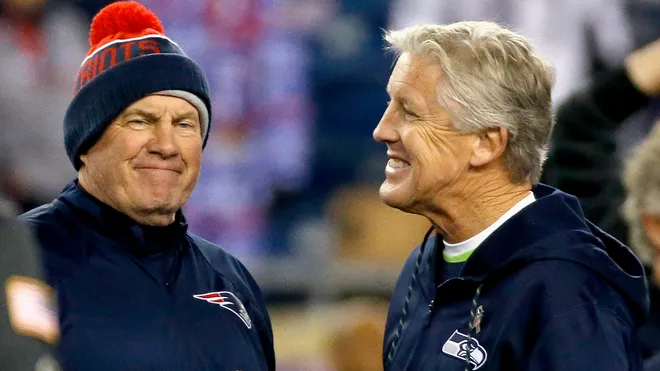
Belichick likely didn’t care. He never coached to be liked.
But Hall of Fame voting is a human process.
And humans remember how you made them feel.
Pete Carroll’s Quiet Advantage
Pete Carroll’s résumé may not match Belichick’s ring count, but it stands firmly in Hall of Fame territory. A Super Bowl title. Another Super Bowl appearance. A decade of sustained success. One of the greatest defenses of all time. A lasting cultural imprint on a franchise.
But Carroll’s true edge isn’t schematic.
It’s relational.
Around the NFL, Carroll is widely viewed as approachable, energetic, and collaborative. Former players speak glowingly about him. Assistants credit him with mentorship. Media members describe him as authentic and open.
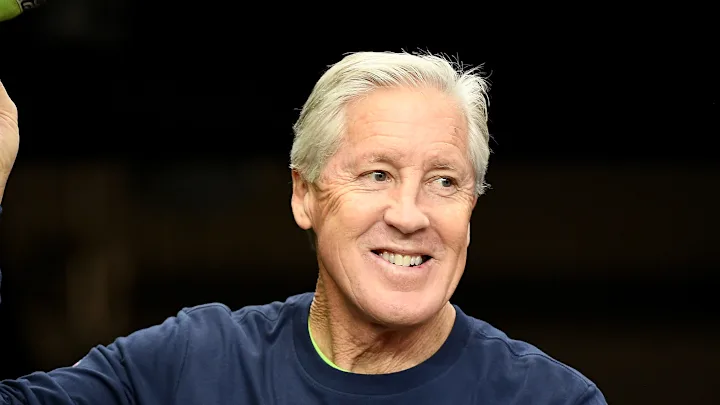
In short: Pete Carroll is liked.
That doesn’t make him a better coach than Belichick — but it may make him an easier vote.
The Hall Isn’t Supposed to Be a Popularity Contest — But…
In theory, Hall of Fame voting should be immune to personality. It should be about results, impact, and legacy.
In practice?
Voters are human. They remember slights. They remember cooperation. They remember who treated them with respect — and who didn’t.
Belichick’s snub feels less like a rejection of his greatness and more like a pause driven by resentment and fatigue. A subtle reminder that dominance doesn’t erase friction.
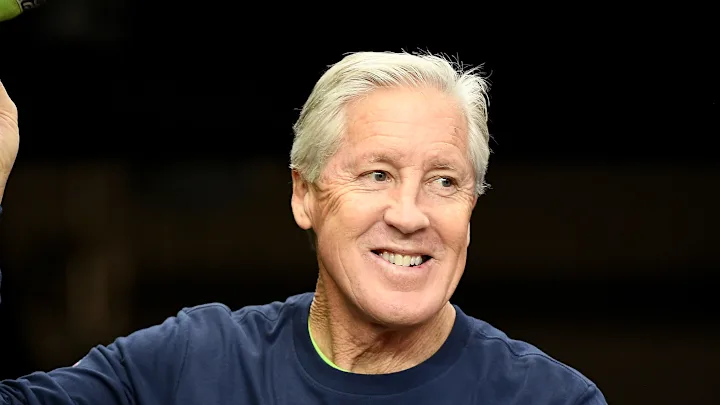
Carroll, on the other hand, exits coaching with almost universal goodwill.
That matters.
Timing Could Be Everything
When Carroll becomes eligible in 2028, the emotional temperature around his career will be calm, nostalgic, and appreciative. He’ll be remembered as a culture-builder, a players’ coach who won big without alienating everyone around him.
Belichick, eventually, will get in. That’s inevitable.
But Pete Carroll may not have to wait.
And that’s the irony: two all-time great coaches, separated not by football acumen, but by how they moved through the league as people.
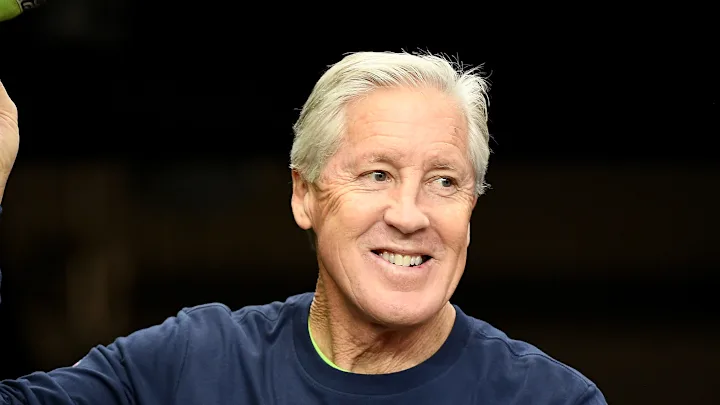
Sometimes, being excellent is enough.
Sometimes, being excellent and likable makes all the difference.
Leave a Reply