Rhys Hoskins is back in the majors — just not where many expected.
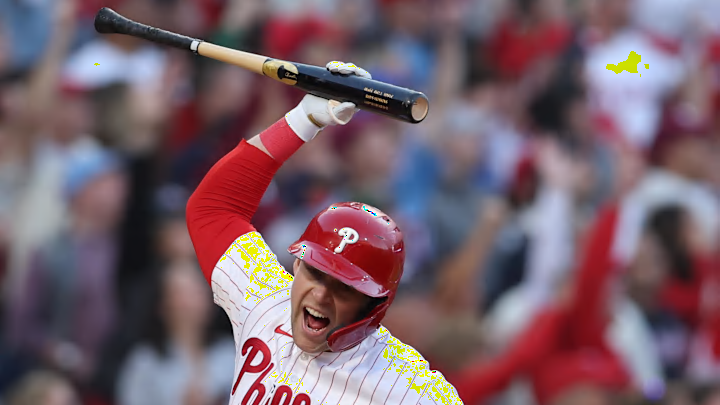
Oct 14, 2022; Philadelphia, Pennsylvania, USA; Philadelphia Phillies first baseman Rhys Hoskins celebrates after hitting a three-run home run against the Atlanta Braves during the 3rd inning in game three of the NLDS for the 2022 MLB Playoffs at Citizens Bank Park. Mandatory Credit: Bill Streicher-Imagn Images | Bill Streicher-Imagn Images
After settling for a minor league deal with the Cleveland Guardians this offseason, the longtime Phillies slugger has officially earned a spot on their Opening Day roster. It’s a feel-good comeback story on the surface.
But in Philadelphia, it may feel like something else entirely.
Because this is exactly the scenario Bryce Harper reportedly hoped to see — just in a different uniform.
Harper pushed for a reunion with Hoskins during the offseason, believing the veteran first baseman could still contribute. The Phillies’ front office, led by Dave Dombrowski, chose not to pursue it.
Now, with Hoskins back in the big leagues on a low-risk deal, that decision is being revisited.
For Phillies fans, the connection to Hoskins runs deep.
He arrived in 2017 during one of the lowest points in franchise history and immediately gave the team life. His power surge turned heads, and for a stretch, he was one of the few reasons to watch during a difficult rebuild.
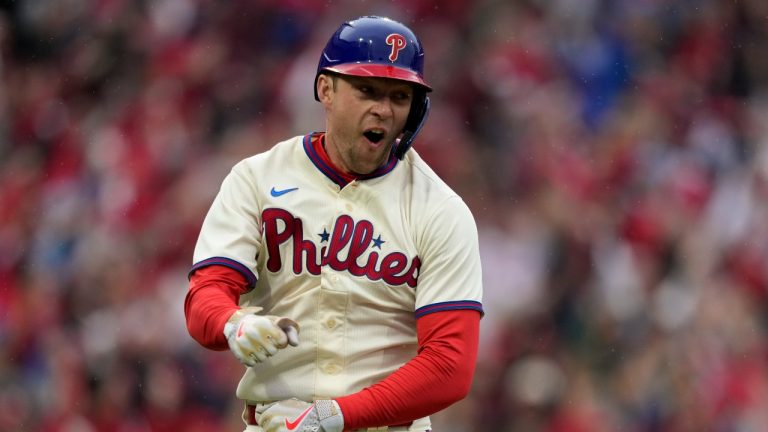
When the Phillies finally returned to relevance, Hoskins was still there.
His most iconic moment came in the 2022 postseason, when his emphatic bat spike after a home run against the Braves became one of the defining images of that playoff run. It symbolized not just his energy, but his connection to the city.
It also made his eventual departure harder to accept.
A torn ACL in spring training 2023 abruptly ended his season and, ultimately, his time in Philadelphia. By the time he was ready to return, the organization had already committed to Bryce Harper as its everyday first baseman.
There simply wasn’t a clear role waiting for him.

Hoskins moved on to Milwaukee, signing a two-year deal and delivering modest production. Injuries limited his availability, and while he remained a capable hitter, he didn’t fully regain his previous form.
Then came this offseason — and the real surprise.
Despite still showing plate discipline and power potential, Hoskins found little interest on the open market. Instead of a guaranteed major league deal, he had to settle for a minor league contract with Cleveland, one that would pay just $1.5 million if he made the roster.
He did exactly that.
Now, he projects as a platoon option at first base and designated hitter for the Guardians — a role that suits where he is in his career.
But the bigger question lingers in Philadelphia: why didn’t the Phillies take that same chance?
This wasn’t about committing significant money or blocking young talent. It was a zero-risk move — the kind teams make all the time to add depth and upside. If it didn’t work, they could have simply moved on.
Instead, they passed.
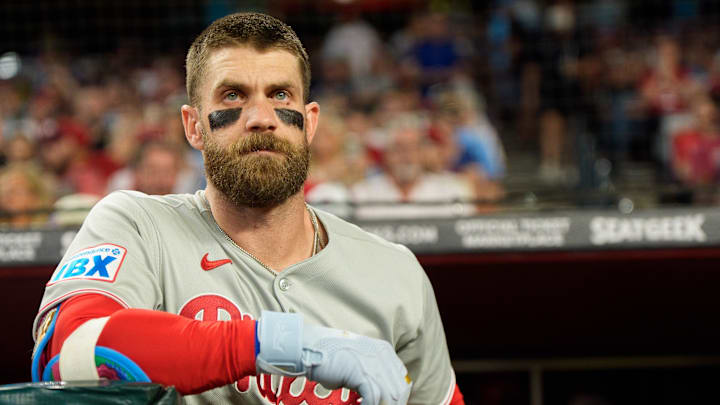
That decision feels even more significant given the team’s current needs.
The Phillies’ offense has become increasingly inconsistent, particularly in high-stakes moments. Their postseason exit last year exposed familiar flaws — long stretches without production and a lineup that can lean too heavily to one side.
Hoskins, even in a limited role, could have helped address that.
A right-handed bat with power and patience would have added balance. He wouldn’t need to play every day to make an impact. And if injuries struck — as they often do — he could have stepped into a larger role seamlessly.
Beyond the numbers, there’s also the emotional side.
Hoskins wasn’t just productive — he was beloved. Bringing him back would have energized a fan base that has grown restless after repeated playoff disappointments and a relatively quiet offseason.

Instead, the Phillies stayed the course.
They retained familiar pieces, explored other options that didn’t materialize, and ultimately made only incremental changes. The result is a roster that looks similar — and carries many of the same questions.
Meanwhile, Hoskins gets a fresh start in Cleveland.
If he produces, even modestly, the optics will be hard to ignore. Not because Philadelphia made a clearly wrong decision at the time, but because the opportunity cost was so low.
Sometimes, the moves you don’t make linger the longest.
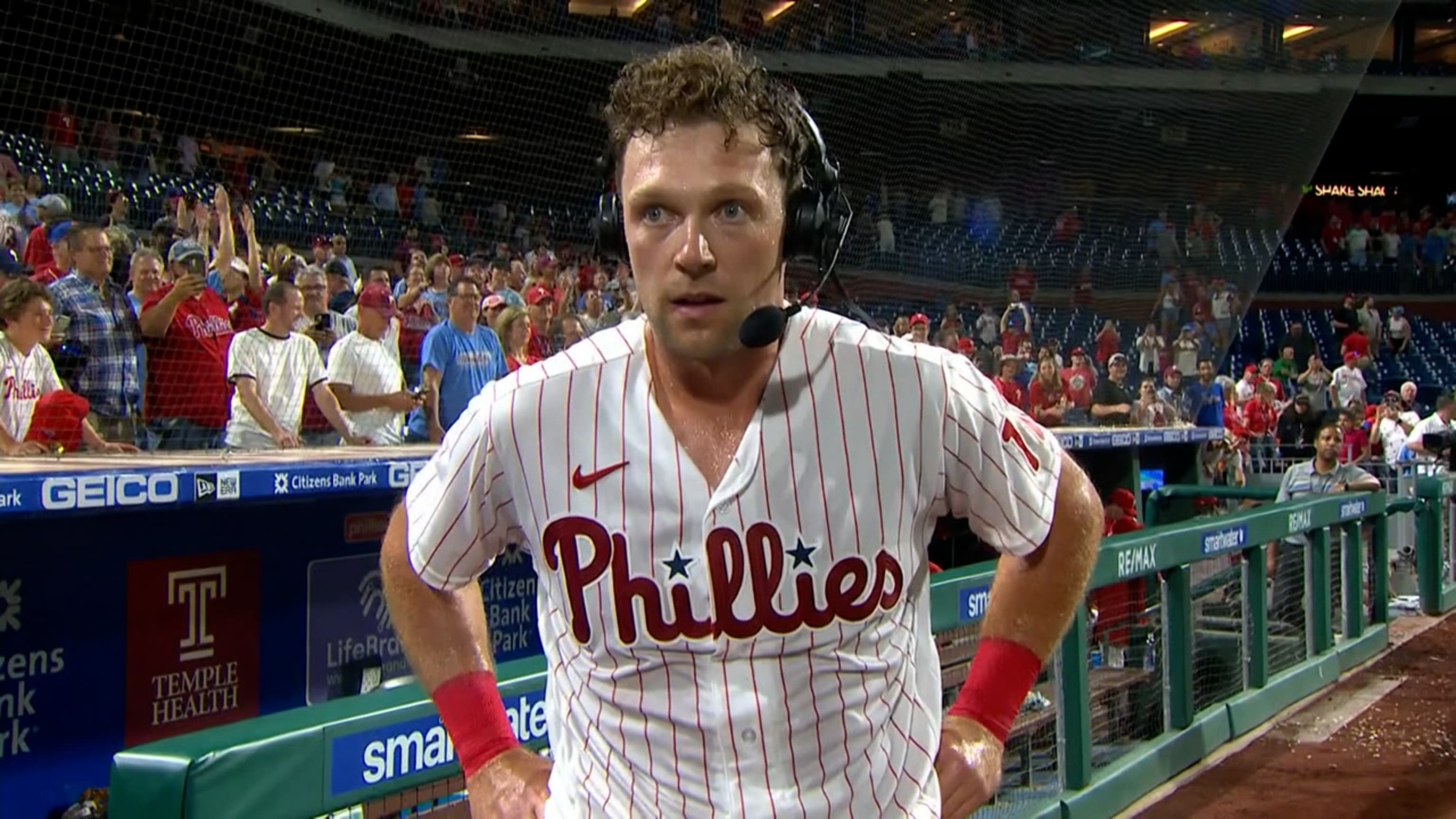
And if Hoskins finds even a fraction of his old form, this could become one of those decisions the Phillies — and their fans — won’t forget anytime soon.
Leave a Reply