For more than a decade, the name Virginia Giuffre appeared only in court filings, scattered media reports, and whispered conversations surrounding one of the most notorious criminal networks of the modern era.

But while public narratives swirled—some sensationalized, some dismissive—Giuffre herself remained, in many ways, unheard.
Her private pain, her legal battles, and her attempts to bring attention to the circumstances she endured were overshadowed by the sheer influence of the powerful individuals linked to the case.
Now, in a new four-part Netflix investigative series, her voice is finally centered.
Through confidential documents, legal testimony, and interviews with experts and survivors, the documentary paints a disturbing portrait of how systems of power can obscure the truth for years.
It does not present itself as the ultimate authority on events; rather, it examines public records, legal outcomes, and allegations that have long fueled global debate.
It offers viewers something rare in stories dominated by scandal: context, nuance, and humanity.
The result is a chilling and provocative look at how wealth and influence can create barriers to justice—and how those barriers can be dismantled when survivors speak, investigators persist, and the world finally listens.

A Story Once Buried Beneath Power
A central theme of the documentary is the profound imbalance between ordinary individuals and the elite structures that surround them.
Giuffre’s story—publicly known for years through legal filings relating to Jeffrey Epstein and Ghislaine Maxwell—has been documented, disputed, and dissected in countless headlines.
Yet what the series highlights is the way institutional silence and societal discomfort helped prevent broader public understanding of the allegations.
The filmmakers take viewers back to the early 2000s, to a period when growing whispers about Epstein’s misconduct were repeatedly overshadowed by his social circle and philanthropic façade.
Legal settlements and confidentiality agreements, all part of the public historical record, play a key role in illustrating how certain allegations remained shielded from widespread scrutiny.
Through interviews with journalists, former prosecutors, and advocates, the series details how complex legal mechanisms—some standard in civil cases, others criticized for their opacity—helped shape the limited understanding the public once had.
These sections avoid sensational speculation; instead, they rely on established facts, legal outcomes, and expert interpretations of the documents.
The overarching message is clear: truth can be difficult to access when power stands in the way.
Human Cost Behind Headlines
Many documentaries focused on crimes or scandals fall into the trap of centering villains or sensational events. This series deliberately shifts attention back to the human beings who lived through trauma, uncertainty, and years of not being believed.
Giuffre’s interviews are emotional, reflective, and grounded in her personal experience.
She describes, in her own words, the psychological toll of coming forward publicly, the fear of retaliation, and the exhaustion of repeatedly reliving painful memories.
The filmmakers allow her space not only as an accuser in high-profile litigation, but as a person navigating the aftermath of events that shaped her life.

Other survivors and advocates share similar stories—of institutional failure, of public judgment, of the complicated journey toward healing.
These voices broaden the narrative, emphasizing that while Giuffre’s name may be the most widely recognized, the systemic issues examined in the documentary extend far beyond any single individual.
What emerges is not simply a recounting of events, but a meditation on the resilience required to confront structures designed to minimize or silence victims.
The Mechanics of Cover-Up: Systems, Not Just Individuals
One of the most striking contributions of the Netflix investigation is its explanation of how networks of influence—legal, financial, and social—can interplay to obscure misconduct.
The series approaches this topic with caution, grounding each insight in publicly accessible evidence and established legal findings.
Former federal agents discuss how Epstein’s wealth granted him privileges that complicated investigations.
Legal scholars explain the controversial 2008 non-prosecution agreement, placing it in the context of broader critiques of prosecutorial discretion.
Journalists detail the obstacles they faced when attempting to investigate allegations that were repeatedly dismissed or minimized.
None of this is presented as a conspiracy theory. Rather, it reflects the real-world complexity of pursuing justice when the accused possess extraordinary financial resources and social connections.
The series underscores a difficult truth: systems sometimes fail not out of malice, but due to a combination of bureaucratic shortcomings, legal loopholes, and the uneven distribution of power.
Yet the result is the same—survivors feel abandoned, and public accountability is delayed.
Why This Documentary Matters Now
The release of the series comes at a moment when society is wrestling with questions of institutional accountability, the rights of survivors, and the role of media in shaping public opinion.
Since Epstein’s death and Maxwell’s conviction, public attention has remained fixated on figures associated with the broader narrative. But the documentary intentionally resists the tendency to frame the story as a mystery to be solved or a scandal to be exploited.
Instead, it asks: What does justice mean for those whose lives were affected?
Giuffre’s presence in the documentary is central to this shift in perspective. It is one thing to read allegations in a court filing. It is another to hear how those allegations shaped a person’s life, family, and sense of self.
Her willingness to speak—after years of litigation, public scrutiny, and hostile backlash—reflects an extraordinary level of courage.
At the same time, the series clarifies that some aspects of the historical narrative remain contested or unresolved, and it is careful not to overstep the boundaries of what is known.
This approach helps build a more responsible and informative public conversation.

The Questions That Remain
Each episode poses a series of difficult questions—some directed at institutions, others at viewers themselves:
- How do we hold powerful individuals accountable when legal systems are slow or inconsistent?
- What obligations do media organizations have when reporting on allegations involving influential figures?
- How can society better support survivors who choose to come forward, especially when doing so subjects them to public judgment?
- And perhaps most crucially: How do we prevent systemic failures from repeating themselves?
The documentary does not pretend to have all the answers. Instead, it challenges audiences to grapple with the reality that justice is often imperfect, incomplete, and deeply human.
Breaking the Silence
In many ways, the documentary functions not just as an exposé, but as a cultural reckoning.
For years, the silence surrounding this network—legal silence, institutional silence, and the silence imposed by fear—served as a protective barrier for those with much to lose.
Now, that silence is broken.
Giuffre’s voice, and the voices of others featured in the series, remind viewers why listening matters.
They remind us that public narratives can obscure personal truths; that institutions can fail those who need them most; and that the pursuit of justice requires persistence, empathy, and transparency.
The world may not have heard her story for years. But it hears it now—and the echo of it may shape conversations about power and accountability for years to come.
Mark Carney SHREDS T.r.u.m.p’s Claims About Canada — In a Live TV Showdown That Stunned Viewers Across the Country-tramly

As President Trump doubles tariffs on steel and aluminum to fifty percent, a dramatic shift shakes the global market, allowing Canada to seize a strategic advantage while American manufacturers brace for rising costs and growing economic uncertainty.
Canada accelerates aluminum production through a massive investment in Quebec, repositioning itself as a dominant supplier capable of undercutting United States prices by nearly twenty percent, creating escalating pressure across American industrial sectors.
Aluminum premiums surged sharply after Trump’s announcement, jumping from eight hundred sixty to one thousand three hundred twenty-three dollars per ton, leaving United States manufacturers scrambling for affordable supplies as shortages ripple through key industries.
Canada redirects more than three million tons of aluminum toward Europe and Asia, tightening supply for United States factories and pushing production schedules toward delays, layoffs, and difficult financial decisions for companies already struggling with increased costs.

The Canadian government leverages clean-energy-powered aluminum to negotiate stronger trade concessions, pushing for benefits in electric vehicle incentives and renewable subsidies while reducing reliance on United States markets to safeguard long-term economic stability.
Canada’s export patterns shift significantly as shipments to non-United States markets rise sharply, demonstrating a strategic diversification that strengthens global positioning through increased gold exports to the United Kingdom and expanded oil shipments to Singapore.
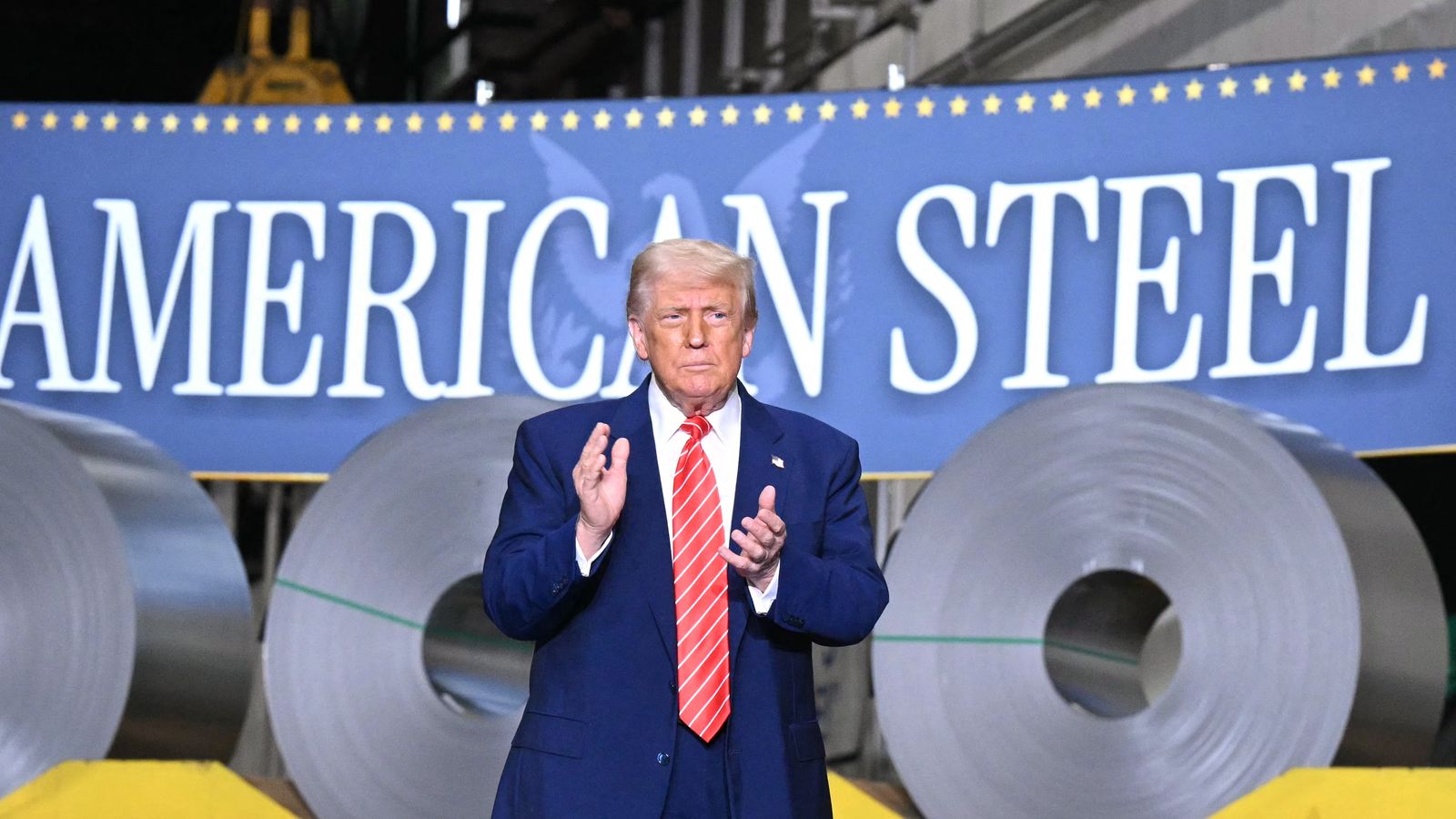
As aluminum costs continue rising across the United States, manufacturers face bleak choices between absorbing severe financial losses or pursuing alternative supplies at even higher prices, further weakening confidence throughout the entire industrial landscape.
Canada uses this disruption to expand green infrastructure, particularly in Quebec, where new hydroelectric projects attract international investment, transforming the region into a central pillar of the country’s long-term economic strategy.

The evolution of Canada’s aluminum sector signals a broader redefinition of foreign policy, raising urgent questions about whether Canada can sustain momentum as Washington prepares new economic countermeasures that could escalate tensions further.
Leave a Reply