WEST PALM BEACH, Fla. — Inside a quiet hotel room during December’s winter meetings, Astros general manager Dana Brown spoke openly about a future he hopes will last far longer than his current contract allows. Sitting nearby was manager Joe Espada, the man Brown chose to lead the team just two years earlier.
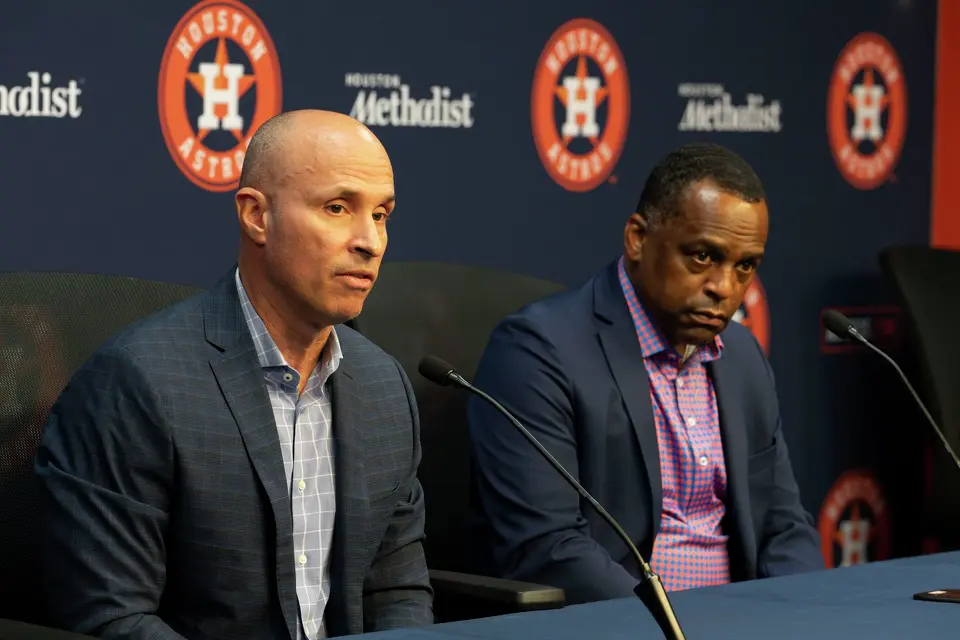
Neither Astros manager Joe Espada (left) nor general manager Dana Brown have a contract past the 2026 season, adding long-term uncertainty for the franchise.Kirk Sides/Houston Chronicle
Both share the same ambition: to finish their careers in Houston. But as the 2026 season approaches, that vision is anything but secure.
Neither Brown nor Espada is under contract beyond this year, placing both at the center of one of the most consequential seasons the Astros have faced in nearly a decade.
Owner Jim Crane has made it clear there’s no urgency to change that. The organization plans to evaluate everything after the season, leaving both leadership figures in a familiar but uncomfortable position — win now, or face uncertainty later.
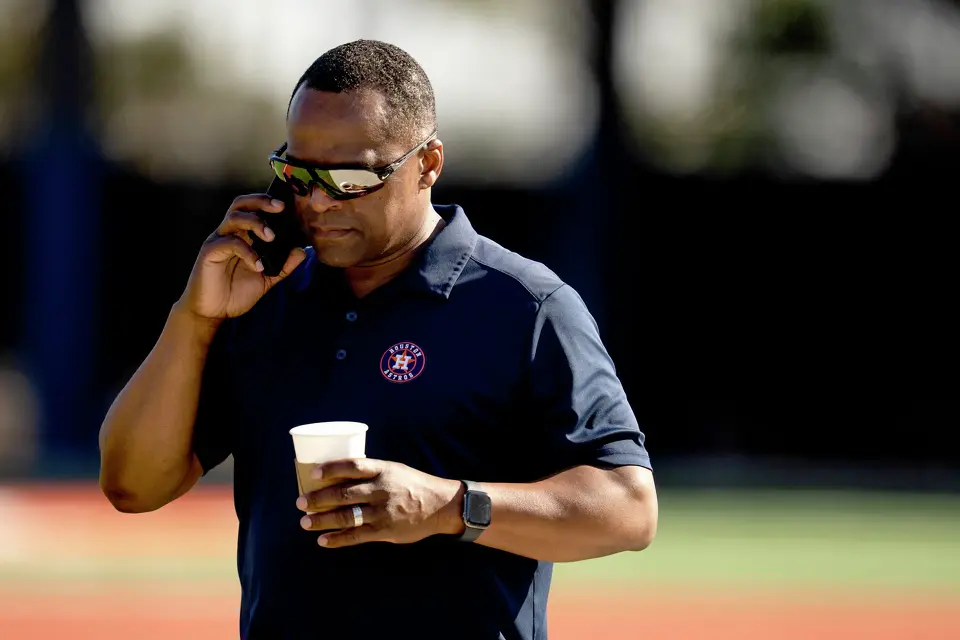
Dana Brown hasn’t hesitated to pull the trigger on major moves as Astros GM, with big trade-deadline deals three years in a row.Jason Fochtman/Houston Chronicle
For Brown, the mindset is simple.
Focus on results. Let everything else follow.
“I’m not worried about an extension,” he said in early March. “If you do your job, it takes care of itself.”
Espada has echoed that tone publicly, emphasizing commitment over contract talk. He has leaned into his role, expressing pride in the team and the city, while keeping his attention on returning the Astros to October.
Still, the backdrop is impossible to ignore.

This isn’t new territory for Houston. Dusty Baker managed under short-term deals, even after delivering a World Series title. Former general manager James Click wasn’t retained despite that same championship season. Stability, under Crane, has always been earned — not promised.
But what makes 2026 different is the trajectory of the team itself.
The Astros are no longer riding the peak of their dynasty years. Instead, they are navigating a transition — one that has already shown signs of erosion.
Under Brown, Houston reached the postseason twice in three seasons, but each run ended earlier than the last. In 2025, the streak finally snapped. The Astros missed the playoffs for the first time since 2016.
That absence changed the tone inside the organization.
“There’s frustration,” Brown admitted. “Because for us, making the postseason isn’t optional.”

Joe Espada’s challenges for this season include juggling a surplus of veteran infielders and figuring out a starting rotation after importing in several arms during the offseason.Jason Fochtman/Houston Chronicle
To correct course, the front office made aggressive moves — especially on the pitching side.
After cycling through 15 starting pitchers last season, Houston prioritized depth, adding multiple arms to stabilize a rotation that had been stretched thin. The goal is clear: avoid overexposing young pitchers and prevent another collapse driven by injuries.
At the same time, roster construction has created a different kind of challenge.
The Astros now have a crowded infield filled with proven veterans. On paper, it’s a luxury. In practice, it could become a daily balancing act.
Espada will be responsible for managing playing time, egos, and expectations — all while trying to keep the lineup productive and healthy.
It won’t be easy.
Jose Altuve, approaching his mid-30s, still expects to play nearly every day. Jeremy Peña, when healthy, is a fixture. Christian Walker, Carlos Correa, and Isaac Paredes all bring established roles and track records.
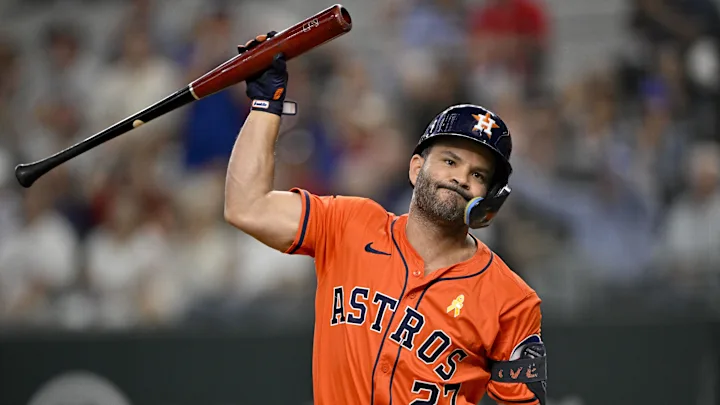
There simply aren’t enough at-bats for everyone.
Espada has already hinted at a more strategic approach, emphasizing rest and long-term health. But managing that plan — especially with veteran players — will require careful communication and trust.
Last season offered a painful lesson.
Houston held a strong division lead entering July before injuries and inconsistent offense triggered a late-season collapse. They finished just one win shy of a playoff spot, a margin that still lingers inside the clubhouse.
Advanced metrics underline how much injuries cost them. The Astros lost more projected value to injuries than any team in baseball.
That reality has shaped nearly every decision this offseason.
Even so, external expectations suggest the path forward won’t be easy.
Projection systems see a changing landscape in the AL West. Houston is no longer the clear favorite. Some forecasts place them behind division rivals, signaling a potential shift in power after years of dominance.
That’s the environment Brown and Espada now face.
A team trying to rebound. A roster with both depth and questions. And a front office philosophy that demands results before rewards.
For two leaders who hope to stay in Houston long-term, the equation is straightforward — but unforgiving.
Win, and the future likely follows.
Fall short, and everything changes.
In a season filled with moving parts and rising pressure, the Astros aren’t just chasing another playoff run.
They’re defining what comes next — for the franchise, and for the men leading it.
Leave a Reply