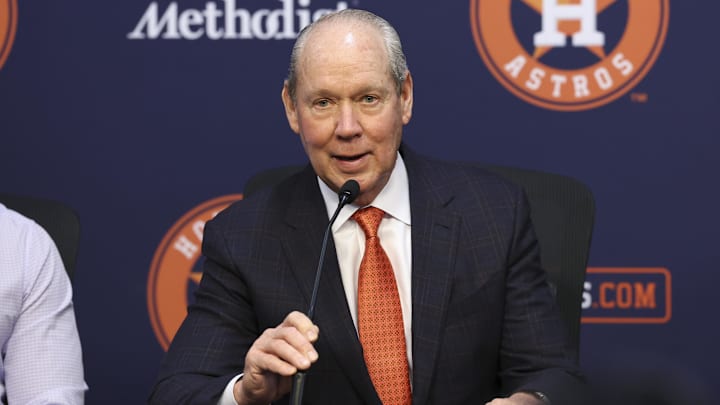
The Houston Astros being labeled a .500 team for 2026 might not be the most alarming takeaway.
It’s what that label represents that should worry fans.
More Than Just a Down Year
According to recent tier rankings, the Astros fall squarely into baseball’s middle class — the “.500 zone.” On the surface, that suggests mediocrity. A team that might hover around .500, maybe sneak into contention with some luck.
But not all .500 teams are the same.
Some are young, rising squads on the verge of breaking through. Others are aging contenders losing their grip.
Houston looks a lot more like the latter.
A Roster Stuck in Place
The Astros are largely running back the same core that failed to reach the postseason last year.
Internally, the belief is that injuries were the primary reason for that collapse. And while health certainly played a role, it doesn’t fully explain the underlying issues — particularly a roster that is getting older without getting better.
Aside from a few new additions like Tatsuya Imai, there hasn’t been a meaningful shift in direction.
The Real Problem: Team Building Decisions
Dynasties don’t last forever — but how they end matters.
In Houston’s case, the decline feels increasingly self-inflicted.
For years, the Astros managed to stay competitive despite losing star players. But eventually, roster decisions began to catch up with them.
The issue isn’t just spending — it’s how that money has been used.
Aging Investments, Limited Flexibility
Several recent moves point to a troubling trend: investing heavily in players already on the decline.
Some decisions were understandable, like extending franchise cornerstone José Altuve. Others are harder to justify — particularly committing significant money to aging hitters or making reactionary trades that create positional logjams.
The result is a roster with less flexibility and fewer pathways to improve.
A Farm System That Can’t Bail Them Out

In the past, Houston’s ability to develop talent helped sustain its success.
That pipeline has thinned.
Without a strong influx of young, cost-controlled players, the Astros are forced to rely more heavily on veterans — which only compounds the problem when those players begin to decline.
It also makes it harder to retain emerging talent, as payroll becomes tied up in long-term commitments.
Ownership Constraints Add Pressure
Owner Jim Crane’s reluctance to push beyond the luxury tax further complicates things.
When a team operates within tighter financial limits, every contract matters more. Misses become harder to absorb, and roster mistakes linger longer.
That combination — aging contracts, limited spending flexibility, and a thin farm system — creates a difficult cycle to escape.
A Window That May Already Be Closing
The Astros still believe they can contend.
And to be fair, the talent on the roster isn’t insignificant. A few things breaking right — better health, bounce-back performances — could keep them competitive in the short term.
But the bigger picture tells a different story.
This doesn’t look like a team on the verge of another run. It looks like one trying to hold onto a window that’s already starting to close.
The Real Concern Isn’t 2026
A .500 season isn’t ideal, but it’s not catastrophic.
What’s more concerning is what comes next.
Without meaningful changes — either in roster construction, player development, or spending philosophy — the Astros risk drifting from contender to afterthought faster than expected.
And for a franchise that spent nearly a decade at the top, that kind of fall could be steep.
Leave a Reply