After capturing the AL East title and reaching the World Series in 2025, the Toronto Blue Jays enter the 2026 season with championship expectations once again.
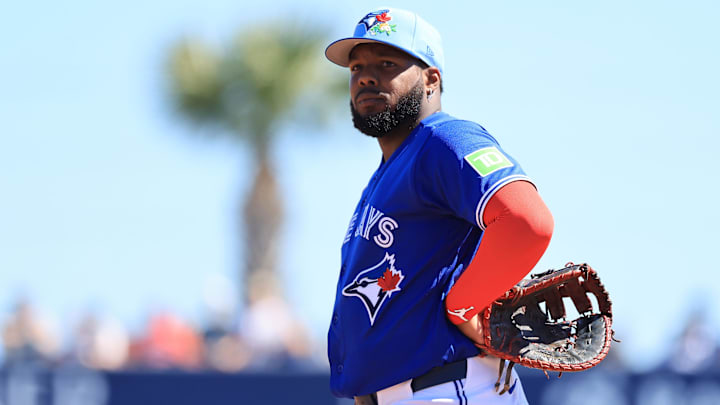
Toronto Blue Jays first baseman Vladimir Guerrero Jr. (27) looks on. | Kim Klement Neitzel-Imagn Images
The roster remains filled with star talent and emerging contributors, giving Toronto one of the most balanced lineups in baseball. However, a closer look at each position group shows that while the Blue Jays dominate in certain areas, there are a few spots where depth and production remain concerns.
Here’s how Toronto’s projected Opening Day position groups stack up across Major League Baseball, based on overall talent and depth (excluding pitching).
Catcher — Ranked 2nd in MLB
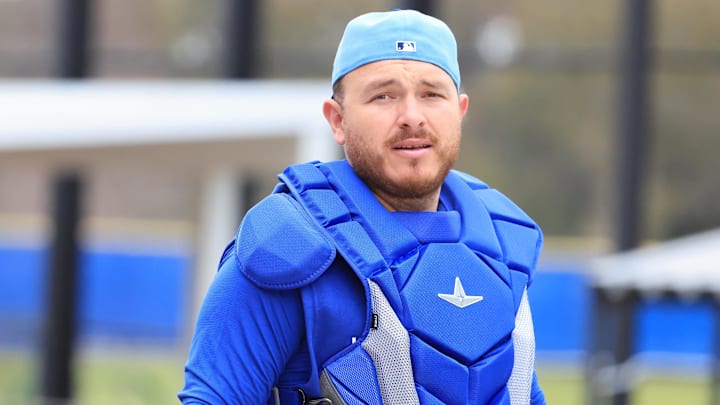
Toronto Blue Jays catcher Alejandro Kirk (30) works out for spring training practice. | Kim Klement Neitzel-Imagn Images
The Blue Jays remain one of the strongest teams in baseball behind the plate thanks to Alejandro Kirk.
Kirk earned his second All-Star selection last season and continues to be one of the league’s most productive offensive catchers. His bat gives Toronto a major advantage at a position that typically lacks consistent hitters.
Backing him up are Tyler Heineman and promising prospect Brandon Valenzuela, who provide reliable depth if needed.
Only the Seattle Mariners rank higher at catcher entering the season.
First Base — Ranked 1st in MLB
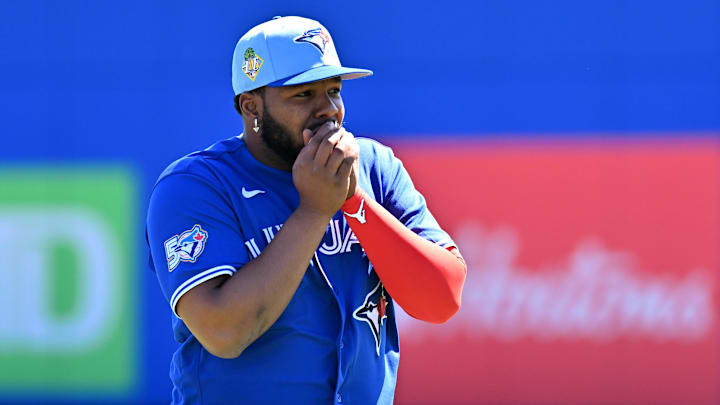
Toronto Blue Jays first baseman Vladimir Guerrero Jr. (27) warms his hands. | Jonathan Dyer-Imagn Images
This ranking is easy to explain: Vladimir Guerrero Jr.
As long as Guerrero remains healthy and producing at an MVP-caliber level, the Blue Jays will hold one of the biggest positional advantages in baseball. His power, on-base ability, and durability make Toronto’s first base situation the best in the league.
Utility infielder Ernie Clement can fill in when needed, but realistically this position belongs entirely to Guerrero.
Second Base — Ranked 13th
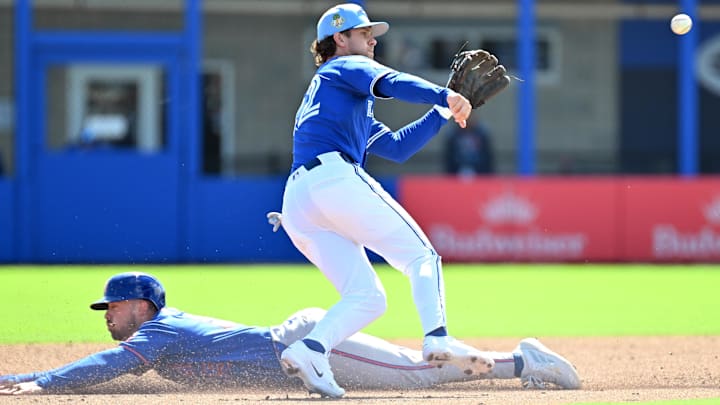
New York Mets second baseman Jackson Cluff (85) slides into second in front of Toronto Blue Jays second baseman Ernie Clement (22). | Jonathan Dyer-Imagn Images
Second base is one of the first positions where Toronto sees a noticeable drop.
With Bo Bichette no longer in the lineup, the Blue Jays are relying on a mix of Ernie Clement, Davis Schneider, and Leo Jiménez to cover the position.
While each brings useful skills, none currently projects as a clear everyday standout. If production lags early in the season, second base could become a trade deadline priority for Toronto.
Shortstop — Ranked 18th
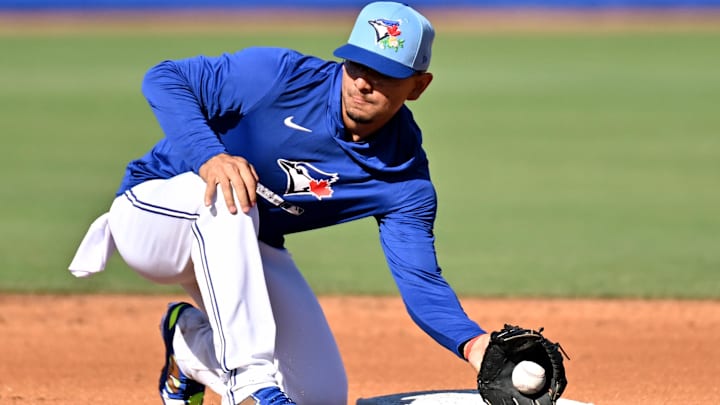
Toronto Blue Jays infielder Andres Gimenez (0) catches the ball during spring training. | Jonathan Dyer-Imagn Images
Replacing Bichette also impacts the shortstop position.
Defensive standout Andrés Giménez is expected to take over the role and should bring Gold Glove-caliber defense, but the offensive production may not match what Bichette previously delivered.
Additional depth could come from Clement, Jiménez, and Josh Kasevich, though the overall ranking reflects the uncertainty surrounding the position.
Third Base — Ranked 10th
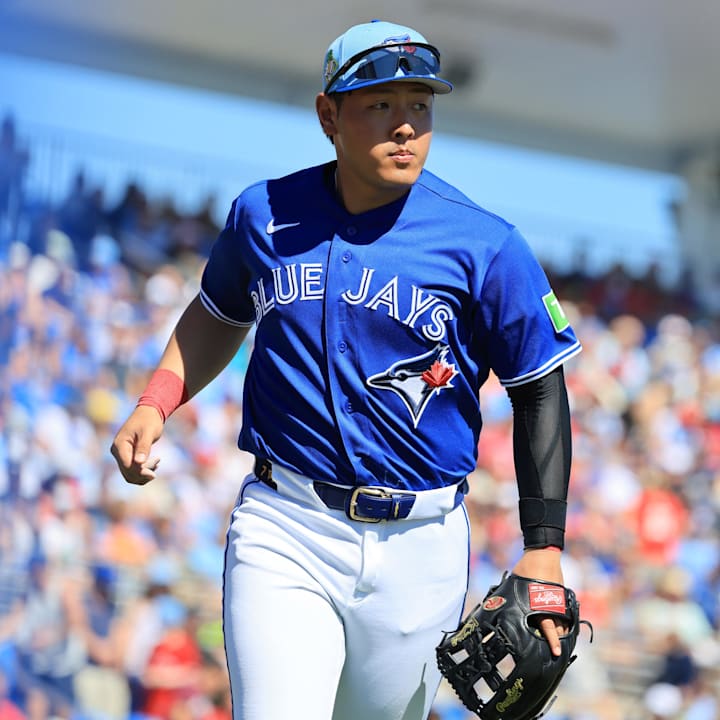
Toronto Blue Jays infielder Kazuma Okamoto (7) runs off the field in spring training. | Kim Klement Neitzel-Imagn Images
Toronto addressed third base this offseason by signing Kazuma Okamoto, pairing him with Addison Barger as potential contributors.
While the signing adds upside, it wasn’t enough to push the Blue Jays into the top tier at the position. For now, they sit 10th in MLB and fifth in the American League.
If Okamoto adapts quickly to MLB pitching, this ranking could improve significantly by midseason.
Left Field — Ranked 12th
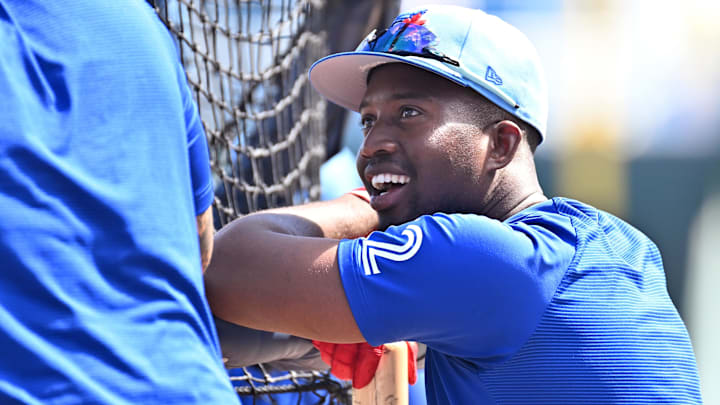
Toronto Blue Jays right fielder Jesus Sanchez (12) takes a break during batting practice. | Jonathan Dyer-Imagn Images
After acquiring Jesús Sánchez from the Houston Astros in exchange for Joey Loperfido, Toronto enters the season with a fairly balanced left field group.
Sánchez is expected to be the primary starter, though the Blue Jays have plenty of flexibility behind him. Nathan Lukes, Davis Schneider, Myles Straw, George Springer, and Jonatan Clase could all see time there depending on lineup needs.
The depth is solid, but not quite strong enough to break into the league’s top ten.
Center Field — Ranked 11th
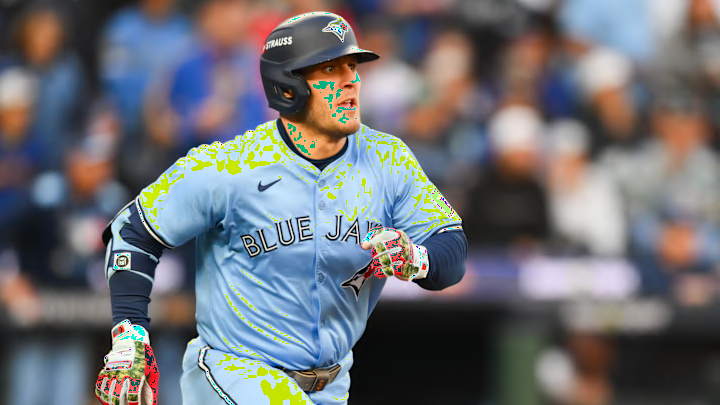
Toronto Blue Jays center fielder Daulton Varsho (5) runs after hitting a two-run double. | Steven Bisig-Imagn Images
Defensively, Daulton Varsho remains one of the most valuable center fielders in baseball.
His elite glove and strong power potential make him a highly impactful player even if his batting average fluctuates. Varsho’s defensive range alone elevates Toronto near the top ten.
Myles Straw also provides reliable depth when Varsho needs rest.
Right Field — Ranked 12th
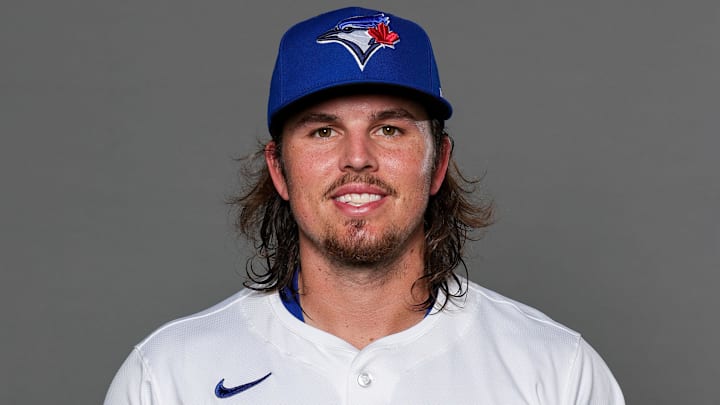
Toronto Blue Jays third baseman Addison Barger (47) poses for a photo during media day. | Mike Watters-Imagn Images
In right field, Toronto’s outlook depends heavily on Addison Barger.
Barger is projected to handle the majority of the workload following his breakout season, though the big question is whether he can replicate that performance in 2026.
Veteran George Springer will also rotate into right field when he isn’t serving as the designated hitter, adding valuable experience to the position group.
A roster built to contend
Overall, the Blue Jays remain one of the most well-rounded teams in baseball.
They boast elite production at first base, top-tier catching, and strong defensive players across the outfield. At the same time, the departures of key players like Bo Bichette have introduced some uncertainty in the infield.
If the weaker positions stabilize — or improve through midseason adjustments — Toronto could once again be among the most dangerous teams in the American League.
And with a roster built around stars like Vladimir Guerrero Jr., Alejandro Kirk, and Daulton Varsho, the Blue Jays’ championship window remains wide open heading into the 2026 season.
Leave a Reply