The New York Mets knew what they were getting when they acquired Freddy Peralta.
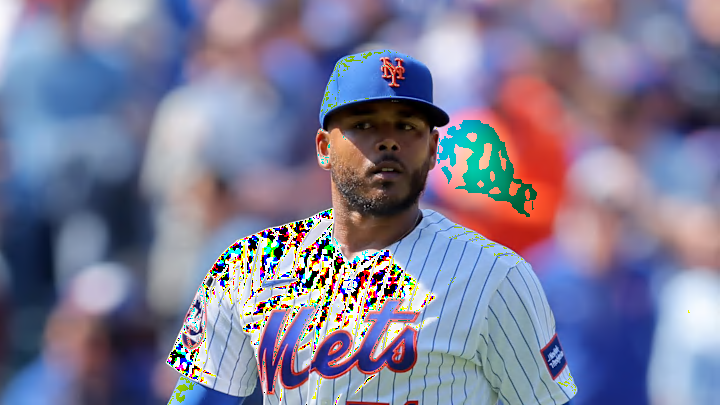
New York Mets starting pitcher Freddy Peralta | Brad Penner-Imagn Image
What they didn’t know was how difficult it might be to keep him.
As the 2026 season unfolds, one of the biggest questions surrounding the Mets isn’t just how far they can go — it’s whether Peralta will still be part of their future when it’s over.
The right-hander arrived with elite credentials. Coming off a dominant season in Milwaukee, where he posted 17 wins and a 2.70 ERA, Peralta quickly established himself as a key piece of New York’s rotation.
But there was always a catch.

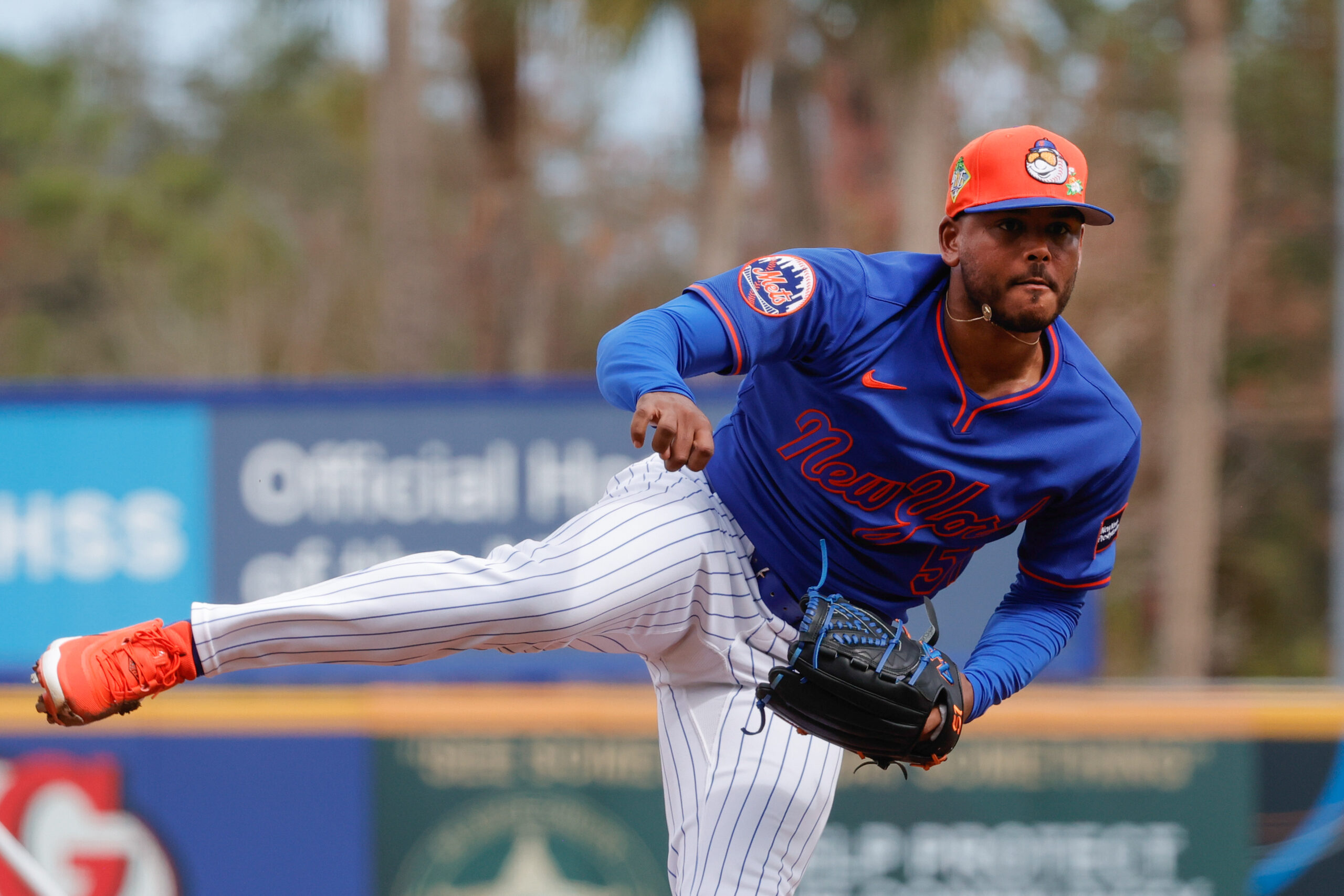
New York Mets starting pitcher Freddy Peralta | Sam Navarro-Imagn Images
Peralta is set to become a free agent after the season, meaning the Mets are operating on a limited window unless they can secure a long-term deal.
That urgency explains why New York was willing to part with top prospects to acquire him in the first place. Moves like that are rarely made without confidence that an extension is within reach.
So far, that confidence hasn’t translated into a deal.
While both sides have expressed interest in continuing discussions, the gap between them remains significant — and it comes down to one key issue.
Contract length.
Peralta is reportedly seeking a deal in the range of seven to eight years, a commitment that reflects both his current value and long-term expectations. The Mets, however, appear far more comfortable offering something closer to four or five years.
It’s a difference that’s proving difficult to bridge.
Recent reports suggest the two sides remain “substantially apart,” with little progress toward a resolution. In fact, there’s growing belief that negotiations could stall entirely until Peralta reaches free agency after the season.
If that happens, the Mets risk losing control of the situation.
Once Peralta hits the open market, competition will increase — and so will the price.
Still, there’s another way to look at it.
Even without an extension in place, the Mets will have Peralta anchoring their rotation throughout the 2026 campaign. For a team with postseason aspirations, that alone carries significant value.

And if the two sides ultimately part ways, New York could pivot.
A loaded free-agent class may offer alternatives, including top-tier arms who could command even larger contracts. That flexibility could reshape how the Mets approach their long-term pitching strategy.
For now, though, the focus remains on the present.
Peralta is still in Queens. He’s still performing at a high level. And the Mets are still in contention.
But with each passing week, the unresolved contract situation adds a layer of tension.
Because the longer this drags on, the more real one possibility becomes — that this partnership might only last one season.
Leave a Reply