When Jonah Tong debuted for the New York Mets last August, it felt like the beginning of something important.

Sep 24, 2025; Chicago, Illinois, USA; New York Mets pitcher Jonah Tong (21) sits in the dugout during the third inning against the Chicago Cubs at Wrigley Field. Mandatory Credit: Matt Marton-Imagn Images | Matt Marton-Imagn Images
He arrived with momentum and expectation. After dominating Double-A hitters with a sparkling ERA, Tong looked every bit like a future rotation piece. His debut only reinforced that belief—poised, efficient, and in control.
But the transition to the majors didn’t stay smooth for long.
In just a matter of starts, the narrative shifted. Hard contact began piling up, home runs followed, and outings unraveled quickly. By the end of his brief stint, Tong’s numbers painted a very different picture—one filled with uncertainty rather than promise.
Now, heading into 2026, that uncertainty hasn’t fully cleared.
Tong spent the offseason working to address his biggest flaw: how often hitters were squaring him up. Early signs in spring training showed some progress, particularly in limiting walks and reducing hard-hit contact.
Still, one critical issue remains.
He isn’t missing enough bats.
In today’s game, swing-and-miss stuff is often the separator between surviving and thriving. Tong’s strikeout metrics have lagged behind league averages, and without that ability to overpower hitters, even small mistakes can turn into damaging contact.
That puts added pressure on every pitch.
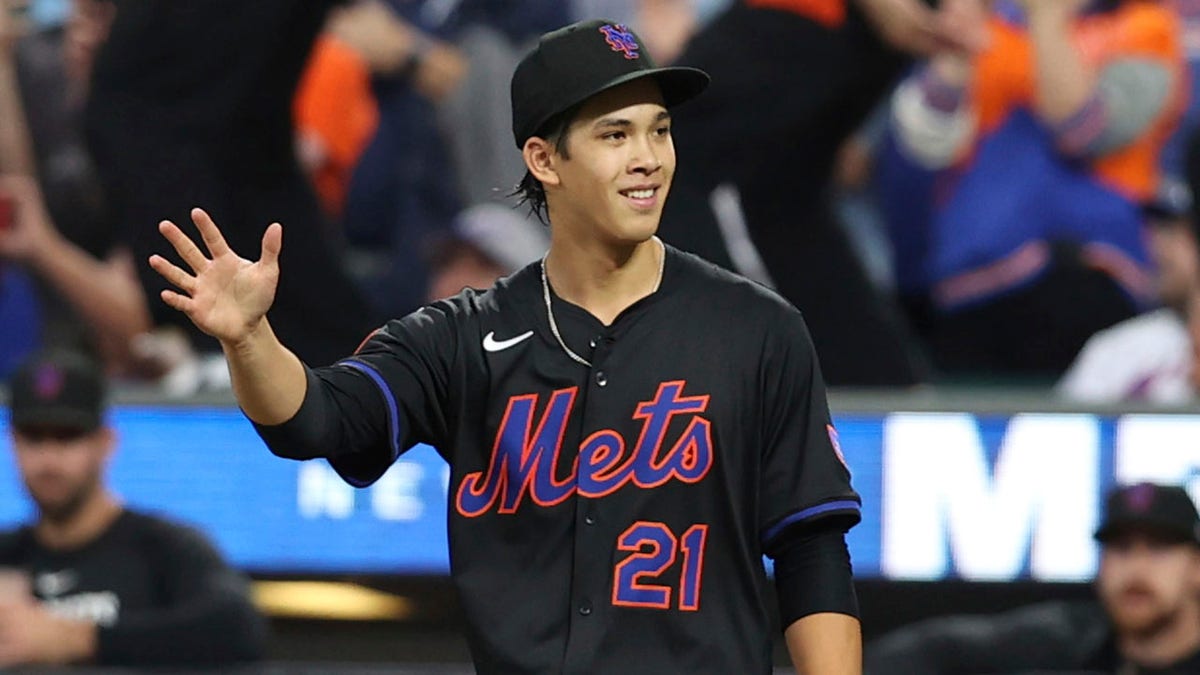
Compounding the challenge is the situation around him.
The Mets’ rotation picture has grown more crowded after adding arms like Freddy Peralta and Tobias Myers. With established options already in place, there’s no obvious opening waiting for Tong if he’s merely “good enough.”
He’ll have to force the issue.
That likely means proving himself at the next level first. A return to Triple-A appears to be the most realistic path, where he can refine his approach and show he’s capable of handling more advanced hitters over a sustained stretch.
His initial call-up may have come a bit too soon.
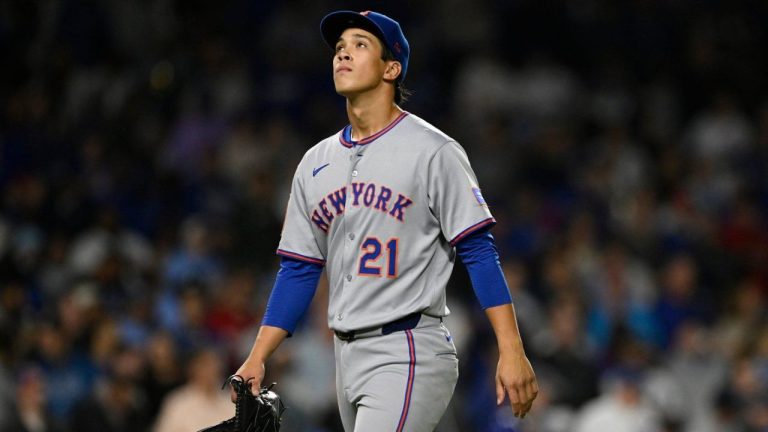
While some prospects make the leap seamlessly, others need more time to adjust. Tong’s experience suggests he falls into the latter category—a pitcher with clear upside, but one still searching for consistency against top-tier competition.
The long-term outlook hasn’t disappeared.
At just 22 years old, there’s still plenty of time for growth. Pitch development, command, and confidence can all evolve with experience. The flashes that made him a top prospect didn’t vanish—they just haven’t fully translated yet.
But the path forward is no longer guaranteed.

For Tong, the next step isn’t about potential—it’s about proof. And until he delivers that, his return to Queens may remain more of a possibility than a certainty.
Leave a Reply