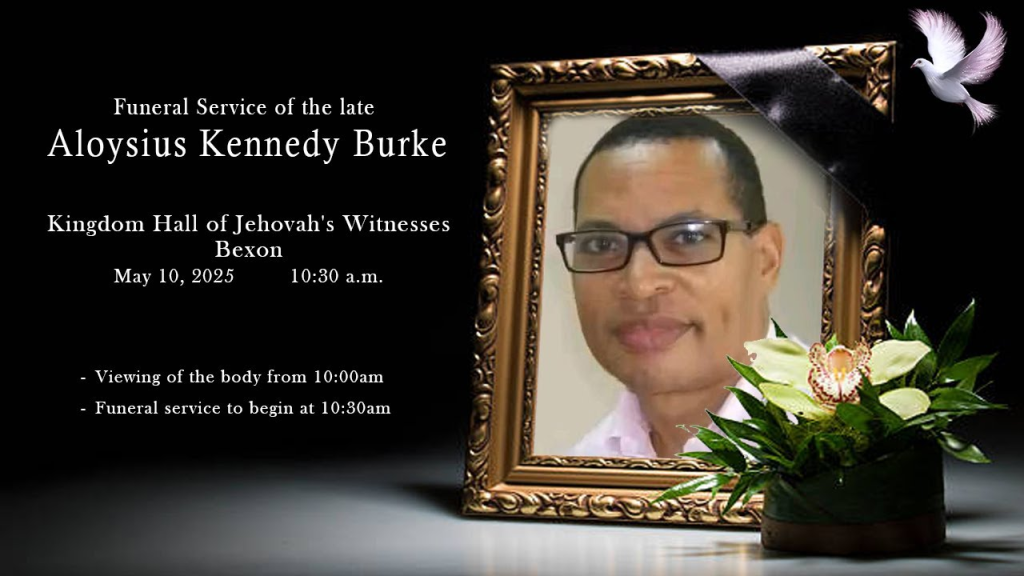
At the funeral service for Aloysius Kennedy Burke on May 10, 2025, the program opened with the song “Through the Years.” The lyrics expressed lifelong devotion, gratitude, and emotional resilience: “I can’t remember when you weren’t there… through the years I’ve never been afraid… you’ve kissed my tears away… I’ll stay with you through the years.” After the song, extended musical interludes followed.
A welcome was then extended on behalf of Kennedy’s immediate, extended, and spiritual family. Attendees were invited to stand and sing song number 151, “He Will Call,” after which a prayer to Jehovah was offered. In the prayer, gratitude was expressed for being gathered together, and reflections were shared on the brevity of life and the reality that death is an enemy, as stated at 1 Corinthians 15:26. The prayer asked Jehovah to comfort the Burke family, to unite those who remain, and to help all present rely on God’s promises—especially the resurrection. The prayer also asked for Jehovah’s spirit to guide the program and to help everyone provide comfort through words, presence, and kindness, even when the right words are hard to find. It concluded in Jesus Christ’s name.
Next, Brother Ninval delivered the funeral discourse. He asked: “Why are we here today? To mourn? To give thanks? To celebrate a life? To comfort? To reflect on the brevity of life? Or all of the above?” He then reviewed Kennedy’s life. Most knew him as Kennedy, and some called him Ken. He is survived by his wife Loretta; their daughter Misha and her husband Robin; their grandson Thomas; his mother Luciana St. Louis; siblings Troy, Wayne, Dawn, Trevor, Richard, Zenith, Gina, and Donna; other relatives; and a worldwide brotherhood of over nine million Jehovah’s Witnesses.
Kennedy was baptized on October 23, 1982, and remained a faithful Witness until his death. He served as a congregation elder and secretary—roles known to require diligence. Elders who worked with him described him as quiet, observant, thoughtful, and loving. His words carried weight because he spoke with intention. He was known to be jovial and often used meaningful illustrations in his talks. He lovingly called his wife Loretta by the affectionate nickname “Tats,” a name derived from the final syllable of “Loretta” (ta → tats), originally given by her father.
The speaker shared humorous stories of Kennedy’s early courtship, including how Loretta initially disliked “the best bone in his body,” and how her father initially gave Kennedy a very hard time—even answering the phone sharply with, “Kennedy, what do you want?” Eventually, however, Loretta recognized Kennedy’s fine qualities, and even her father and Kennedy became close friends. Kennedy loved his family deeply, but he loved Jehovah most. Even during illness, he continued praising Jehovah, expressing how he felt God’s strength and the support of the brothers daily. Though speaking became difficult, he still joined Bible studies via WhatsApp and encouraged even very young students—like a feisty 6-year-old—to keep loving Jehovah.
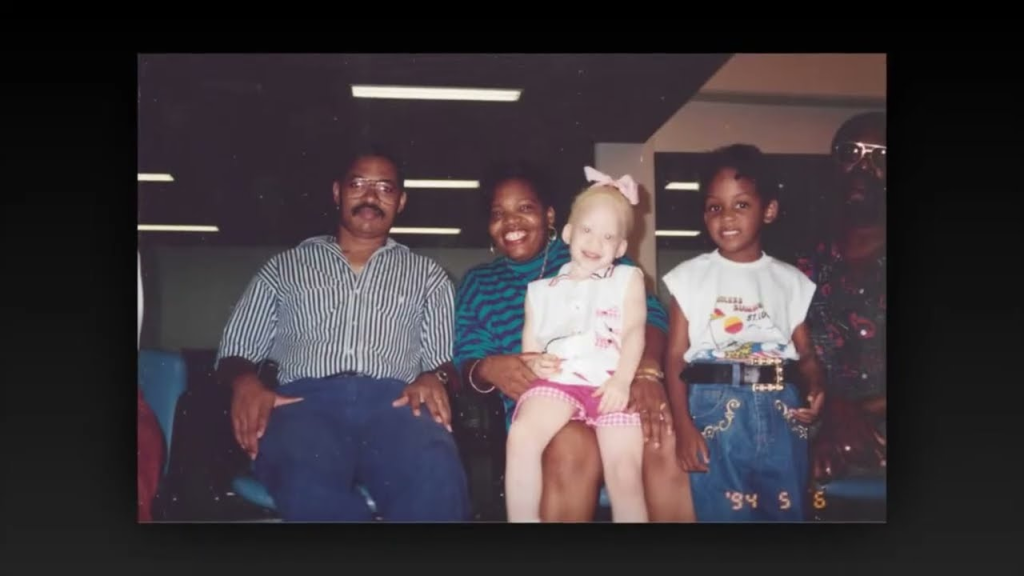
Kennedy loved God, Jesus, people, and Bible truth. He lived in harmony with Ecclesiastes 7:1: “A good name is better than good oil, and the day of death is better than the day of birth.” The speaker explained that a newborn has no reputation, but a life lived faithfully gives value—like a check that will not bounce. Each person chooses the kind of reputation they will have before God.
Brother Ray Naras, who knew Kennedy from boyhood, then shared memories. He recalled Kennedy as a teenager living next door—teachable, eager to learn Bible truth, attending their family worship, and unafraid to ask deep questions such as: “Why can’t all good people go to heaven?” or “If God is good, why do bad things happen?” or “If people are wicked, what’s wrong with God punishing them forever?” Ray emphasized Kennedy’s thirst for truth and sincere spiritual hunger from a young age.
The discourse continued by addressing grief. Even faithful people grieve, as shown in the Bible: Abraham wept for Sarah (Genesis 23:2), and Jacob mourned Joseph for many days (Genesis 37:34). Even Jesus—knowing he would resurrect Lazarus—“gave way to tears” at John 11:35. This shows that grief is not weakness; God created humans with emotion.
Psalm 147:3 says Jehovah “heals the brokenhearted and binds up their wounds.” Like a careful physician bandaging an injury, God uses his promises to protect the grieving heart from worsening pain. Emotional scars may remain for now, but the Bible promises complete healing in the future.
Kennedy believed wholeheartedly in the Bible’s hope for the dead. He knew that death was not God’s original purpose and that God’s purpose—to fill the earth with happy, healthy people—has never changed. The speaker read Revelation 21:4–6, where Jehovah promises to wipe out every tear, end death, and make all things new. Jehovah speaks of the future as if it has already happened because the promise is certain. God speaks of making things new, not making new things—a restoration, not a replacement.
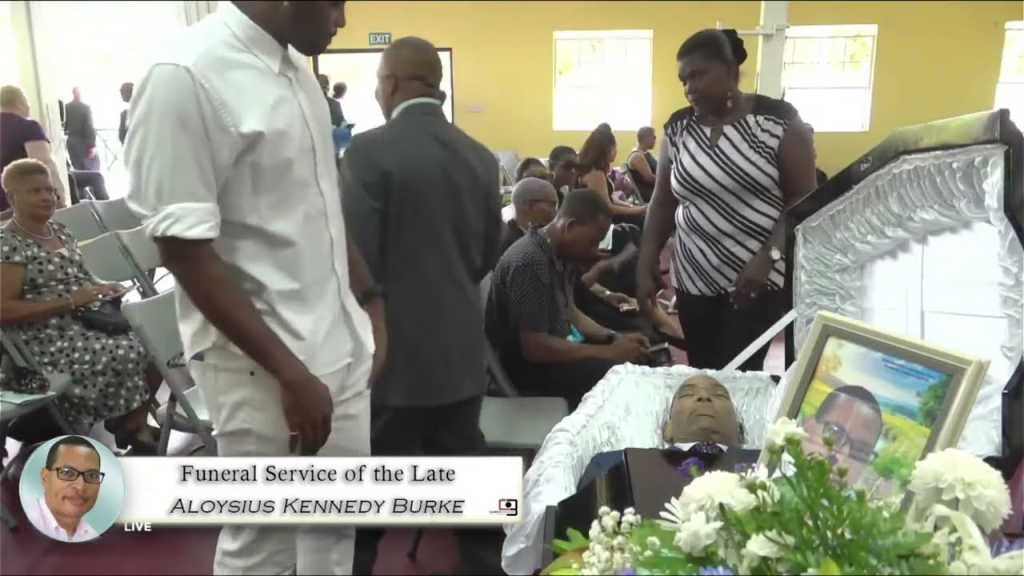
The speaker explained Bible teachings Kennedy loved: that humans are souls (Genesis 2:7), that the soul dies (Ezekiel 18:4), and that the dead are conscious of nothing (Ecclesiastes 9:5). When God told Adam, “Dust you are and to dust you will return,” Adam returned to nonexistence. Christ’s resurrection guarantees that the dead will live again, some in heaven (the 144,000) and others on earth.
Leave a Reply