The Toronto Blue Jays made several headline-grabbing moves this offseason, but one quieter decision may carry more weight than it first appeared.
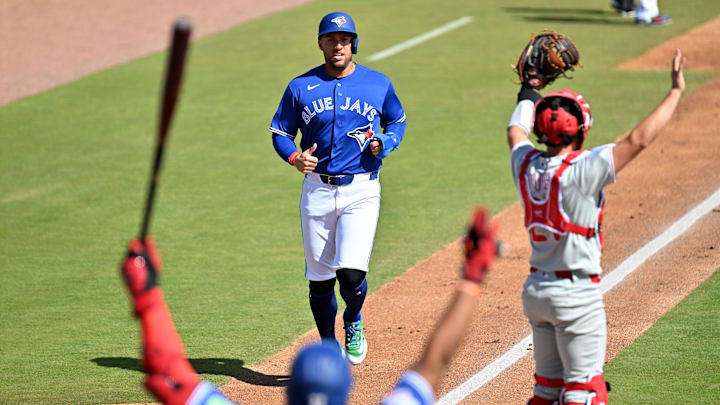
Bringing back Max Scherzer didn’t generate the same buzz as other additions, yet inside the clubhouse, the impact is already being felt — especially by George Springer.
The veteran outfielder didn’t hide his excitement when talking about Scherzer’s return.
“It feels good to not be the oldest guy in the room,” Springer joked during a recent spring training broadcast. Then he got more serious. “He brings so much to us as a team. The name speaks for itself… he’s a Hall of Famer… and he’s so approachable.”
More Than Just a Familiar Face
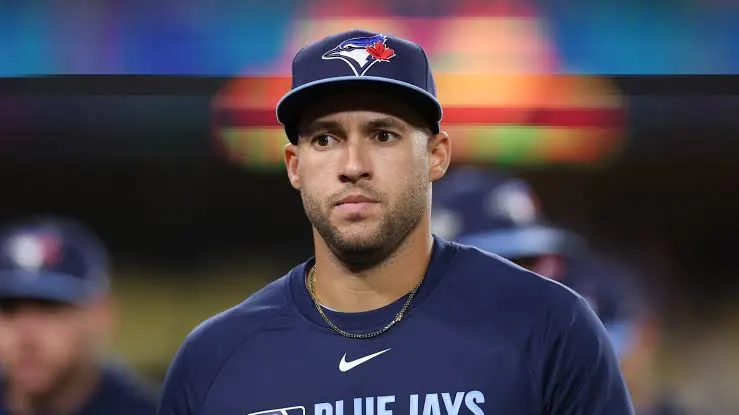
Scherzer’s return to Toronto comes at an important time.
After a heartbreaking World Series loss, many expected the 41-year-old to either retire or wait deeper into the season before signing. Instead, injuries quickly changed the equation.
With Shane Bieber and Bowden Francis sidelined, the Blue Jays suddenly needed rotation help. Scherzer, coming off a productive 2025 campaign, became an obvious solution.
Now, he’s not just back — he’s likely locked into a major role.
A Rotation Need Turns Into Opportunity

Toronto’s pitching situation has only grown more complicated.
Recent reports of elbow inflammation for José Berríos have further thinned the rotation, making Scherzer’s presence even more critical. At this point, he’s expected to be part of the Opening Day starting five.
Expectations, however, must be realistic.
Scherzer is nearing his 42nd birthday, and last season showed signs of wear. He posted a 5.19 ERA across 85 innings and dealt with a nerve issue in his thumb that impacted his consistency.
But when the games mattered most, he still delivered.
In three postseason starts, Scherzer recorded a 3.77 ERA — another reminder that even a diminished version of “Mad Max” can rise to the moment.
The Value Beyond the Numbers

Even if Scherzer is no longer the dominant ace he once was, his value extends far beyond statistics.
His experience, competitive edge, and presence in high-pressure situations provide something the Blue Jays clearly value — especially for a team with championship aspirations.
At some point, when the rotation gets healthy, Toronto may face difficult decisions about roles. Scherzer hasn’t worked out of the bullpen in a regular season game since his rookie year in 2008, which could complicate roster flexibility.
But for now, those questions can wait.
Leadership at the Core

Scherzer isn’t the only veteran presence carrying importance into 2026.
Springer remains one of the emotional leaders of the clubhouse, and his performance last season played a major role in Toronto’s success. While repeating a 166 wRC+ season may be unrealistic, another strong campaign would go a long way toward stabilizing the lineup — especially with Bo Bichette no longer in the picture.
Together, Springer and Scherzer form a veteran backbone that could define the Blue Jays’ season.
A Team Built for One More Push

For Toronto, this isn’t just about filling innings or adding depth.
It’s about surrounding a talented roster with players who understand what it takes to win when the stakes are highest.
Scherzer brings that mentality. Springer reinforces it.
If both veterans stay healthy and productive, the Blue Jays won’t just benefit from their numbers — they’ll gain the kind of leadership that can carry a team deep into October.
And based on Springer’s reaction, that belief is already starting to take hold.
Leave a Reply