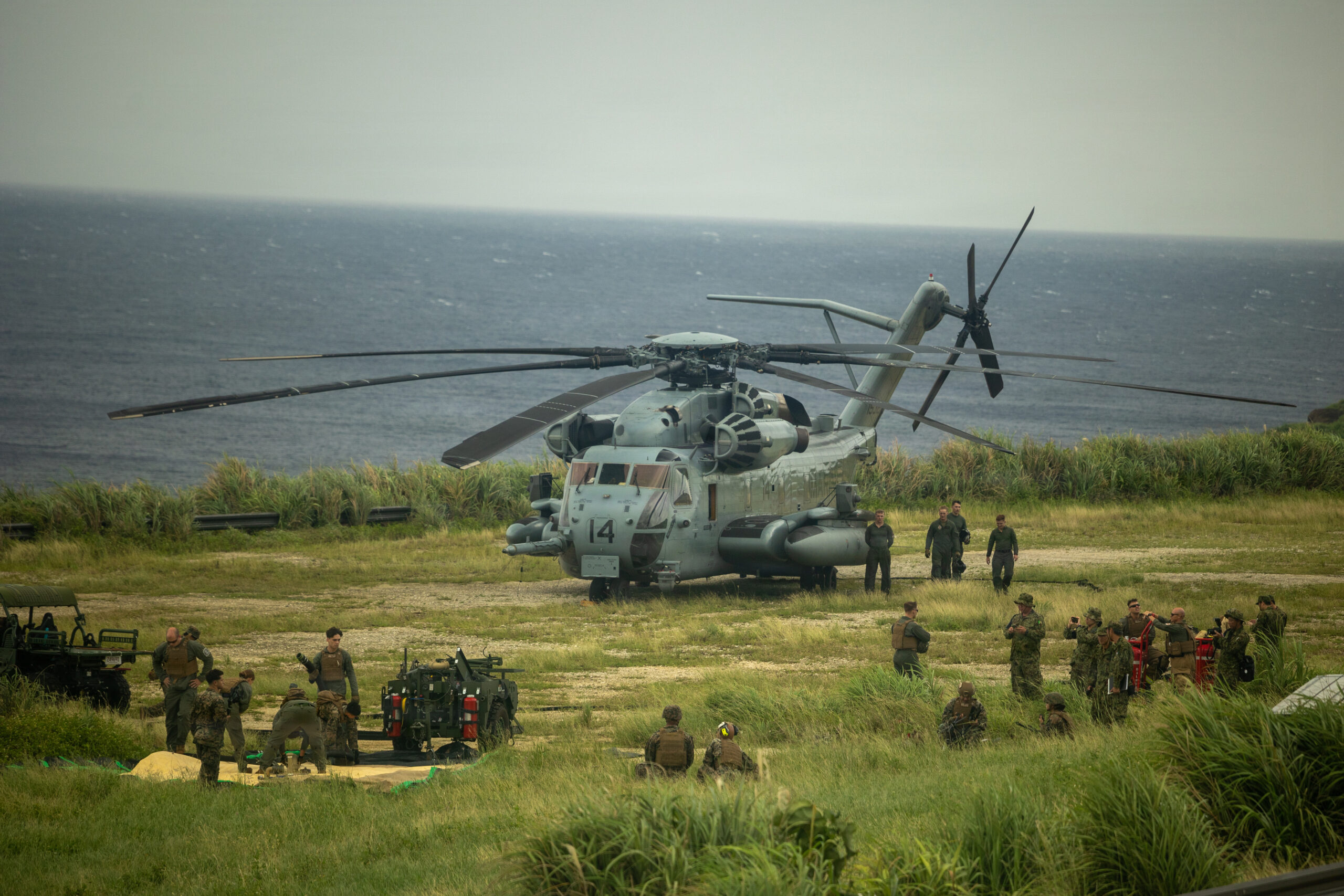
Defense Secretary Pete Hegseth laid out the Trump administration’s vision to reinforce U.S. military posture in the first island chain to deter Chinese aggression against Taiwan while speaking at the Reagan National Defense Forum over the weekend.
“We’re not trying to strangle China’s growth, we’re not trying to dominate or humiliate them,” Hegseth said during his keynote at the annual national security conference. “Nor are we trying to change the status quo over Taiwan. Our interests in the Indo-Pacific are significant, but also scoped and reasonable. This includes the ability for us, along with allies, to be postured strongly enough in the Indo-Pacific to balance China’s growing power.”
The defense secretary’s remarks came in tandem with the release of the 2025 National Security Strategy, which emphasized burden-sharing and economic security. On the Indo-Pacific, the document noted the need “to deter adversaries and protect the First Island Chain” via American conventional military overmatch, increased cooperation with partners and basing access.
“That’s why we will ensure that our military can – if, God forbid, necessary – project sustained capabilities along the first island chain and throughout the Indo-Pacific,” Hegseth said.
American commitments to station U.S. forces and invest in the defense of the region has increased in recent years due to China’s military modernization efforts.
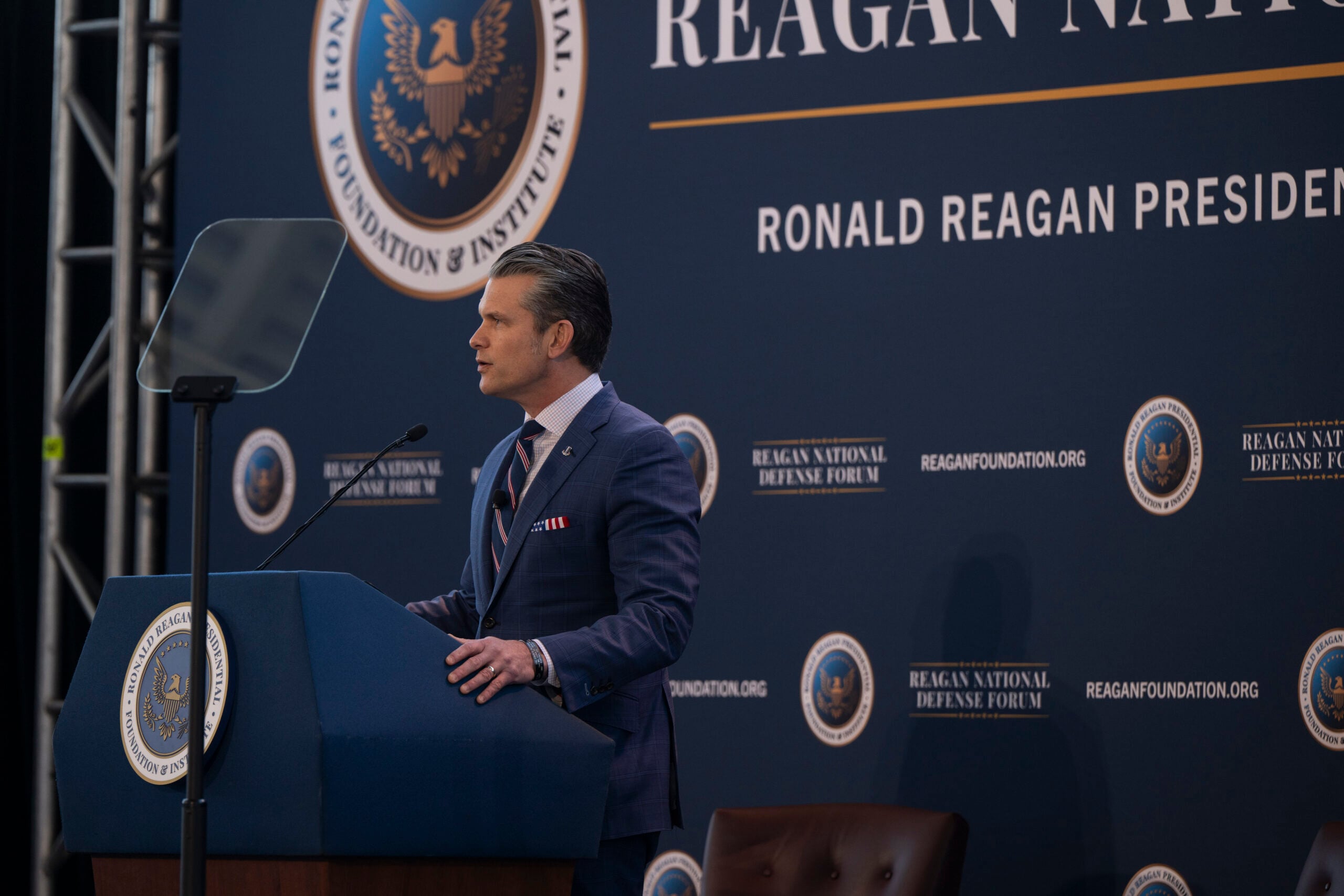
Hegseth noted that Washington’s efforts against China were not meant to constrain the country’s rise, but to ensure that Beijing will not have “the ability to dominate us or our allies.”
The rapid expansion of the People’s Liberation Army has put Taiwan, which Beijing views as a “renegade province,” under an increased threat of invasion. China has also doubled down on its South China Sea territorial claims against the Philippines, a mutual defense treaty ally of the United States, with its vast maritime militia and Coast Guard.
Chinese military deployments have also impacted Tokyo amid its recent row with Beijing on Taiwan. Over the weekend, Chinese fighter jets launched from the Liaoning Carrier Strike Group were involved in two incidents with Japanese aircraft near Okinawa, USNI News reported. Japan’s Ministry of Defense reported that the flattop and its escorts were northbound, heading toward Japan’s main islands.

In response to Beijing’s military buildup and ambitions, Washington in the last decade has taken steps to improve its position in the Western Pacific. Within the last five years, the U.S. has formed its posture against China through the strategic deployment of American missile forces and targeted defense cooperation at locations between Australia and Japan.
The 2025 National Security Strategy advocated for the use of diplomatic means to increase forward deployment locations across the region to deter a conflict against American allies as well as a Chinese invasion of Taiwan.
“This will interlink maritime security issues along the First Island Chain while reinforcing U.S. and allies’ capacity to deny any attempt to seize Taiwan or achieve a balance of forces so unfavorable to us as to make defending that island impossible,” reads the document.
With the looming threat from China, Taipei has pledged to modernize its military with a multi-billion defense supplemental and field more asymmetric capabilities to defeat Beijing’s overwhelming conventional advantage
Leave a Reply