The Houston Astros’ early offensive surge isn’t just about talent — it’s about transformation.

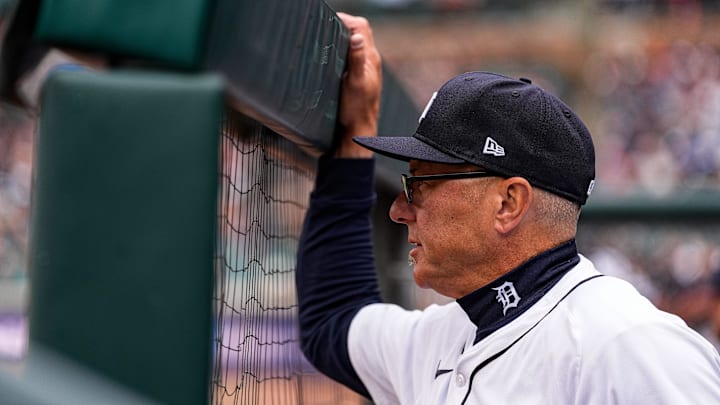
Detroit Tigers first base coach Anthony Iapoce (76) watches warm up from the dugout before Game 2 of AL wild-card series against Cleveland Guardians at Progressive Field in Cleveland, Ohio on Wednesday, Oct. 1, 2025. | Junfu Han / USA TODAY NETWORK via Imagn Image
Through the first week of the 2026 season, Houston’s lineup has looked sharper, more disciplined, and far more dangerous than it did a year ago. While standout performances from stars like Yordan Alvarez have grabbed headlines, there’s a deeper reason behind the team’s hot start.
It begins with a change in philosophy.
After the 2025 season, the Astros made a surprising decision to move on from longtime hitting coaches Alex Cintron and Troy Snitker. Both had been part of highly productive offenses, but there was a growing concern inside the organization.

The approach at the plate had become too aggressive.
Houston hitters were swinging early and often, leading to inconsistent at-bats and missed opportunities. Despite internal efforts to correct it, the issue lingered — and ultimately led to a reset.
Enter a new direction.
Victor Rodriguez and Anthony Iapoce were brought in to reshape the team’s offensive identity. Alongside those hires, the Astros also adjusted their broader operations structure, signaling a clear commitment to change.
So far, that shift is paying off.
Through six games, Houston’s hitters are not only producing — they’re controlling the game. The lineup is working deeper counts, forcing pitchers into uncomfortable situations, and consistently finding ways to get on base.
The numbers reflect that evolution.

The Astros have already drawn 30 walks, a notable jump from the same point last season. That increased patience has translated into more opportunities, longer innings, and added pressure on opposing pitching staffs.
It’s a subtle change, but a significant one.
Instead of relying solely on power, Houston is building offense through discipline. Each at-bat feels more intentional, more calculated — a stark contrast to the free-swinging tendencies that defined stretches of last season.
Of course, the sample size is small.

Six games don’t guarantee long-term success, and maintaining this level of discipline over a full season will be the real challenge. Baseball has a way of testing consistency, especially when early adjustments begin to fade.
But for now, the signs are encouraging.
The players have bought in. The approach looks sustainable. And the results are following.
If the Astros can hold onto this mindset — combining patience with their natural power — their offense could become one of the most complete units in baseball.
Because sometimes, the biggest changes aren’t the loudest ones.
They’re the ones that quietly reshape how a team wins.
Leave a Reply