The Toronto Blue Jays didn’t just prepare for the 2026 season.
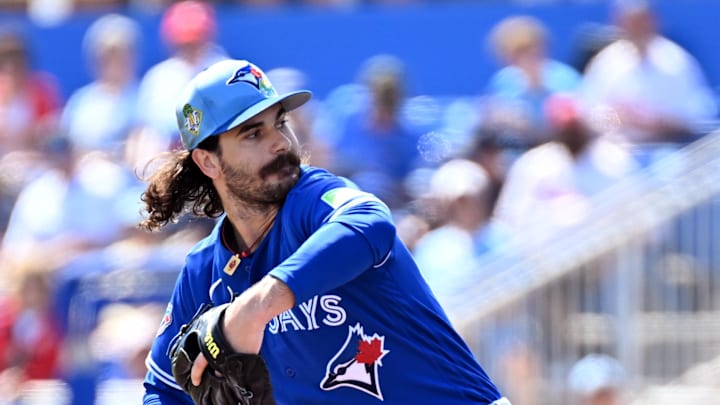
Feb 28, 2026; Dunedin, Florida, USA; Toronto Blue Jays starting pitcher Dylan Cease (84) throws a pitch in the first inning against the Philadelphia Phillies during spring training at TD Ballpark. Mandatory Credit: Jonathan Dyer-Imagn Images | Jonathan Dyer-Imagn Images
They braced for it.
All winter, the front office made one thing clear — you can never have enough pitching. At the time, the strategy raised questions. Why so many arms? Where would they all fit?
Now, just days before Opening Day, the answer is obvious.
They were planning for exactly this.

Injuries have already begun to reshape Toronto’s rotation. Shane Bieber isn’t ready to start the season. José Berríos is dealing with a stress fracture. Trey Yesavage is headed to the injured list.
Suddenly, what once looked like excess has become essential.
This is the reality the Blue Jays are facing — and one they quietly anticipated.
Over the offseason, Toronto added wave after wave of pitching depth. From established names like Max Scherzer and Dylan Cease to lower-profile arms brought in for flexibility, the approach was clear: build a surplus and sort it out later.
Now, that surplus is being tested immediately.
Scherzer’s signing, in particular, looks more significant by the day. What may have seemed like a luxury addition now feels like a necessity, giving the Blue Jays a veteran presence to stabilize an unsettled rotation.

Other moves are proving just as important.
Eric Lauer, originally viewed as a depth option, is now expected to take on a larger role. Despite a contract that suggests a bullpen assignment, he could find himself starting games early in the season — a shift that highlights just how quickly plans can change.
That flexibility matters.
Without it, Toronto would be forced to rely heavily on unproven talent right out of the gate. Top prospects like Ricky Tiedemann and Adam Macko offer promise, but asking them to carry early-season innings comes with risk.
Beyond them, the options become even thinner.
Pitchers like Yariel Rodriguez, Michael Plassmeyer, and CJ Van Eyk can fill in when needed, but they’re not ideal solutions for a team with postseason ambitions.

That’s why the offseason approach now looks less like overbuilding — and more like foresight.
The Blue Jays didn’t just add pitching.
They added insurance.
Of course, this isn’t how they envisioned the rotation back in January. Injuries have forced adjustments, and the opening weeks of the season may feel more like a patchwork than a finished product.
But there’s a difference between scrambling and adapting.
Toronto is adapting.
They have enough depth to remain competitive while waiting for reinforcements. They have options that can bridge the gap without completely derailing their plans.
And most importantly, they’ve avoided the worst-case scenario — being unprepared.
In baseball, pitching depth isn’t a luxury.

It’s survival.
And as Opening Day arrives, the Blue Jays are already seeing why.
Leave a Reply