The Luis Robert Jr. trade didn’t come together overnight — and the final deal almost looked very different.
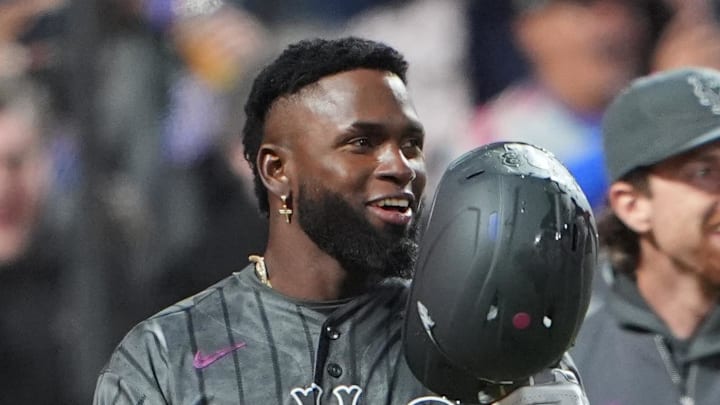
New York Mets center fielder Luis Robert Jr. | Gregory Fisher-Imagn Image
When the New York Mets finally landed the talented outfielder this past offseason, it felt like the conclusion of a long-running storyline. Robert had been floated in trade rumors for years as the Chicago White Sox looked to reshape a struggling roster.
But even with that urgency, Chicago never approached negotiations lightly.
Despite Robert’s uneven production over the previous two seasons, the White Sox front office remained firm in its asking price. They weren’t interested in a discounted return — especially for a player with his ceiling.
In the end, the Mets acquired Robert by sending Luisangel Acuña and pitching prospect Truman Pauley to Chicago. Early signs have been encouraging, with Robert making an immediate impact at the plate, including a walk-off home run and a strong start offensively.
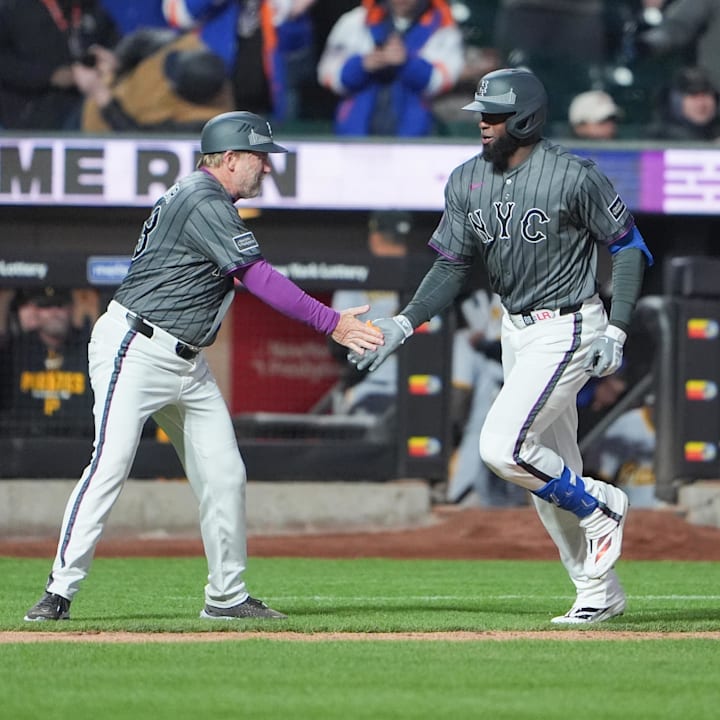
New York Mets third base coach Tim Leiper (63) congratulates Luis Robert Jr. (88) | Gregory Fisher-Imagn Images
Still, the finalized trade package only tells part of the story.
Behind the scenes, negotiations were far more complex — and at one point, centered around a completely different player.
According to reports, the White Sox initially pushed hard to acquire Brett Baty as the centerpiece of the deal. The Mets, however, weren’t willing to move him.
That decision proved to be a turning point.

New York countered by offering Mark Vientos, but Chicago wasn’t convinced. The White Sox were looking for a different profile — not another bat-first corner player, but someone they believed could develop into a more complete contributor.
That back-and-forth highlights just how deliberate both teams were.
For the Mets, holding onto Baty signaled long-term commitment. He’s viewed as a key part of their core moving forward, and moving him — even for a player like Robert — was a line they wouldn’t cross.
Instead, they pivoted.
Including Luisangel Acuña ultimately bridged the gap. While Acuña carries significant upside, the Mets’ current roster construction limited his immediate path to playing time. With a win-now mindset, New York made the calculated decision to move him in exchange for proven major league talent.
It’s a move that reflects both urgency and confidence.
Chicago, meanwhile, gets a player who could grow into a foundational piece, even if he wasn’t their initial top target. And for a team in transition, that kind of upside still carries real value.
As for the Mets, the early returns suggest they may have struck the right balance.
By keeping Baty and still landing Robert, they preserved part of their future while strengthening their present — a combination that could prove crucial as the season unfolds.

And if Robert continues producing at a high level, that decision will only look smarter with time.
Leave a Reply