When the Mets signed Luke Weaver to a two-year, $22 million deal this winter, they didn’t just add another arm.

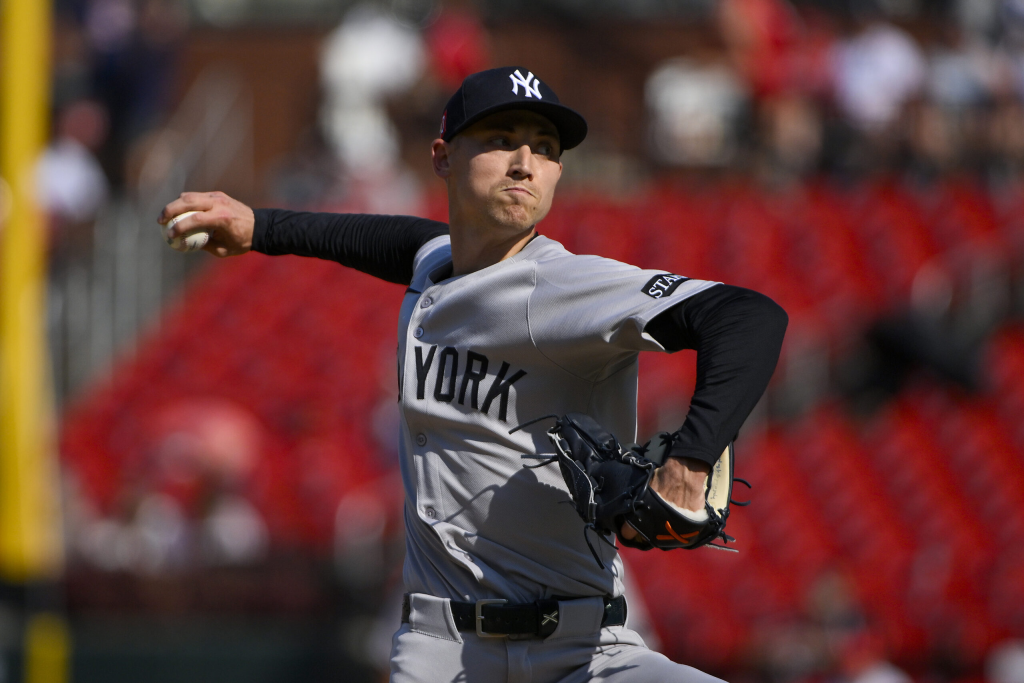
New York Mets pitcher Luke Weaver (30) | Sam Navarro-Imagn Images
They added flexibility.
Over the past two seasons with the Yankees, Weaver evolved into one of baseball’s most adaptable pitchers. He closed games during New York’s 2024 World Series run, handled high-leverage innings in 2025, and showed he could thrive whenever the moment demanded it.
That versatility made him attractive across the league.

In fact, several teams reportedly explored converting Weaver back into a starter — a role he held for much of his early career. Weaver himself acknowledged he’d be open to returning to a rotation if the right situation emerged.
But the Mets had a different vision.
They signed him to pitch out of the bullpen.
What remained unclear was exactly how he would be deployed. With Devin Williams projected as the closer, would Weaver work as a setup man? A fireman? An occasional ninth-inning option when matchups dictate?

This week, Weaver offered a telling answer.
“Yeah, I think it’s still early in the communications on that,” Weaver said in an interview with MLB Network. “We’re trying to establish, and get our arms right, make sure we’re healthy. Those conversations will come. But I just want to make an impact.”
The message was simple — and deliberate.

“I’ve always tried to think about, especially as a newer reliever in my career, just to get outs, and do them when they need them. And just show up every day and be successful. If I can do that, then the roles are the roles. They’re just labels.”
That’s not a pitcher angling for saves.
That’s a pitcher signaling adaptability.

For a Mets bullpen that underwent heavy turnover this offseason, that mindset matters. Williams may handle the ninth inning, but modern bullpens are rarely so rigid. High-leverage situations often appear in the seventh or eighth, sometimes against the heart of the opponent’s order.
Weaver’s value lies in handling those moments without ego.
At 30 years old, he has experienced both sides of the equation — chasing rotation stability and thriving in relief. That journey appears to have shaped his perspective.
The Mets don’t need another voice lobbying for a specific inning.
They need someone willing to take the ball whenever the game hangs in the balance.
Weaver made it clear: he’s that guy.
In a clubhouse built around defined stars and ambitious expectations, his team-first approach may prove just as important as his fastball.
And if October arrives in Queens, labels won’t matter.
Only outs will.
Leave a Reply