The New York Mets made a bold move this offseason by bringing in Bo Bichette.
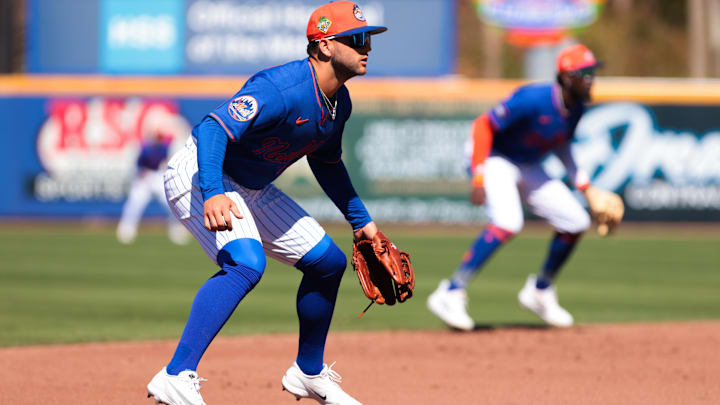
Feb 24, 2026; Port St. Lucie, Florida, USA; New York Mets third baseman Bo Bichette (19) plays his position against the Houston Astros during the third inning at Clover Park. Mandatory Credit: Sam Navarro-Imagn Images | Sam Navarro-Imagn Images
The plan seemed straightforward at the time. With Francisco Lindor locked in at shortstop and Marcus Semien expected to handle second base, Bichette would transition to third — a new role designed to fit him into an already crowded infield.
But just weeks into spring, that plan may already be evolving.
In a recent Grapefruit League game, Mets manager Carlos Mendoza deployed Bichette at shortstop — a move that raised eyebrows and hinted at a broader shift in thinking.
It wasn’t accidental.
Mendoza later explained that the decision was intentional, aimed at giving Bichette reps at short in case the team needs him there during the season. While third base remains his primary position, the Mets are clearly exploring flexibility.
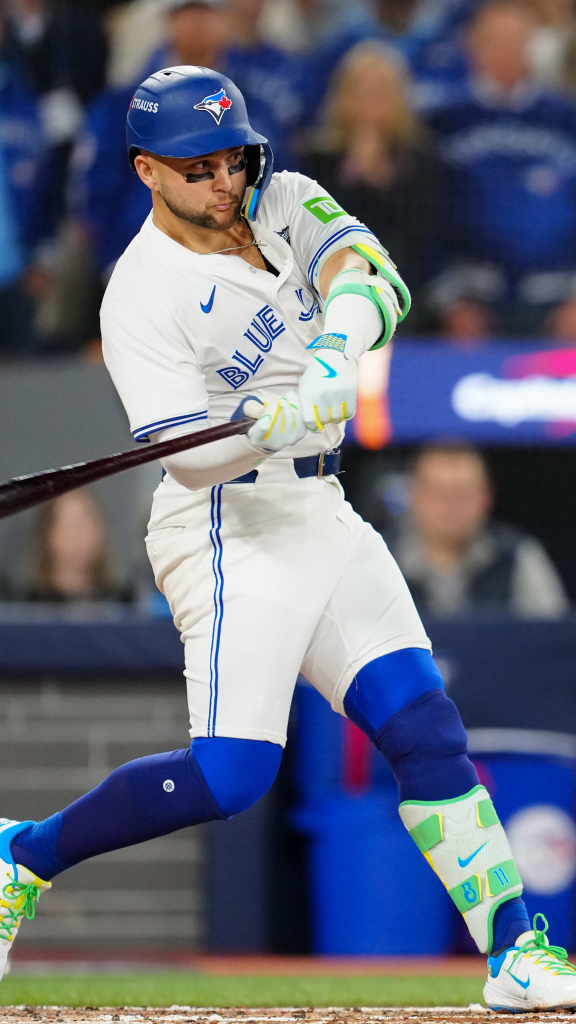
And that flexibility may be necessary.
Bichette has long been known for his offensive production, but his defense has drawn scrutiny throughout his career. That reputation hasn’t entirely disappeared this spring, even as he adjusts to a new team and a new position.
So far, the results have been mixed.
At the plate, Bichette has looked exactly like the player the Mets were hoping for. He’s hitting .324 with an .881 OPS, showing consistent contact, power, and plate discipline. His ability to produce runs and keep the lineup moving has been a clear positive.
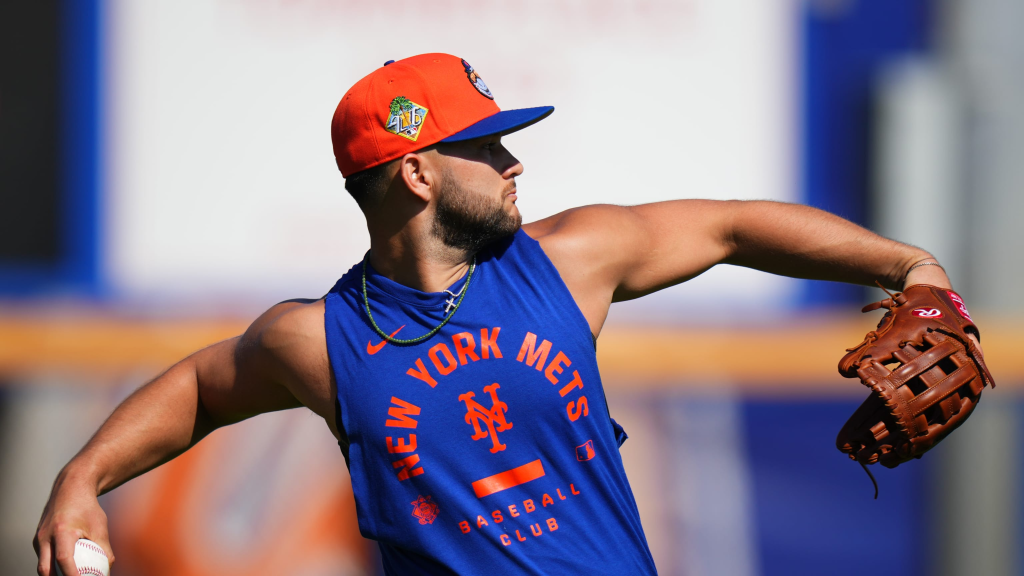
Defensively, however, there are still questions.
While he has committed just one error in limited action, his overall fielding metrics remain less convincing. A .938 fielding percentage in a small sample isn’t alarming on its own, but it reinforces concerns that have followed him since his time in Toronto.
That may explain the Mets’ approach.
Rather than locking him into a single role, they appear to be preparing for multiple scenarios — giving Bichette the ability to shift between third base, shortstop, and even second if needed.
It’s a pragmatic move, but also a revealing one.
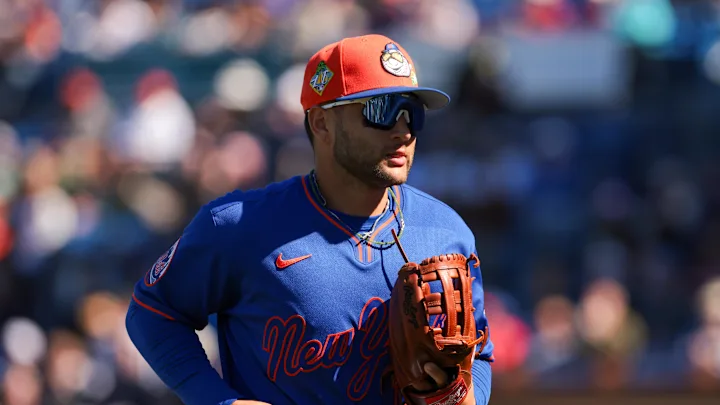
Teams don’t typically experiment like this unless they see potential issues or want to create contingency plans early. In Bichette’s case, it could be a combination of both — managing defensive limitations while maximizing offensive value.
To his credit, Bichette has embraced the challenge.
By all accounts, he has been open to moving around the infield and doing what the team needs. That willingness adds another layer of value, especially for a roster with postseason ambitions.
Still, the situation is worth watching.
The Mets didn’t bring in Bichette to be a utility player. They brought him in to be a core contributor. How — and where — he fits best will be something the team continues to evaluate as the season approaches.
For now, one thing is clear.
The original plan isn’t as fixed as it once seemed.
Leave a Reply