For the first time in years, the New York Mets will look different in a very noticeable way.

Feb 13, 2026; Port St. Lucie, FL, USA; New York Mets second baseman Jorge Polanco (11) works during spring training at Clover Park. Mandatory Credit: Sam Navarro-Imagn Images | Sam Navarro-Imagn Images
Pete Alonso is gone.
After anchoring first base since 2019, Alonso’s departure this offseason marked the end of an era — and introduced a major question just days before Opening Day.
Who replaces him isn’t the only concern.
It’s how.
Instead of pursuing a traditional first baseman, the Mets made a bold and somewhat unconventional choice. They signed veteran infielder Jorge Polanco and asked him to learn the position on the fly.
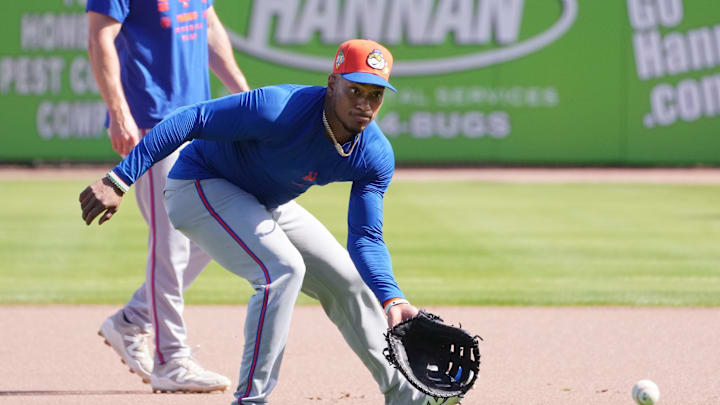
Feb 12, 2026; Port St. Lucie, FL, USA; New York Mets infielder Jorge Polanco (11) takes infield practice during spring training. Mandatory Credit: Jim Rassol-Imagn Images | Jim Rassol-Imagn Images
That decision says a lot about the direction of the organization.
It also carries real risk.
Polanco brings offensive credibility. He’s coming off a strong season at the plate, delivering power and consistency that should translate well into the middle of New York’s lineup. On paper, his bat helps soften the loss of Alonso’s production.
But first base isn’t just about offense.
And that’s where the uncertainty begins.
Polanco has never been a full-time first baseman at the major league level. While he’s shown flashes of comfort during limited spring reps, there have already been reminders of the adjustment ahead — including a defensive miscue late in camp.
Those moments matter.

The Mets made defense a stated priority this offseason. Improving run prevention was a key objective, and yet their solution at first base introduces a new variable instead of eliminating one.
It’s a calculated gamble.
To his credit, Polanco hasn’t approached the transition casually. He’s sought guidance from former Mets great Keith Hernandez, one of the best defensive first basemen in baseball history, in an effort to accelerate the learning curve.
That effort could pay off.
But there’s a difference between understanding a position and mastering it under game pressure.
The alternatives don’t offer much certainty either.

Brett Baty is expected to see time at first base, but his experience there is limited. Mark Vientos, while more familiar with the position, hasn’t done enough to secure a reliable role after a difficult 2025 season and a rough spring.
In other words, there’s no clear safety net.
That’s what makes this decision so significant.
The Mets didn’t just move on from Alonso — they chose a path that depends on adaptation, not stability. If Polanco handles the position well enough defensively while maintaining his offensive production, the move could look like a smart evolution.
If not, it could quickly become a glaring weakness.
And in a competitive National League, small weaknesses don’t stay hidden for long.
The Mets believe they made the right call.
Now, with Opening Day approaching, they’re about to find out if that belief holds up when the games start to count.
Leave a Reply